
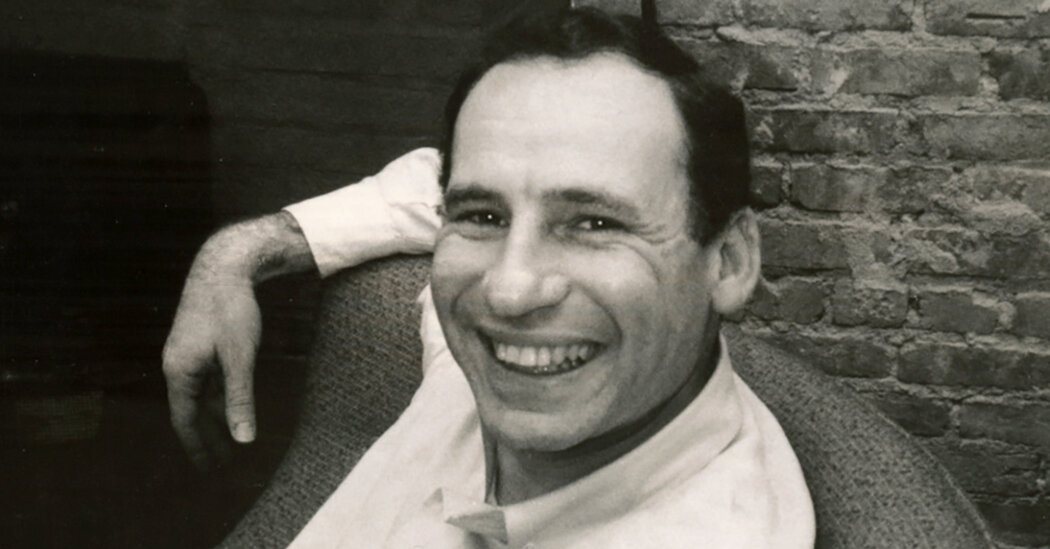
As the 2,000-Year-Old Man prepares to turn 100, he’s looking to history.
Mel Brooks — who will hit the century mark in June and whose titanic career includes playing an ancient man with a thick Jewish accent answering questions about subjects like the invention of fire (credit goes to a guy named Murray) — is donating his personal archives to the National Comedy Center in Jamestown, N.Y.
Chronicling one of the pillars of modern comedy, this archive covers nearly 15,000 documents and 5,000 photos that shed light on a lifetime of making jokes. It includes the development of scripts he helped create for the pioneering sketch series “Your Show of Shows,” one of television’s first comedy hits, and early scripts for “Spaceballs” (back when it was called “Planet Moron”).
The archive also features storyboards and other material from every movie he has directed, including his blockbuster parodies of Broadway (“The Producers”), westerns (“Blazing Saddles”) and horror (“Young Frankenstein”). Among the many personal photos is a shot of Brooks with Gene Wilder, who starred in all three of those films.
“It’s obviously Gene Wilder! I don’t know why he had to add the W,” Brooks wrote in an email.
“I’m honored that my contributions will be preserved for future generations at the National Comedy Center — especially because it’s a place that was meaningful to my best friend, Carl Reiner, who believed in the importance of preserving comedy’s history,” Brooks said in a statement. Reiner, who was Brooks’s partner on the five 2,000-Year-Old Man albums, died in 2020 and his archives were donated to the National Comedy Center the next year. “I know he’d be happy that our work will be around for the next 2,000 years, or maybe even more,” Brooks added.
Conversations about the donation began five years ago, and while many major comedians, including Joan Rivers and George Carlin, have donated their files to the organization, Brooks’s contributions are particularly important, said Journey Gunderson, the executive director of the center. “It’s as big as it gets,” she said, “especially considering the duration of Mel’s career and the way he so fearlessly satirizes the darkest moments of humanity in the post-World War II era.”
No one in comedy made fun of the Nazis more frequently than Brooks. Martin Short, playing the moronic celebrity interviewer Jiminy Glick, once asked him, “What’s your big beef with the Nazis?” Brooks quipped, “I think they were rude.”
Long before he dressed up as Hitler and skated around an ice rink in “History of the World, Part I,” Brooks fought Germany as a member of the U.S. Army in World War II. Some of the earliest material in the archive comes from this era, including his comedy notebook and a photo of him in uniform that he believes he was sending home to his mother.
For students of comedy, one of the most valuable documents in the collection is a handwritten draft of the lyrics for “Springtime for Hitler,” the song from the intentionally awful musical at the center of the plot of the landmark comedy “The Producers,” made first as a movie in 1968, and then turned into a Broadway musical in 2001.
The jokes in this song are now some of the best known in comedy (“Don’t be stupid / Be a smarty / Come and join the Nazi Party”). But this draft reveals a lyric that is unfamiliar: “Maybe other men have vigor and dash / But other men don’t have that mustache.”
In an email, Brooks explained: “I’m very proud of the mustache line, but in the end, it didn’t make it in.”

