
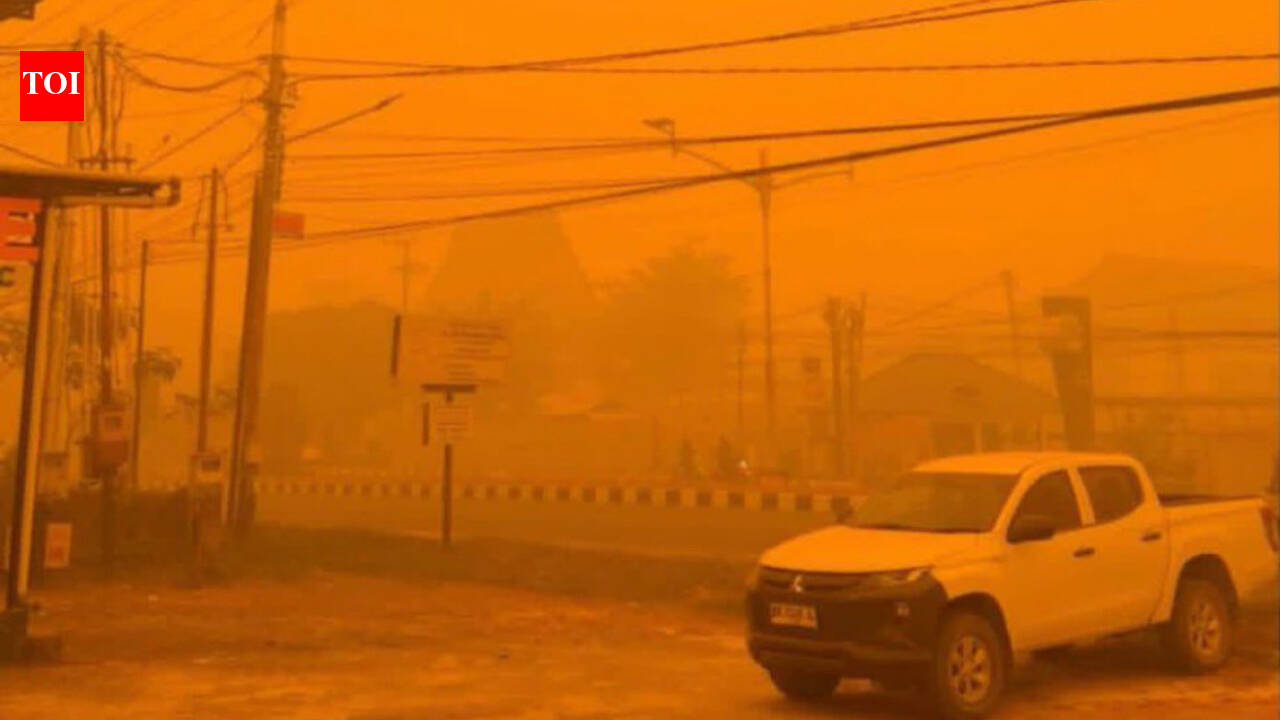
The sky in parts of Indonesia has turned an alarming shade of orange, and people living there are struggling to cope with the smoke. Videos shared on social media show buildings and roads barely visible through a thick orange-brown haze. The scenes look almost unreal, but the fires behind them are very real, and so are their effects on people’s lives.Central Kalimantan, on the Indonesian island of Borneo, is among the areas affected. The smoke has also travelled beyond Indonesia, reaching neighbouring Singapore and Malaysia, according to the BBC.A social media user from Kalimantan shared footage of the situation, warning that the crisis was far from over. What people were seeing in the videos, she said, was nothing compared with what residents were experiencing on the ground.For those living through the fires, the colour of the sky is the least of their worries. The air has become difficult to breathe, visibility has dropped and people who work outdoors are struggling to avoid the smoke.
Why has Indonesia’s sky turned orange?
The strange colour comes from smoke particles released by the fires. These particles scatter sunlight, making the sky appear orange, red or brown. The thicker the smoke, the more noticeable the effect can be.But the haze is more than an unusual sight. It carries tiny particles that can enter the lungs, while the thick smoke makes it harder to see clearly on roads and in residential areas.
What is causing the wildfires?
Some of the fires are linked to slash-and-burn farming, a method in which vegetation is cut down and burned to clear land for crops. The problem begins when these fires spread beyond the areas where they were meant to remain under control.Commercial land clearing has also been linked to wildfires. Fires that reach peatlands can be especially difficult to put out because they may continue burning beneath the surface, even when there are few visible flames.The Indonesian government has taken action against companies suspected of being linked to the fires. Last month, it suspended the operating licences of 26 companies over their alleged involvement. Several others are also under investigation.President Prabowo Subianto has ordered additional resources to tackle the fires.“This is a top priority for us. We must resolve it immediately,” he was quoted as saying by Reuters.
How much land has been burned?
The damage could be extensive, although the exact area affected is still being assessed.Official figures last updated in July put the area burned at around 202,000 hectares, or 500,000 acres. Indonesia’s Forestry Ministry said it needed more time to verify the latest numbers.Environmental group Auriga has put the figure considerably higher. It estimated that more than 637,000 hectares had been affected between January and August this year, Reuters reported.The two estimates differ, but they both point to the scale of the fires and the challenge facing authorities as they try to contain them.
Can dry ice help tackle the haze?
Indonesia is also testing a less familiar method: dry ice dispersal.Minister Dudung Abdurachman said the trial was being carried out under the president’s instructions to address the haze in South Sumatra, according to state news agency Antara.Officials will study the results before deciding whether to try the method in other parts of the country. For now, it remains to be seen whether it will make a difference.The bigger challenge is stopping the fires themselves. Unless they are brought under control, smoke will continue to affect the air and the people who have to breathe it.
How is the haze affecting people’s health?
The smoke from wildfires can irritate the eyes and throat, trigger coughing and cause breathing difficulties. Fine particles can travel deep into the lungs, making exposure particularly concerning for people with asthma and existing heart or lung conditions.In parts of Kalimantan and Sumatra, residents are trying to protect themselves from the polluted air. But not everyone can stay indoors until conditions improve. For people who earn a living outdoors, avoiding the smoke may simply not be an option.Imrayedi, a 63-year-old motorcycle taxi driver, told the BBC that breathing the polluted air had left him feeling unwell.“I’m short of breath and have a headache from breathing this air. But I still have to work,” he said.He also appealed to the government to find a solution, pointing out that ordinary people were bearing the brunt of the crisis.His words offer a glimpse of what life is like for residents caught in the haze. While images of the orange sky have grabbed attention online, people on the ground are worrying about their health, their work and how long they will have to live with the smoke.And until the fires are brought under control, the problems are unlikely to disappear. For now, the orange sky is a visible reminder of a crisis that is affecting far more than the view outside people’s windows.


