
Toussaint wound up decamping to a high floor of a hotel near his home, where he left behind a Steinway piano as well as records and memorabilia. When the flood set in, he had to escape through water up to his calves, while, as he told The New York Times afterward, “shaking a fist at the hurricane.” A friend arranged a ride for him to Baton Rouge “for a fee,” he said then, and from there he flew to New York. “His sister lived in New York before she passed,” Clarence Reginald Toussaint said. “That was the ideal place to go.”
In New York, Toussaint hooked up with a friend, Joshua Feigenbaum, a longtime record executive who had been his partner in an independent label, NYNO. Feigenbaum took him shopping at Barneys. “Allen was a very dapper guy,” Feigenbaum said of the hitmaker who appears on the cover of “Songbook” in a pinstriped suit with a pocket square matching his tie. “He literally showed up with a bunch of hard drives, what he had on his back and that was about it.”
Toussaint wanted to work so Feigenbaum hosted him and Bragin, of Joe’s Pub, at his house in the Hamptons. “He had a camcorder with him,” Bragin remembered of Toussaint. “He was asking me and my wife about how we got together, and turning the camera on us — turning the camera on anybody else but him, as, clearly, he was going through this strong trauma.”
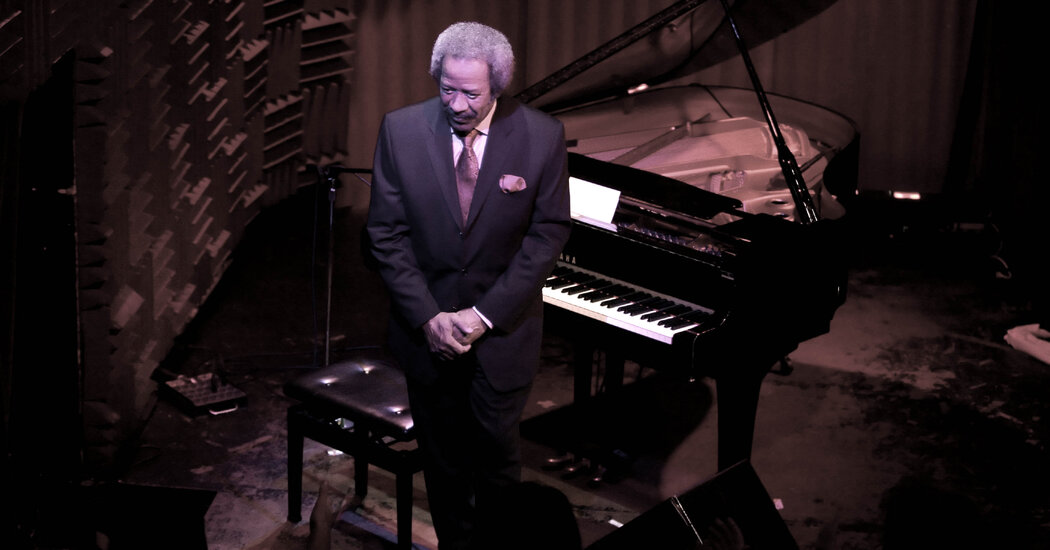
That first Joe’s Pub performance, a Sunday brunch benefit for hurricane survivors in September 2005, turned into a long run. Toussaint charmed audiences with his deep voice, endless song catalog, easygoing command of New Orleans boogie-woogie piano turnarounds and unexpected vulnerability in spoken-word stories about his roots and family. “He didn’t have to worry about if the bass player knew the song,” Siegel said. “He could just sit down by himself and sing anything he felt like.”
Costello and Toussaint later connected after performing at a Madison Square Garden benefit concert, collaborating on an album, “The River in Reverse” (2006), and a subsequent tour. “That was really the beginning of the renewal of his career,” Feigenbaum said of the Joe’s Pub shows.
Toussaint returned to New Orleans for good in roughly 2008. His flooded home was unsalvageable, so he moved to the city’s Lakeview neighborhood, onto a street named for the Confederate general Robert E. Lee. It was renamed Allen Toussaint Boulevard by unanimous City Council vote seven years after his death.
“Songbook” documents Toussaint’s crucial New York period. “He would talk about how, when he walked around, which he did a lot, he would hear things,” Siegel remembered. “A symphony would come from the different sounds he was hearing as he walked around New York City. He was very inspired by New York.”

