
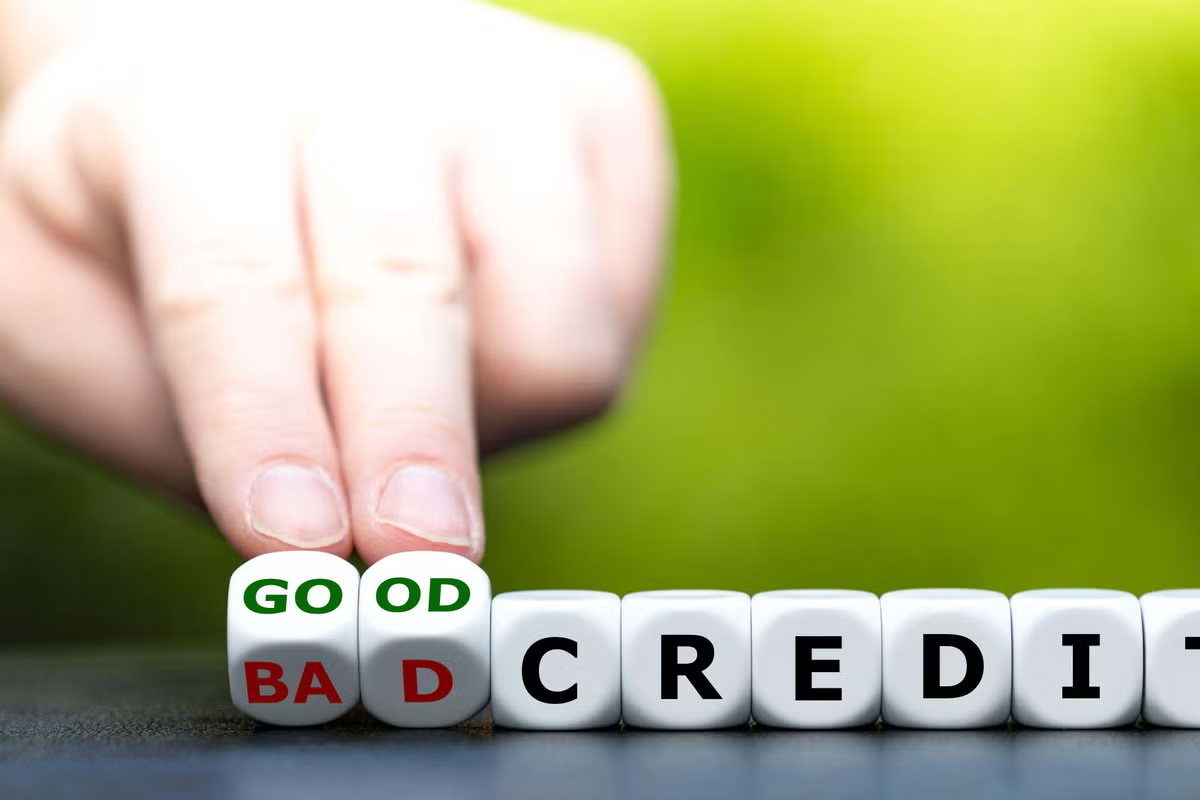
A bad credit score can have a huge impact on your financial life – and therefore your life in general.
It means your credit history – when you’ve borrowed money in the past – is poor, so lenders are less likely to let you borrow from them, or will charge higher interest rates or lend smaller sums.
Here, financial experts give the lowdown on bad credit scores – and what you can do about them…
Lilly Aaron, a senior policy manager for the Money and Pensions Service (MaPS), which provides free debt advice and money and pension guidance, says: “Every adult in the UK has a credit score – a set of numbers that shows how attractive you might be to lenders.
“A poor credit score is therefore anything that might put them off, such as a track record of missed or late payments.
“A ‘bad’ credit score can sound alarming, but in practice it’s less about one wrong number and more about what lenders see when they look at your borrowing history.”

And Helen Saxon, deputy editor at MoneySavingExpert, points out that credit scores from a credit reference agency are only an indication of how well (or how badly) you’ve managed credit in the past, explaining that lenders don’t see your credit score when you apply for credit, they see the data on your credit report and make their decision based on that.
“However, it’s true to say that if you’ve got a ‘bad’ credit score, then it’s likely you’ve not managed credit well in the past,” she says.
What type of transactions affect your credit score?
A variety of financial transactions can affect your credit score, says Saxon, ranging from being up to your limit on several different credit cards and loans, making lots of applications in a short space of time (suggesting you’re desperate for cash) or – and she stresses these are the “the real killers” – having county court judgements (CCJs) against you, bankruptcy, or having missed repayments or defaulting on a loan (which stays on your credit file for six years from the date of default, regardless of whether you pay off the debt, says credit reference agency Experian).

Get a free fractional share worth up to £100.
Capital at risk.
Terms and conditions apply.
ADVERTISEMENT
Get a free fractional share worth up to £100.
Capital at risk.
Terms and conditions apply.
ADVERTISEMENT
“If you’ve got some or all of these in your credit history, then if you apply for credit, lenders are going to look at those things and likely conclude that you’ll probably struggle to pay them back,” warns Saxon.
“So it’s likely they’ll either turn you down, or, if they do give you credit, it’s probably going to be low amounts at high interest rates.”
There’s no universal credit score
In the UK there’s no universal score that counts as ‘bad’, explains Aaron. The three main credit reference agencies in the UK – Experian, Equifax and TransUnion – all use different scoring systems,
“So your score can look different depending on who calculates it,” she says. “In general, a lower score can make borrowing harder, but lenders still use their own rules when they decide.”
Not being a borrower can work against you
Just because you haven’t taken out any loans doesn’t mean you’ll have a perfect credit score, and Aaron explains: “Being new to using credit or having only a limited borrowing history can work against you, because firms have less evidence of how you manage repayments.”
It’s not just borrowing money that could be impactedWhile having a bad credit score can make it difficult or even impossible to secure deals on loans, credit cards and mortgages, they’re not the only financial transaction the score could impact.
“It can also affect you when renting,” says Aaron, “with landlords sometimes reviewing your credit report, while insurance premiums can be higher due to your credit score.”
And a bad credit score can even affect the chances of you getting a mobile phone contract deal, warns Saxon.
Your credit score can improve
Just because your credit score is bad doesn’t mean you won’t ever be able to get credit again, the experts point out.
Saxon stresses: “The key point is that a bad credit history isn’t permanent. It reflects past behaviour, but it can change with new, better habits.”
She says the most important thing to do is make repayments and pay bills on time. “Do this over a long-enough period and it’ll build a positive track record that will gradually replace your existing poor credit history,” she says.
“Keeping your borrowing well within limits also helps demonstrate control, while avoiding a flurry of new applications prevents further negative signals.”
Aaron says it’s also worth making sure all your credit check details are correct, and suggests it’s a good idea to check all three credit reference agencies (CRAs) because they may hold slightly different information.
“Make sure you report any mistakes to the credit reference agency straight away, as even a typo in your address can affect an application,” she suggests.
And another simple step, she says, is making sure you’re registered to vote at your current address. “Councils send voter data each month to CRAs, so if you weren’t registered, this could improve your score within eight weeks,” she explains.
Other potential ways to improve your credit score, she says, are opening and managing a current account, staying within your overdraft, and being wary of joint accounts, as the other person’s history can affect you.
She says if you haven’t already, it’s worth setting up direct debits so your bills are paid out automatically, helping you to stay top of all your outgoings.
And she suggests: “If you’re struggling to get accepted for credit, seeking out a credit card with a low credit limit from a regulated provider can also help build your credit score.
“But be careful of products advertised as credit-building that charge high interest rates or fees, as these might negatively affect your credit score.”
And she advises people seeking credit to always use an eligibility checker, which are provided free by CRAs, or by financial websites like MoneySavingExpert, before applying.
Keep an eye on your credit scoreSaxon says it’s important to keep checking how your credit score is doing. You can do this and view your credit report for free by signing up with the three main credit reference agencies.
“If you stick to good habits, you should see your score improve over time,” she says.
For more information on what your credit score means, visit the MaPS Money Helper service.

