
Want to bookmark your favourite articles and stories to read or reference later? Start your Independent Membership today.
Already a member?
Log in
Whenever the latest stats on baby-making drop, they always seem to tell the same, depressing story: we’ve stopped having children. Not altogether, of course. But we’re having fewer, and putting it off till later. This is true across every demographic, in nigh-on every country. The UK birth rate, for example, fell to a record low of 1.39 children per woman in 2025, down from 1.9 in 2010 and well below the replacement rate of 2.1 that’s required to maintain a stable population. Live births dropped to 585,000 in 2025, the lowest annual total in 50 years.
A new study on social infertility, conducted on behalf of the IVI Institute, has found that almost 40 per cent of women are becoming mothers later than they want to, with the average delay in having children standing at six years. This had the knock-on effect of women having fewer children than they’d originally wished. The most common reasons given were that women felt they were too young, didn’t have enough money, and hadn’t met the right partner.
While the socio-economic obstacles standing in the way of procreation are mind-bogglingly complex these days, there is one factor that’s less often considered: are we having fewer kids because we’ve regressed to becoming kids again ourselves?
This perpetual Peter Pan syndrome, often exhibited by millennials, is most recently evidenced by new stats around toys in the US. In the first six months of 2026, the clear majority of toy purchases – 55 per cent – were made by adult-only households. Sales from January to July to over 18s grew 16 per cent year-on-year, outpacing households with children, and driving the best first half-year results for the toy industry in six years.
It’s a strange state of affairs when products traditionally made for and marketed to kids are being bought up by grown-ups. And yet this trend is nothing new. Of course, there have long been adult “hobbyists” – those for whom certain kinds of figurines were purchased as treasured collectables, the types you’d see hanging around Warhammer shops back in the day. But what used to be a fairly niche pastime has gone far more mainstream in the decade just gone.
Take the phenomenon of the “Disney adult” – an often derogatory term for unironic Disney superfans who visit the theme parks without any children in tow, often opting to dress up and cosplay as popular characters – which started to gain traction in the late 2010s.
In 2019, a viral Facebook post by a parent complaining about childless millennial couples ruining her family’s experience at Disney World sparked the first of many “Disney adult” memes, and the trope soon gained traction. “Disney adult” quickly became shorthand for a grown man or woman stuck in a kind of arrested development, one whose tastes hadn’t matured in line with the number of candles on their birthday cake.
My generation’s obsession with all things juvenile didn’t end there. Soon enough, the term “Harry Potter adult” followed in “Disney adult”’s wake, applied to those who not only read the JK Rowling books but knew their Hogwarts house, bought all the pricey associated merch (including an official HP wand) and would love nothing more than to throw on a cloak and Hufflepuff scarf and spend a morning at King’s Cross station, getting snapped holding half a trolley at Platform 9 ¾ while pretending to cross the invisible magical barrier to catch the Hogwarts Express. (Miriam Margolyes, who played Professor Sprout in the Harry Potter films, famously said in an interview that adult fans should “grow up” and “get over it”: “It was 25 years ago, and I think it’s for children.”)
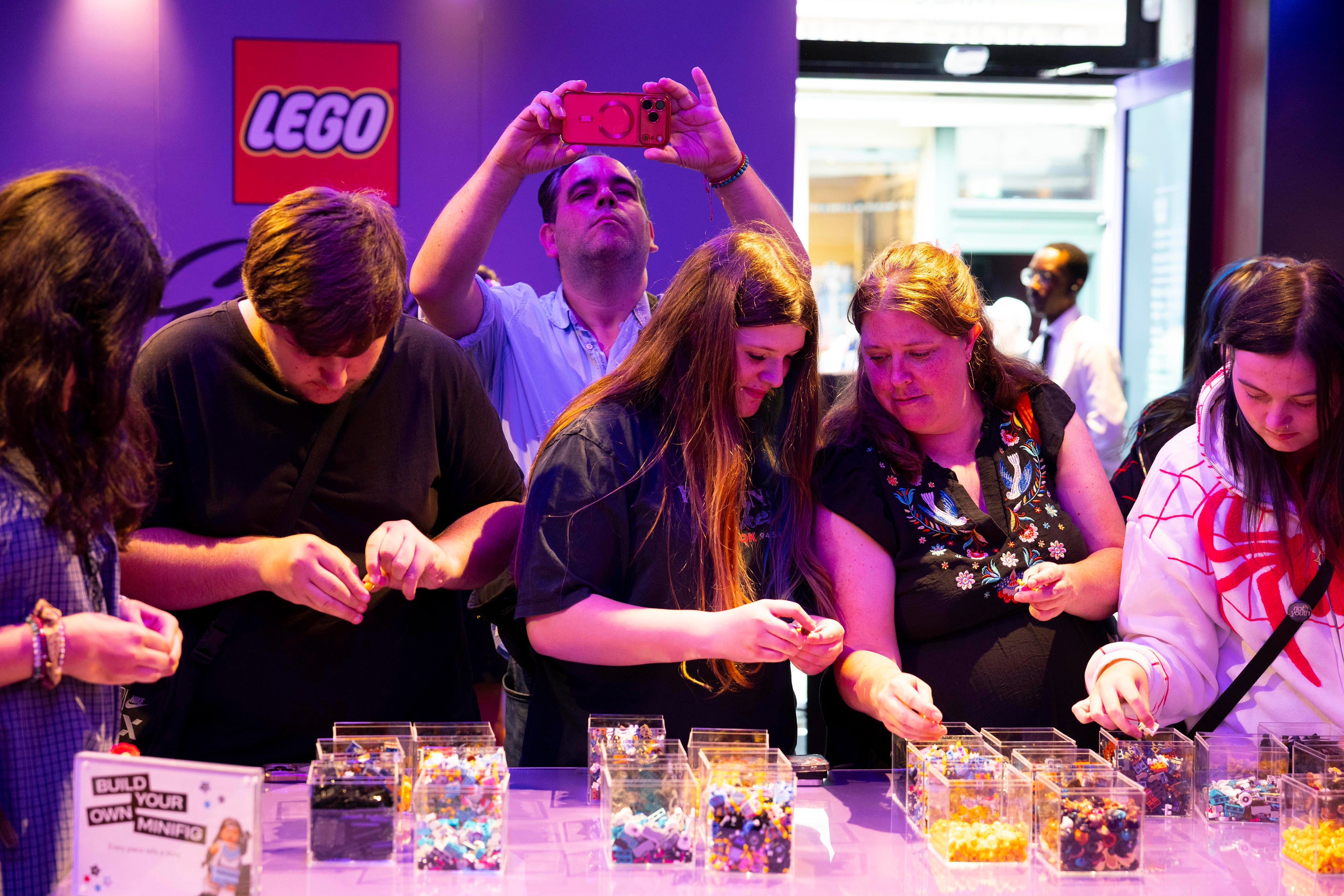
Then there’s been the marked return to the toys and games of our youth, arguably part of the same wider wave of Nineties nostalgia responsible for the cursed return of low-rise jeans. The number of adults who have rediscovered their love of Lego is so significant that the Danish company consciously shifted towards marketing its models to this demographic in recent years. They even have their own acronym: “Afols” (adult fans of Lego).
‘Disney adult’ quickly became shorthand for a grown man or woman stuck in a kind of arrested development
Pokémon cards, meanwhile, have had a remarkable resurgence – and, unlike 30 years ago, they’re about as far from a simple child’s game as you can get. The most expensive card sold for a record-breaking $16,492,000 (just over £12m) earlier this year after a 41-day bidding war. Even a quick browse on eBay shows original cards from the late Nineties being resold for £50,000 a pop.
Alas, nostalgia alone cannot explain such madness. Similarly high-priced crazes have been driven by adults splurging on thoroughly modern playthings. Demand for Labubus, those sinister-looking dolls with smiling, jagged teeth, furrowed brows and furry animal costumes, reached its zenith in 2025, with long lines outside toy shops, models selling out online within minutes, and others listing for triple their original price on resale markets.

If you thought the frenzy was whipped up by youngsters, think again – it was largely Gen Z women in their twenties aiming to get their hands on the Hong Kong-designed Pop Mart dolls and bag charms, which somehow became framed as coveted collectible fashion statements. Sonny Angel has become one of its natural successors; adults are, once again, the surprising primary market for this range of cherubic Japanese mini dolls.
The toy companies themselves have been quick to stoke adult interest in their products. After all, they can connect the dots between a falling birthrate and fewer kids to buy their products; they’ve been forced to generate a different kind of consumer. In its 2025 accounts, the UK arm of Sylvanian Families maker Epoch revealed that it was aiming to combat dwindling sales by tapping into the expanding and lucrative kidult market.
Adult consumers are turning to toys for comfort amid a backdrop of war, climate anxiety and economic pressures
“In recent years, the traditional toy market has declined due mostly to a combination of cost of living challenges and the longer-term decline in birth rates,” it said. “During the same period, however, the industry has seen a growth in demand from kidult consumers, who may be more isolated from the pressures of the high cost of living.”
There are bigger contributing factors than simple immaturity or a willful resistance to growing up in all this. As Frédérique Tutt, global toy industry expert at data firm Circana, told The Telegraph: “Adult consumers are turning to the childhood delights of building sets, games, puzzles, collectables and squishy soft toys for comfort amid a backdrop of war, climate anxiety and economic pressures that now shape daily life.”
The reasons why someone might feel completely unprepared to bring a child into this world are, in fact, likely the very same compelling them to evoke the coddled innocence and safety of youth.
The famous Bible quote by the Apostle Paul reads: “When I was a child, I spoke like a child, I thought like a child, I reasoned like a child. When I became a man, I gave up childish ways.”
But perhaps we can hardly blame adults for regressing to kidults and putting off having families of their own. As our own government tells us to stock up on tinned food in case of war and we sit under the collective threat of Russian attack, climate crisis and rogue AI agents that may or may not destroy the whole of humanity… a gentle game of Sylvanian Families sounds quite nice, actually.


