
Hi, I’m Olivia Wilde, and this is “Anatomy of a Scene” for my film “The Invite.” “We’ve been dying to see your apartment.” “Oh. Oh, God. I’m so sorry. We wanted to invite you. It wasn’t quite ready before.” “It still isn’t quite ready, if you ask me, but — ” “Uh, ‘cause you mentioned it in the elevator, but then you never called.” At this point in “The Invite,” Joe and Angela, played by myself and Seth Rogen, have been in this very tense, disagreement about this impending dinner party. “So much bigger than ours.” “So much bigger than ours.” “And it has such a nice flow.” “You guys have money?” “Eso no se pregunta.” [You don’t ask that.] The neighbors who are coming are neighbors, not only that Joe doesn’t like, but that he has a very specific issue with. They live upstairs, and they have been having very loud sex in the apartment above us. And he has threatened to Angela that if she forces him to have this social interaction, that he will bring up this topic that is forbidden. “Este precioso, si?” [This is lovely, isn’t it?] “Precioso, precioso, si.” [Beautiful, beautiful, yes.] “You’ve really — You’ve really got some beautiful pieces.” “It’s all Angela.” “Well, I know what I like, but it’s actually not all expensive —” “Some of it is very expensive —” “Some of it. Most of it’s not.” There’s been this kind of minimizing of comedies in terms of their significance and their cinematic value, but we were all raised on comedies that felt incredibly cinematic. One of the films that really inspired this film was Mike Nichols’s, “Who’s Afraid of Virginia Woolf?” “Who’s afraid of Virginia Woolf?” For many reasons, including the fact that it’s all based in one house for the most part in that film. This scene, in particular, is inspired by that film, the first time that that couple arrives for dinner and the kind of dance that’s happening as, George and Martha in that case, are sort of establishing how they’re going to be handling this new couple and how they’re going to be continuing to play this game. “God damn you! Hi, there.” We are isolated in this one apartment together, this pressure cooker. The air is thick with tension. And here we are trying to kind of wish it away with, like, social niceties. “Thank you. Thank you for saying that.” “Yeah, it has great energy.” “It’s got great energy.” “¡Chispas!” [Jinx!] “Candado cerrado.” [You can’t talk.] “Ah!” “Wow, look at that.” “Energy is what I was going for. That’s what I wanted.” “Energy is great. We talked a lot about how to capture energy as though that was a real thing we could do.” OK, and we can pause it. There was so much about doorways, frames, architecture — creating boundaries between these characters that we would slowly dissolve. It was supposed to elicit, hopefully within the audience, this sense of being a little bit out of sorts. One guiding force for this scene was the introduction of Piña, Penélope’s character, as this kind of oracle. The way the camera follows her, we actually called it ’Piña-cam.’ Because we had a Steadicam on Piña and we did not have a Steadicam on anyone else. “Energy is everything.” “Really?” “Kinetic, chemical, potential, nuclear, sexual.” She doesn’t shy away from the kind of clear tension and awkwardness in the moment — she leans into it. “Too existential for you, Joe?” “No, hey, not existential enough for me. Let’s get deep. What is life?” “Oh, that is my Spanish flan.” “No. Oh, my God, flan. Oh, how elegant.” “Fair warning, once you try Piña’s flan, there’s no going back. You’ll be at our door, late at night, like a junkie under the bridge, saying We need to score, like, heroin.” “Oh, wow.” “You might want to put it in the fridge.” “Yes. Yeah. Come, come, come.” “Yeah, you want to refrigerate it.”
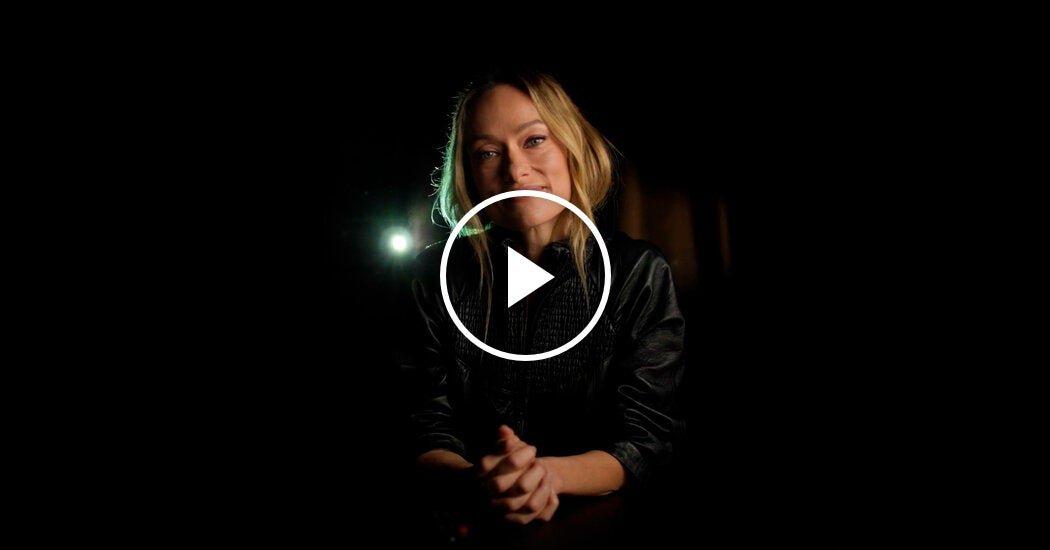
Video: How Olivia Wilde Directed an Awkward Dance in ‘The Invite’


RELATED ARTICLES
Recent Comments
on Hello world!