
As Health Secretary Robert F. Kennedy Jr. sets out to rein in the use of psychiatric medications, a group of prominent psychiatrists are developing guidance for helping patients to stop taking them, noting that providers sometimes “park” patients on medications that are no longer necessary or effective.
The experts, whose first recommendations appeared in JAMA Network Open and the British Journal of Psychiatry, identify structural problems that may lead to overprescribing: There are few clinical trials showing when it is advisable to stop a medication; many providers do not regularly review whether a prescription is still needed; and psychiatry residents receive more training in starting drug prescriptions than stopping them.
“We have not really taught our trainees to think about, what is the logical endpoint?” said Dr. Joseph F. Goldberg, a past president of the American Society of Clinical Psychopharmacology, which convened a group of 45 psychiatrists to agree on basic principles for “deprescribing,” as supervised drug tapering is sometimes called.
“You’ll see a patient in consultation who has been parked on a medication which seems to be ineffective for years, and you’ll ask, ‘Why are you still on this medicine?’” he said. “We’ve got a bugaboo going about passive re-prescribing, and I hope we’ll see much less of that.”
The new recommendations come amid rising pressure from Mr. Kennedy and his allies in the Make America Healthy Again movement, who have long made the case that Americans overuse psychiatric medications.
The Department of Health and Human Services will convene expert panels on deprescribing the main class of medication used to treat depression — selective serotonin reuptake inhibitors, or S.S.R.I.s — this summer, with an eye toward developing official guidance.
During Mr. Kennedy’s confirmation hearings last year, he suggested that reducing the use of such drugs would be a central aim of his tenure. In testimony, he claimed, without evidence, that S.S.R.I.s have contributed to a rise in shootings, and that they can be harder to quit than heroin.
The recommendations from the A.S.C.P. are not binding, and represent a first pass at outlining best practices. They take a moderate approach, warning that it could be dangerous for patients to stop taking psychiatric drugs on their own, and that to avoid relapse, some may need to take a medication indefinitely.
By addressing the issue now, psychiatric groups hope to take a leading role in the conversation, steering it away from a broader rejection of psychotropic treatments.
Dr. Awais Aftab, a clinical associate professor of psychiatry at Case Western Reserve University and the author of a popular psychiatry newsletter on Substack, said expert groups watched as “critics of psychiatry — especially radical critics of psychiatry — had gained more prominence in the deprescribing space and claimed that banner for themselves.”
He welcomed the effort but said it has come late, after a growing number of patients have spoken out publicly about the difficulties they have had coming off medications. The vacuum, he added, has been filled by professionals outside the medical mainstream who are “skeptical of the reality of mental illness and the efficacy of psychiatric medications.”
With their primary treatments questioned by Sec. Kennedy, psychiatric organizations have responded that medications used to treat depression, mania and psychosis have undergone decades of rigorous testing and analysis.
Medications allow many young people to participate fully in school, social activities and family life, and curtailing the drugs’ use “will have serious deleterious consequences,” said a joint statement released last year by groups that included the American Psychiatric Association.
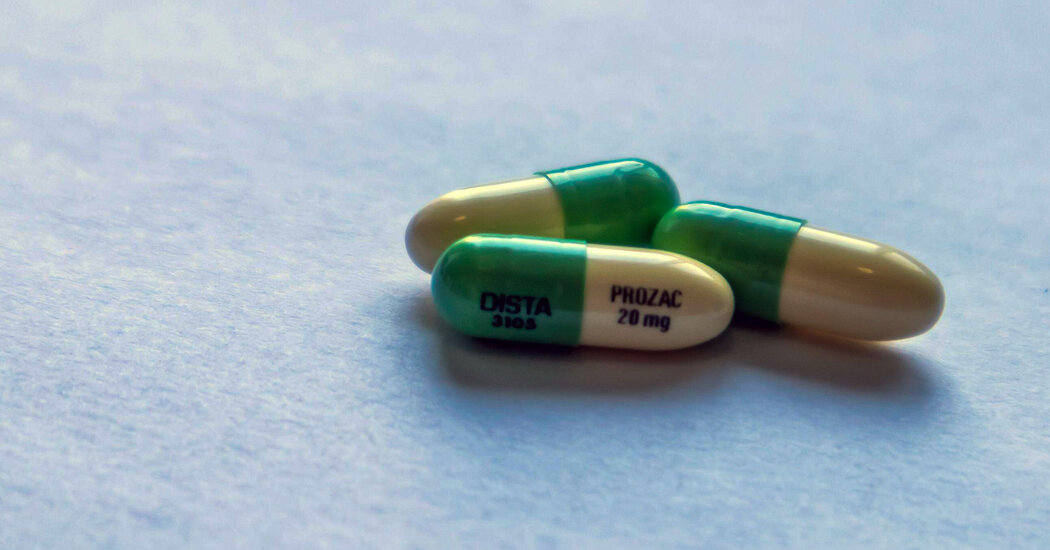
Use of psychiatric medications has risen steadily since 1988, when Prozac, the first selective serotonin reuptake inhibitor antidepressant, was introduced. By 2026, 16.6 percent of U.S. adults, or roughly one in six, reported currently taking an S.S.R.I.
As use rose, more patients reported downsides, like decreased sexual desire. And some said that they experienced debilitating withdrawal symptoms when they stopped taking the medications, but got little support from their doctors. Many turned for support to social media, where peers advised one another on how best to go off the drugs.
Those patient-led groups, like Surviving Antidepressants and Inner Compass, have grown into a potent force aligned with Mr. Kennedy, and they are hoping for significant regulatory changes, including black box warnings about withdrawal syndromes.
Several advocates said in interviews that the new guidelines released by the A.S.C.P. were weak and long overdue.
“Read as a whole, the paper feels like a reluctant admission that psychotropics have been marketed for decades without adequate off ramps,” said Dr. Mark Horowitz, an associate professor of psychiatry at Adelaide University in Australia and co-author of the “Maudsley Deprescribing Guidelines,” an influential handbook for British doctors.
Dr. Horowitz, who founded Outro, a telehealth clinic that helps patients taper off antidepressants, compared the new guidance to an automobile manufacturer issuing a warning about a model that was introduced 40 years earlier.
Adele Framer, who launched the peer support website Surviving Antidepressants in 2011 after a difficult withdrawal from Paxil, an S.S.R.I., described the new guidelines as “a reluctant but significant turnaround by the psychiatric establishment.”
“They never wanted to open this box,” she said. “Now it’s open.”
A Middle Path
The A.S.C.P.’s recommendations emphasize that the risks and benefits of stopping a medication should be carefully weighed under professional supervision.
The authors agreed that antidepressants should be stopped or replaced if they stop working. Most patients experiencing manic symptoms should not be taking antidepressants, which exacerbate mania, the recommendations said. Patients with nonpsychotic mood disorders should, in many cases, be taken off antipsychotics if they lead to major weight gain or other acute side effects.
Too often, Dr. Goldberg said, prescribers are so apprehensive about recurrence that “there may be an implicit messaging” that treatment will be lifelong.
He laid some responsibility for this at the feet of the pharmaceutical companies, which he said “are not especially looking for when to stop prescribing their product, and so they don’t necessarily do the kinds of randomized discontinuation trials that tell us beyond a period of time, you get diminishing returns.”
Dr. Mauricio Tohen, the chair of the department of psychiatry at the University of New Mexico and one of the co-authors of the paper, said he was troubled by the number of patients diagnosed with bipolar disorder who are on combinations of four or five psychotropic medications, so that “you don’t really know which ones are helping.”
He said the guidelines should serve as a “call to action” for clinicians to more systematically ensure that patients are not taking more medications then necessary. “The best approach is to be parsimonious,” he said. “The least number of variables, or medications, is the best.”
But not everyone can do without psychiatric medications, the group warned. For example, while patients with Bipolar 2 may “achieve an eventual medication-free status,” those with Bipolar 1, a condition with more severe swings of mania and depression, probably will not. Patients who have suffered three or more episodes of major depression may need to take antidepressants indefinitely, the recommendations say.
“There, the model shifts closer to hypertension or diabetes or arthritis or heart disease,” Dr. Goldberg said. “We don’t cure it, we manage it.”
The recommendations largely sidestep a central complaint of patient groups, that withdrawal symptoms can be debilitating unless medications are tapered very slowly. They state that long-acting antipsychotics and S.S.R.I.s that take a longer time to be metabolized, like Prozac, “generally can be abruptly stopped without the need for a downward dose titration because they will auto-taper.”
Dr. Goldberg said this position might be seen as “contrarian” but makes scientific sense for drugs that leave a patient’s system slowly. Requiring slow tapering for all medications, regardless of their half-life, he said, “is rather unscientific.”
‘There’s so much art to it’
Experts who contributed to the new guidelines said conscientious clinicians have been taking their patients off unnecessary medications all along, frequently stepping in to help patients who were prescribed a medication by a general practitioner.
Dr. Anita Clayton, the A.S.C.P.’s president and a co-author of the new recommendations, said one reason for addressing deprescribing is to reclaim the term from critics of the field, including those aligned with Mr. Kennedy’s MAHA movement.
“The truth is we deprescribe all the time, it’s just that people haven’t talked about it,” she said. “We need to take that word back.”
Various efforts within the psychopharmacology society aim to make deprescribing part of regular medical practice. One group is proposing the creation of a new insurance code, so that doctors can be reimbursed for helping patients get off medications. Another is developing a clinical tool to help doctors ascertain whether a patient is a good candidate for deprescribing.
And a scattering of specialists are developing deprescribing clinics within large medical systems. Six months ago, Dr. Jayne Shadlyn began a pilot project at the University of Virginia Medical Center, uncertain of how much demand there might be.
A lot, as it turned out. Colleagues in geriatric and adult psychiatry clinics sent her patients who wanted to reduce their dosage or quit medications, but who were taking multiple psychiatric drugs and were anxious about withdrawal symptoms.
So far, she said, all her patients have been able to make progress. But some patients have “really intense withdrawal symptoms,” and some are “emotionally attached” to the medication.
“There really is an art to it,” she said. Most psychiatric outpatient practices, with their brief monthly medication management appointments, do not provide the time or attention patients need to get off complex psychotropic regimens, she added.
“It’s so much easier to add a medication than to take away a medication,” she said. “This is where the art comes in.”

