
Today is July 1, which is sort of the beginning of real summer — the end of the preseason, when school’s out for everyone and, with any luck, we unclench a little. Right on time, much of the country is enduring an extreme heat wave. I can’t control the weather, but I hope you’ll find some relief with the good things assembled here.
On this week’s list:
1. The celery vase
2. Treat people like trees
3. Your handwriting as a font
4. Beethoven for elephants
5. Richard Grant sniffing
6. Tears, magnified
7. Browse the Criterion Closet
The United States turns 250 this weekend, but restaurant dining as we know it — with menus featuring à la carte items — arrived on our shores less than 200 years ago. I learned this from the writer Stephen Lurie’s fascinating social history of dining, told through 10 dishes. Who knew celery was the fourth most common item on menus from 1880 to 1920, according to a collection in the New York Public Library? The top three were coffee, tea and olives. Celery was a luxury hors d’oeuvre, served by the stalk in a crystal vase.
I’d like to have visited a 19th-century “coffee and cake saloon,” where “women could find cakes, ice creams and light lunches, without the expectation of a male dining companion.” Explore the intricacies of dining history by paging through old menus from all over the country.
If restaurant dining seems fussy for a holiday weekend typically associated with backyard cookouts, check out America’s Potluck, an effort by the Utah America250 commission to organize communal dinners around the country on Sunday, July 5. I enjoyed clicking around the interactive map and seeing what communities have organized. (The Popsicle Party in southwest Iowa is sparse on details, but if you live near there, please report back.)
2.
Treat people like trees
We like to be right. When we’re in conflict with other people, it can be hard to just let go. We wish our siblings or spouses or co-workers would just change how they think, or how they are. This passage, from the spiritual teacher Ram Dass, is a good reminder to observe others with interest, without reacting emotionally to their behavior.
When you go out into the woods, and you look at trees, you see all these different trees. And some of them are bent, and some of them are straight, and some of them are evergreens, and some of them are whatever. And you look at the tree and you allow it. You see why it is the way it is. You sort of understand that it didn’t get enough light, and so it turned that way. And you don’t get all emotional about it. You just allow it. You appreciate the tree.
The minute you get near humans, you lose all that. And you are constantly saying “You are too this, or I’m too this.” That judgment mind comes in. And so I practice turning people into trees. Which means appreciating them just the way they are.
3.
Your handwriting as a font
It wasn’t so long ago that if you knew someone fairly well, you could probably recognize their handwriting. Now that we type nearly everything, handwriting has become something peculiarly intimate. I’m always struck when I see a scrawled Post-it on a colleague’s desk: “Huh, he makes a double-story A, like a typewriter! I’d never have guessed!”
I used to be rather proud of my penmanship, perfected over years of taking reams of notes in class I’d never look at again and writing long-winded letters to everyone I’d ever met. It felt like an extension of me: tidy, artsy, sort of architect-on-holiday in its quirky consistency. But no one ever gets to see it!
That changed this week, when I visited “Hand of You,” a lovely tool from the designers Alex Burdin and Max Yugi. It takes your handwriting and turns it into a font you can use to send little notes. I immediately sent one to my friend Julie, one of my most reliable pen pals from the letter-writing era, and she made her own font and sent a note back. There were her round, almost witty F’s, the T’s with the cross a little lower than most, the very specific Julie penmanship that was as identifiable to me as her voice.
4.
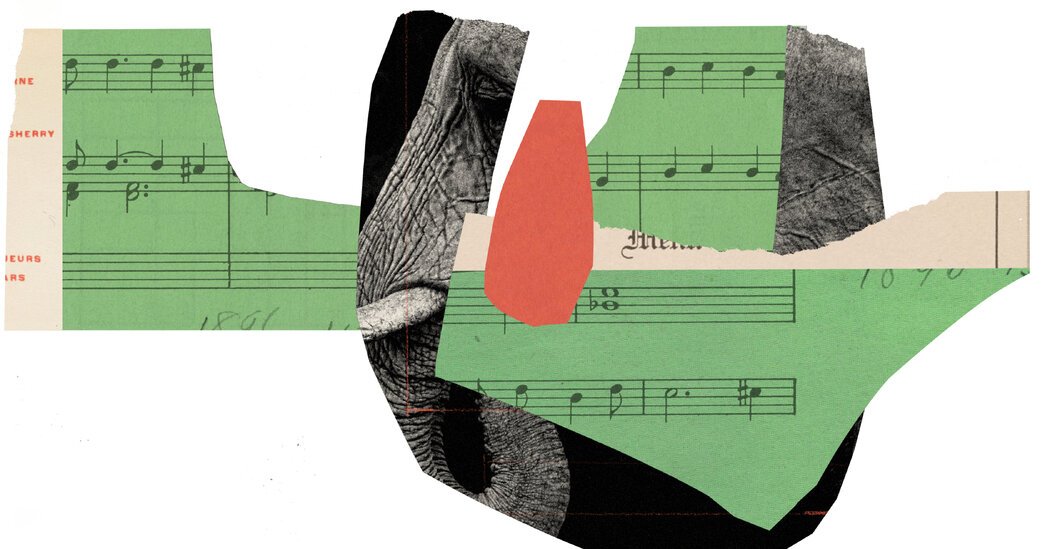
Beethoven for elephants
I use certain YouTube videos for self-soothing in times of stress. The meditation teacher Jon Kabat-Zinn’s body scans impart near-instant peace. The poet Joseph Brodsky’s readings of his work reconnect me to a softness that’s easy to forget. Doubly calming is watching the pianist Paul Barton play for elephants in a sanctuary in Thailand.
There, a restless elephant lies down and appears to relish a Grieg air. In this video, a particularly solemn-looking creature named Mongkol stands so close while Barton plays “Moonlight Sonata” in the darkness. Barton says that the elephants stop eating to listen to him play, that their breathing slows down. Mine does, too.
The chef Yotam Ottolenghi invited the actor Richard E. Grant to his test kitchen. As they cook, Grant smells everything — lemons, toasted bread, the contents of the Cuisinart. I’ve read that you should taste everything as you cook, even your salted pasta water, but why not smell it, too? A feast for all the senses! You can watch it all on Instagram.
6.
Tears, magnified
Magnified Sand is a strangely interesting catalog of the world’s beaches, photographed under a stereo microscope. It’s the work of Robert Maronpot, whose day job as a veterinary toxicologic pathologist, studying the effects of drugs, chemicals and environmental factors on animals, gives him easy access to microscopy equipment.
I love the shiny pink orbs in the photos of the sands of Cuba, the sparkly black volcanic grains of Iceland. Are such colorful gemstone-like forms hiding in the apparently beige expanse of Rockaway Beach in Queens, my beloved summer getaway? Alas, it is not (yet?) in Maronpot’s collection.
If I had access to a stereo microscope, I imagine I’d be magnifying everything I could think of. Who knows what shapes and patterns are lurking within this dust from the attic, this salad dressing? Have a look at this collection of different tears: David’s reflex tear from cutting onions appears totally different from Natalie’s tear from looking directly into the sun without eye protection (be careful, Natalie!). Of course magnified tears look like strange organic terrains, both lush and severe! Of course things that seem unremarkable on the surface are more divinely complicated the closer you look.
7.
Browse the Criterion Closet
I love watching celebrities select their favorite movies from the Criterion Closet’s collection of classic and indie cinema. Now, those of us who aren’t notable enough to be invited to the actual library can approximate the experience via this online version. Click on the spine of a movie to get a synopsis, watch the trailer and see which luminaries chose it for their personal collections. You can filter the films by decade, language and director, and save them to lists for future viewing.
One more thing: Ira Gore writes from Birmingham with a prehistoric creature he captured during a storm.
If you see anything good in the sky this week, tell us about it in the comments, or send me an email. If you want to get The Good List in your inbox, sign up here. And you can check out past editions of The Good List anytime. — Melissa
The editor of The Good List is Jodi Rudoren. Eli Cohen handles the photos.

