
Millions of older Americans in Medicare are about to receive a benefit that has never existed before: coverage of obesity drugs.
Starting Wednesday, eligible beneficiaries can get GLP-1s to treat obesity for a copay of just $50 per month. It’s a watershed move that could unlock a vast new patient population for Novo Nordisk and Eli Lilly and dramatically expand access to medications that were previously out of reach for many people ages 65 and above.
Medicare Part D, or prescription drug plans, already cover some GLP-1s for conditions like diabetes and cardiovascular disease, but federal law has banned coverage solely for obesity. Medicare’s new Bridge demonstration program sidesteps that law to cover the drugs for obesity – at least temporarily – for more beneficiaries, including those who are overweight with conditions like prediabetes or uncontrolled hypertension.
There were more than 69 million beneficiaries in Medicare as of about a week ago, and “several million” are expected to access the drugs through the Bridge program, said Chris Klomp, director of Medicare and deputy administrator of the Centers for Medicare and Medicaid Services, during the Aspen Ideas Festival last week.
There are also many more patients to capture: Roughly 15 million to 20 million older adults in Medicare are estimated to qualify for weight loss drugs, according to Novo and Lilly.
But the initial rollout may not be smooth. Providers must submit prior authorization requests to attest that patients meet eligibility requirements, a process some physicians said may be cumbersome. Some doctors also worry the new coverage could spark a surge in demand that will strain busy clinics and pharmacies, and others raised concerns about a lack of broader public awareness of the program.
There’s also a larger question hanging over the Medicare breakthrough: Unless the Trump administration extends or replaces the demonstration program, obesity drug coverage is scheduled to expire at the end of 2027. Covering the drugs permanently would require a change in federal law or at least agreement among private health insurers to provide the medications in Part D plans.
That creates uncertainty for patients who may begin treatments that many experts view as lifelong therapies.
“It’s good news that Medicare is rolling out this program, but it is temporary, so it’s really not clear at this point what happens after the end of the 18-month program duration,” said Juliette Cubanski, director of the Program on Medicare Policy at KFF, a health policy research organization. “Whether that coverage will continue in some other fashion, or whether people might lose access at that point.”
Here’s what to know about the long-awaited coverage.
How much will this save patients?
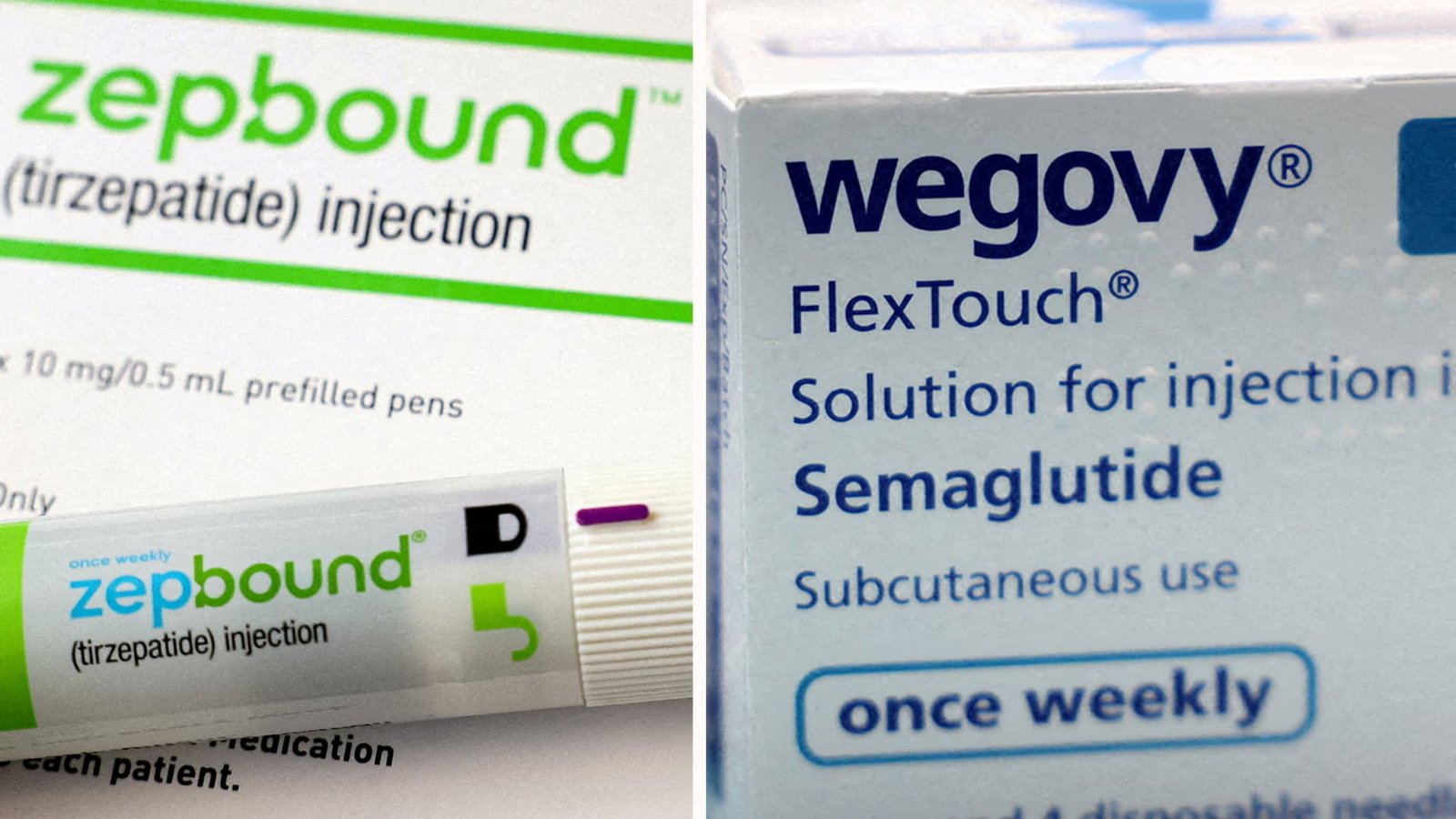
A combination image shows an injection pen of Zepbound, Eli Lilly’s weight loss drug, and boxes of Wegovy, made by Novo Nordisk.
Hollie Adams | Reuters
The $50 monthly copay is significantly less than what patients without any insurance coverage for obesity drugs typically pay. That price also applies to all doses rather than increasing with a larger dosage, as it does for people paying out of pocket.
Lilly and Novo have both rolled out sweeping cash discounts for their respective drugs for patients willing to pay out of pocket, but those prices can still be unaffordable for some people.
Novo’s Wegovy injections range in price from $199 for a lower dose for the first two months under a limited-time offer, to $399 for the newly launched highest dosage. The KwikPen and single-dose vial formulations of Lilly’s Zepbound cost from $299 to $699 per month, depending on the dose. At the highest dosages, Novo’s daily Wegovy pill costs $299, while Lilly’s rival Foundayo tops out at $349.
Crucially, the $50 monthly copay for GLP-1s will not count toward a patient’s Part D deductible, or the $2,100 annual out-of-pocket cap on prescription drug costs, said Rachel Schmidt, a research professor at Georgetown University’s McCourt School of Public Policy.
Many older people may still not be able to afford an extra $600 a year for another prescription, especially as they grapple with rising healthcare costs. A quarter of Medicare beneficiaries had an income below $24,600 in 2024, according to KFF.
Still, the coverage “is going to improve access to so many Americans who need these medications, and either are going without or using their hard-earned money in retirement to pay for them,” said Dr. Holly Lofton, director of the Medical Weight Management Program at NYU Langone.
Who is eligible and how does it work?
The Bridge program operates differently from traditional Medicare drug coverage.
It’s available to Medicare beneficiaries with Part D coverage, but private insurers running those plans don’t foot the bill. Bridge is funded by taxpayer dollars and beneficiary copays.
Under the program, Part D plans also do not determine eligibility or approve coverage like they typically do. Instead, a healthcare provider must determine whether a person meets clinical requirements for coverage based on their body weight and health status.
Eligible patients include those with a body mass index, or BMI, of 35 or higher, as well as some people with lower BMIs who have at least one related condition, such as prediabetes, a previous heart attack or stroke, or blocked arteries in their arms or legs.
The eligibility criteria open the door to many patients who previously had no Medicare coverage option for obesity drugs.
NYU Langone’s Lofton called the criteria “appropriate” and broader than what she’s seen with commercial insurance. The inclusion of people with prediabetes represents an effort to prevent diabetes in the Medicare population, “which will ultimately reduce healthcare costs nationally,” she added.
For patients to get coverage, a provider must first send a prescription to their pharmacy. That triggers a prior authorization request for the Bridge program, which the provider must complete to certify that the individual is eligible. The provider then submits that request directly to Humana, which CMS contracted to process approvals for Bridge.
Once a request gets a final signoff, patients will pay the flat $50 copayment at the pharmacy when they pick up the prescription.
The GLP-1s that can be prescribed for obesity include Novo’s Wegovy injection and the drug’s tablet form, as well as Lilly’s rival pill Foundayo and its obesity shot Zepbound in the KwikPen formulation.
Lilly chose to only include that form of Zepbound in the program because it contains a month’s worth of doses in one pen, making it easier for providers to administer, said Ilya Yuffa, president of Lilly USA and global customer capabilities, in an interview on Wednesday.
However, people who already have coverage of a GLP-1 from their Part D plan for a use already covered by Medicare, such as Type 2 diabetes, cardiovascular disease risk reduction or sleep apnea, don’t qualify for the Bridge program. Those patients will continue to access the drug through traditional coverage.
What are the potential issues with the program?
The launch of Bridge could unleash significant pent-up demand for obesity drugs, potentially creating new pressures for physicians, pharmacies and the prior authorization process, some experts said. That also risks delaying older Americans from getting their hands on the medications.
The healthcare system is already stretched thin, with many Medicare beneficiaries facing long waits for appointments with doctors, said Dr. Carolynn Francavilla Brown, a physician and vice president of the Obesity Medicine Association, the nation’s largest medical organization for clinicians dedicated to preventing and treating the condition.
But she said after Bridge begins, doctors and specialists will likely deal with an influx of patients seeking appointments, while pharmacists grapple with an increase in prescriptions for the drugs. Patients shouldn’t expect to pick up a medication immediately on July 1, Francavilla Brown added.
“I do think we’re all going to have to be a little bit patient, because there is probably going to be a bit of a strain on clinics and pharmacies for the next couple of months as people very excitedly start these medications,” Francavilla Brown said.
Some experts pointed to the prior authorization process as a potential hurdle. Providers must submit paperwork for every patient seeking coverage, and the volume of requests could be substantial since so many people are eligible.
The process could be “potentially cumbersome,” said Dr. Shauna Levy, medical director of the Tulane Bariatric and Weight Loss Center. But she said her clinic has already begun preparing by adding providers and identifying patients who may qualify for the program.
Francavilla Brown noted that one potential advantage of Bridge is that it is administered through a single program rather than multiple insurance plans, which could make authorization more streamlined and consistent.
CMS expects prior authorization requests to be processed within 72 hours of being received and is encouraging providers to use electronic submissions to speed up reviews, another official told reporters on Thursday.
Still, some experts raised questions about whether Humana, the program’s central administrator, is prepared to handle what could be millions of requests.
In a statement to CNBC, Humana said it has 15 years of experience administering a temporary Medicare drug coverage program for low-income beneficiaries and will play a similar operational role in Bridge. CMS, meanwhile, remains responsible for program costs, pharmacy payments and beneficiary communications, among other efforts.
How will this impact Lilly and Novo?
The new coverage could unlock millions of potential patients for Novo and Lilly, intensifying their competition in the obesity market. Lilly currently leads with roughly 60% market share, compared with Novo’s 39% as of the first quarter.
Neither company has disclosed revenue projections for Bridge. Lilly’s Yuffa said uptake will depend on factors including patient and physician awareness and how smoothly the health-care system handles demand, which will take time to build.
Still, some analysts expect the program to create a meaningful growth opportunity.
Leerink Partners analyst David Risinger said he expects volume growth of the companies’ obesity drug prescriptions to start picking up in July, with “rapid adoption” over the second half of the year. He said the program could bring in more than a billion dollars in annual revenue for each company, but expects no major changes in their market share.
Novo and Lilly’s oral obesity drugs may be particularly attractive to seniors, Risinger said. The Wegovy pill surpassed 3 million prescriptions in its first five months on the market, while Lilly launched Foundayo in April.
Novo’s market research found that 75% of seniors prefer a daily pill over a weekly injection, according to Jamey Millar, the company’s executive vice president of U.S. operations.
Millar described Bridge as a significant opportunity for both companies to compete for a new patient population. He added that if the program demonstrates improved health outcomes and cost savings for Medicare, it could strengthen the case for broader obesity drug coverage across the healthcare system.
He said Novo is confident it can sustain the strong uptake of the Wegovy pill as the program launches, touting that the pill has slightly higher efficacy and fewer drug-to-drug interactions – when one medication changes how another works in the body – compared to Lilly’s.
But Millar said the new patient population will be “the next opportunity for a jump ball” between Novo and Lilly’s medications.
“From my perspective, both companies are treating this very intentionally and seriously as an opportunity for access,” Millar said.
If the program proves that coverage results in cost savings for CMS and improved health outcomes, that could put pressure on more private insurers and employers to cover GLP-1s for obesity on commercial plans, he added.
What happens after the program expires?
There is still uncertainty about what happens after Bridge expires at the end of 2027, raising questions about whether beneficiaries who start treatment will be able to stay on it long term.
“That’s very concerning, because these are treatments that are meant to be lifelong, just like treatments for hypertension, for diabetes and for any other condition you have,” Caroline Apovian, co-director of the Center for Weight Management and Wellness at Brigham and Women’s Hospital.
That concern stems from evidence showing patients often regain weight after discontinuing GLP-1 treatment. One 2022 study found that people who stopped taking Wegovy regained roughly two-thirds of their prior weight loss within a year.
CMS originally planned for Bridge to serve as a six-month transition to a longer-term program called Balance, which would shift the responsibility for covering the drugs to private insurers running Part D plans.
But insurers including CVS and UnitedHealthcare declined to participate voluntarily, citing concerns about the program’s structure and costs. CMS subsequently extended Bridge through 2027 and plans to use data from the demonstration to encourage participation in Balance.
“We’re going to carefully track participation and outcomes” in Bridge, a CMS official told reporters on Thursday. “We want to understand how extended access affects program operations, and we’re going to learn a lot more, but also really use its wisdom for smarter policy in the future.”
The challenge is that Balance remains voluntary, leaving no guarantee that coverage will continue for all patients, said Kenneth Thorpe, a health policy professor at Emory University. Insurers may be less incentivized to adopt coverage because they could attract a “more expensive” set of patients than competitors who don’t participate, he said.
Thorpe said a more permanent solution would be passage of a bill called the Treat and Reduce Obesity Act, which would lift Medicare’s longstanding ban on coverage of obesity drugs. Despite bipartisan support, concerns about cost have slowed the legislation. The Congressional Budget Office estimated in 2024 that the bill would increase federal spending by $35 billion over nine years.
Supporters argue that estimate may overstate the net cost because it does not fully capture potential savings from preventing obesity-related conditions. One 2025 study projected more than $18 billion in health-care savings over a decade.
Thorpe added that the price of GLP-1s has decreased significantly since the CBO study, and that more drugmakers are developing their own treatments, which could drive prices even lower.
In the near term, the government will need to ensure that it’s clear which Medicare Part D plans do participate in Balance by the fall of 2027, said Dr. Annie Moore, an internal medicine physician at the University of Colorado Medicine.
“It would be incredibly harmful for this population to tell them they can’t get treatment if they see success with the drugs,” she said. “I just cannot imagine a scenario.”

