
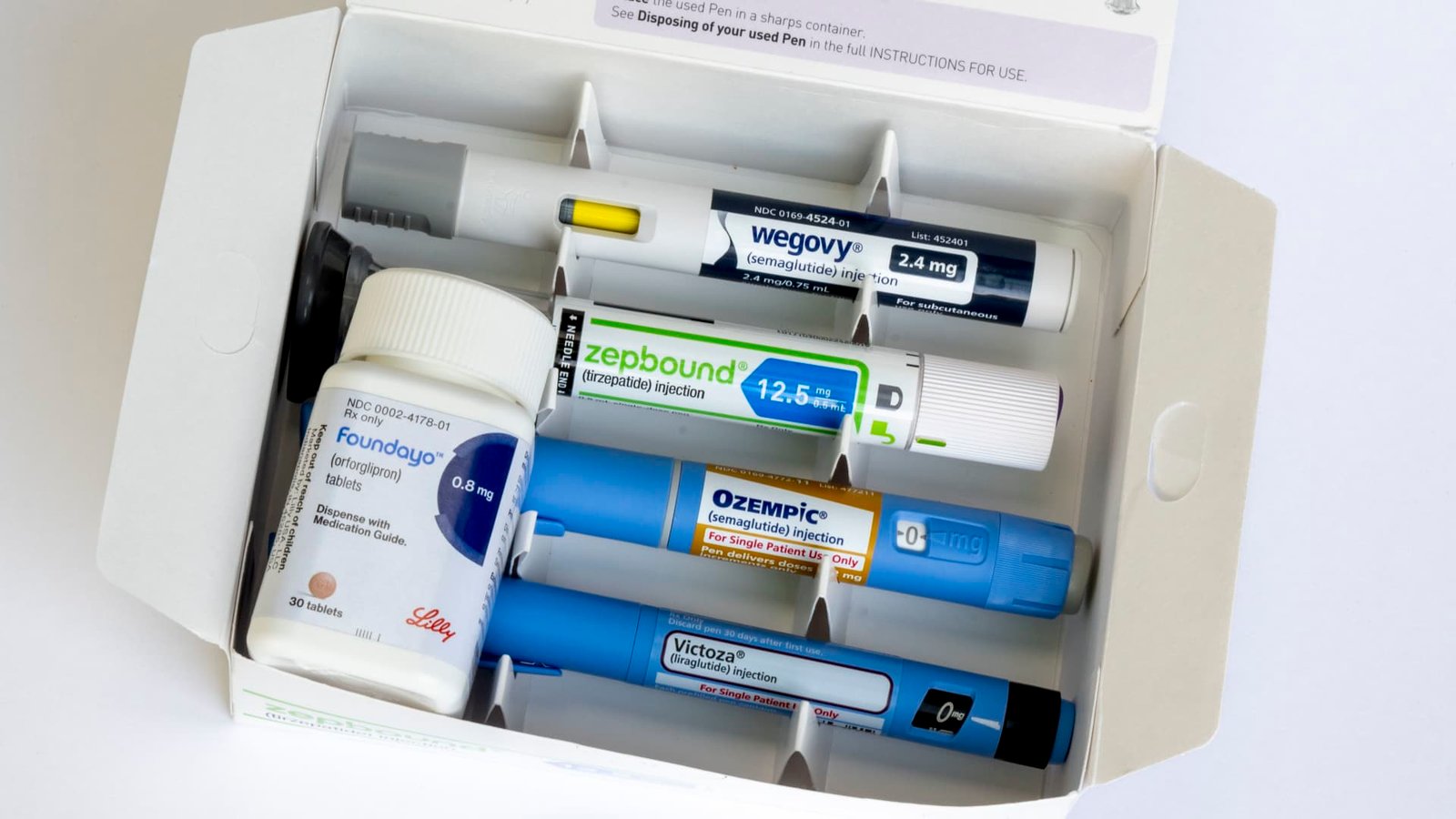
Instead of betting on which single pharmaceutical company wins a drug race, West Pharmaceutical Services benefits as the industry grows by supplying the proprietary packaging that almost every injectable drug needs. West’s high-margin products are essential for GLP-1 weight loss drugs like Ozempic and Zepbound as well as complex biologics, at a time when sales in both categories are booming. West is a proven compounding machine with fresh catalysts for growth. Following a temporary inventory slowdown in 2024, the business has rebounded strongly. With a pristine balance sheet and an experienced new CEO taking over in August, West is primed for continued double-digit earnings growth. As investors scramble to benefit from the multiyear supercycle in GLP-1 drugs, West Pharmaceutical Services is a name many have discovered. After all, West sits at the center of this ecosystem, supplying high-value components that enable these therapies to reach patients. The best part is that it doesn’t matter whether patients turn to Novo Nordisk’s Wegovy, Eli Lilly’s Zepbound or even a generic to treat their obesity, West’s products make all these injectable drugs possible. As GLP-1 use expands from diabetes and obesity into cardiovascular, kidney, liver and other indications, West’s sales will flourish. But there’s more to the story. Biologics market expansion and European Union regulatory upgrades are supporting recurring revenue and margin strength. The company is also reshaping its portfolio for scale, having deepened its partnership with Daikyo Seiko and refocused its SmartDose platform on larger-volume systems — moves that should support it as GLP-1 and biologics volumes ramp. Leadership continuity into this next phase is assured. Former Thermo Fisher Scientific executive Michel Lagarde will become CEO at the end of August, succeeding Eric Green and giving the company a fresh, experienced hand just as these growth drivers hit their stride. Sales have already reaccelerated sharply since the 2024 inventory-led slowdown. West’s second-quarter adjusted earnings per share jumped 29% from the prior year and guidance was raised for the second time in 2026. Investors have already priced in some of this momentum. West shares have outperformed the market over the past year and currently trade at roughly 44x earnings. That’s basically in line with its life sciences peers. With a 46% one-year return, the stock might look rich on most market-multiple checks. However, the average analyst price target has risen along with its increased earnings estimates to sit at $397, implying 14% upside from here, according to LSEG. The setup is less “undiscovered bargain” and more “quality compounder priced for continued execution.” The catalysts — GLP-1 volume growth, biologics expansion, new CEO, portfolio reshaping, are real and identifiable — and the stock is well positioned to keep delivering. A competitive moat West functions as a critical backbone of modern medicine. When pharmaceutical giants develop a breakthrough drug, it requires highly precise, medical-grade containers to maintain sterility and efficacy. West designs and manufactures elastomer stoppers and seals that keep vials sterile, prefillable syringe systems and self-injection cartridges, and wearable patch injectors for continuous drug delivery. Because these products are consumable, every administered dose creates recurring revenue. West has two main segments: proprietary products and contract manufactured products. The proprietary products division enjoys high margin growth, offering specialized proprietary packaging components, design services and advanced administration systems. Contract manufacturing operates as a strategic partner to medical device and pharmaceutical companies, managing the high-precision assembly of drug delivery systems. West’s operations are truly global and often adjacent to key pharmaceutical hubs. This helps protect it from localized supply disruptions. Understanding West requires an appreciation of the regulatory moats protecting the injectable packaging industry. Unlike standard consumer goods packaging, a pharmaceutical container is considered part of the drug system itself by global regulators such as the Food and Drug Administration and the European Medicines Agency, resulting in powerful competitive advantage. Once a pharmaceutical developer chooses a West packaging system and completes its clinical trials, the drug and its container are bound together in the regulatory filing. Changing the supplier of a tiny rubber stopper after a drug is approved requires the developer to run extensive validation testing that can take two to three years and cost millions of dollars, introducing regulatory risk for no functional gain. Consequently, once West is designed into a drug program, it typically remains the sole supplier for the commercial life of that therapy. Injectable biological drugs are incredibly fragile and can be ruined if they touch standard rubber or glass packaging. West’s proprietary coatings, like FluroTec, form a protective barrier between the drug and its container. Replicating these specialized coatings and building the sterile factories to make them require billions of dollars, a barrier to entry. While players like Gerresheimer , Schott Pharma and Aptar have strong niche positions, such as glass vials or nasal spray systems, West holds the leadership position in high-value premium elastomer closures and sophisticated containment systems for injectables. West competes with reliability, not price. In clinical drug delivery, product failure is a multimillion-dollar disaster. Major drug developers exhibit extreme price inelasticity when choosing West’s premium products. Injectables and biologics are driving growth The golden age of oral blockbuster pills like Lipitor or aspirin is giving way to complex biologics, monoclonal antibodies and genetic therapies like Keytruda and Dupixent. In 2025, a quarter of all U.S. drug approvals was a biologic, and West said it participates in supplying more than 90% of all new molecules. These advanced therapeutics are chemically delicate and easily destroyed by the digestive tract. They typically require administration via injection or infusion. As biological drug candidates advance, demand grows, allowing West to capture revenue on every approved dose without taking on clinical development risk. In the second quarter, 43% of West’s revenue came from biologics. Market researcher IQVIA predicts the injectables market will grow from about $700 billion in 2024 to $1.2 trillion by 2030. A multiyear supercycle The rapid adoption of GLP-1 therapies such as Ozempic and Mounjaro has triggered one of the largest capacity expansions in pharmaceutical history. The category accounted for 18% of West’s net sales in the second quarter. “We believe that the global adoption of GLP-1 therapies is still in its early stages,” CEO Eric Green said on West’s second-quarter earnings call in July. “Market access continues to expand with enablers such as Medicare expansion in the United States.” The most common bear case for West is that pharmaceutical giants are developing oral versions of weight loss and diabetes treatments, which could cannibalize the injectable market and reduce demand for syringes and cartridges. Peptides like GLP-1 are highly sensitive to stomach acid and digestive enzymes. Administering it via a pill requires an enormous amount of the active pharmaceutical ingredient paired with a chemical absorption enhancer just to allow a tiny fraction of the drug to survive and enter the bloodstream. This makes oral versions incredibly expensive to manufacture at scale. Producing sufficient active ingredients for millions of patients to take oral weight loss pills daily is a major manufacturing bottleneck. Management teams at major drug companies view oral weight loss pills as a way to expand the market by reaching needle-phobic patients, while injectables will remain the standard for high-dose, long-term weight management. “When looking at clinical data, injectables continue to show meaningful efficacy advantages and a substantial reduction in adverse events when compared to oral alternatives,” Green said. “As a result, we anticipate continued growth in both oral and injectable GLP-1 formats as we move forward.” Shifting to high-margin products Another key part of the story is the systematic shift toward higher-margin components and delivery devices. Standard rubber stoppers represent steady but low margin business. In contrast, West’s high value products, which include NovaPure closures, FluroTec barrier coatings and advanced self-injection systems, command premium prices and margins. HVP’s share of the proprietary products segment net sales has climbed from about 60% in 2019 to roughly 75% in 2025. Europe’s Annex 1 sterile manufacturing standards, which took effect in 2023, are accelerating this trend. The regulation requires drug manufacturers to strengthen contamination controls, driving adoption of NovaPure, FluroTec and other high-value products. “Annex 1 is still in the early stages,” Green said in July. “We now have close to 800 projects in hand, up roughly 50% versus a year ago. … This is a multiyear opportunity, and we’re beginning to see spillover beyond Europe, including the U.S.” At a conference in June, West said only about 15% of the estimated 6 billion-component addressable market has converted to the new standard, providing a multiyear runway for above-market growth and margin expansion as customers upgrade. Management expects this to deliver more than 200 basis points of incremental revenue growth over the next few years. Lagarde takes the helm Lagarde, the former the executive vice president and chief operating officer at Thermo Fisher, takes over for Green on Aug. 31. He arrives with impressive credentials, having managed a majority of the life science giant’s global business segments. Lagarde inherits a company known for stable cash generation, high returns on capital and a rock-solid balance sheet. Traditionally, West has funded its capacity expansion, including a major facility in Dublin, without taking on high-interest debt. It’s also consistently returned capital to shareholders through dividends and share repurchases. Relationships will be key. Because a small group of large pharmaceutical companies control the commercial biologics and GLP-1 landscapes, West’s revenue is concentrated among its top 10 customers. A manufacturing delay, safety recall, or supply chain disruption at any of these core accounts could temporarily impact West’s quarterly order volume. This risk is mitigated by the long-term, multidecade nature of these supply agreements and the high switching costs that make it extremely difficult for a customer to dual-source or replace West’s components. The bottom line The underlying compounding power of West’s business supports long-term investors, but they should be aware it trades at a premium multiple. Given its high-single-digit long-term revenue growth and margin expansion via its mix shift, adjusted earnings per share are expected to grow at a double-digit compound annual rate. A reasonable 12-month price target is $414, or 18% upside from the stock’s Tuesday closing price of $348.76. That said, any short-term earnings miss, temporary inventory imbalance, or rotation away from growth stocks could lead to pullbacks. Investors should anticipate near-term volatility and focus on the company’s long-term earnings power. West represents a premium, infrastructure-style investment within the biotechnology sector. Supported by massive regulatory moats, long-term secular demand from GLP-1s and biologics and a clean balance sheet, West is exceptionally well-positioned to compound earnings and deliver strong returns over the long term. THIS CONTENT IS PROVIDED FOR INFORMATIONAL PURPOSES ONLY AND DOES NOT CONSTITUTE FINANCIAL, INVESTMENT, TAX OR LEGAL ADVICE OR A RECOMMENDATION TO BUY ANY SECURITY OR OTHER FINANCIAL ASSET. THE CONTENT IS GENERAL IN NATURE AND DOES NOT REFLECT ANY INDIVIDUAL’S UNIQUE PERSONAL CIRCUMSTANCES. THE ABOVE CONTENT MIGHT NOT BE SUITABLE FOR YOUR PARTICULAR CIRCUMSTANCES. BEFORE MAKING ANY FINANCIAL DECISIONS, YOU SHOULD STRONGLY CONSIDER SEEKING ADVICE FROM YOUR OWN FINANCIAL OR INVESTMENT ADVISOR. Click here for the full disclaimer.

