
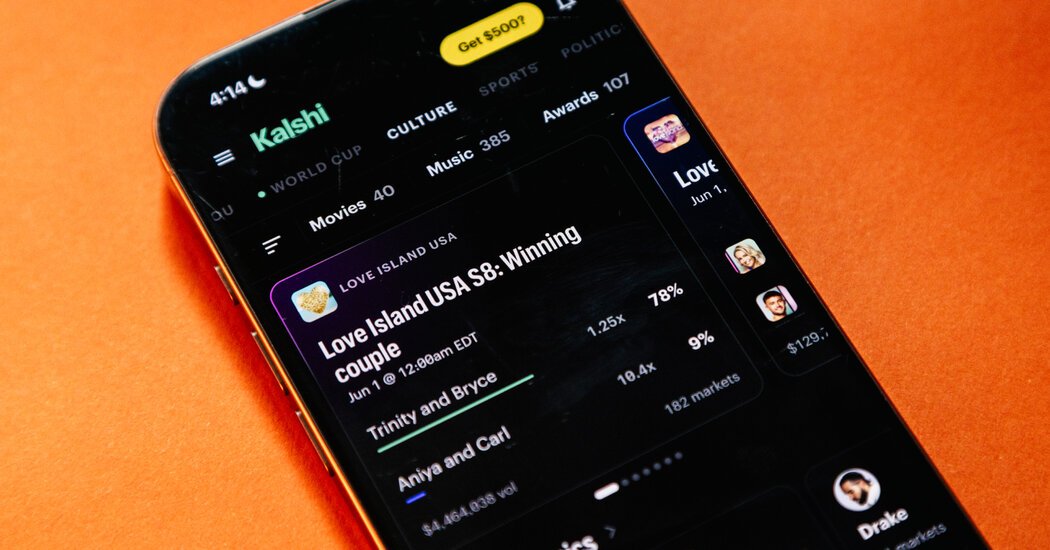
A judge in Seattle has barred Kalshi from most operations in Washington State, the latest legal blow to prediction markets as states enforce existing gambling laws.
The state’s attorney general sued Kalshi in King County Superior Court in March, arguing that the platform was operating illegally in Washington, which prohibits online sports betting.
Judge John McHale ruled in a preliminary injunction on Wednesday that the company was breaking state laws that have tightly regulated gambling since 1889. He ordered Kalshi to stop allowing Washington residents to place bets on sports, elections, politics, entertainment, culture, tech and science — the bulk of the platform’s offerings.
The state’s attorney general, Nick Brown, said in a statement on Thursday, “As this case moves forward, we will continue to enforce Washington law and hold Kalshi accountable for misleading consumers.”
A Kalshi spokesperson said in a statement that the platform disagreed with the decision and was considering its legal options. The Commodity Futures Trading Commission, the federal regulator of prediction markets, has “exclusive jurisdiction over our exchange,” the spokesperson added.
Washington is the latest state to challenge the operation of prediction markets like Kalshi and Polymarket, which have grown rapidly and transformed into cultural phenomena. Prediction markets allow people to wager on everything from college football games to who will win on “The Traitors.”
The companies have attracted billions of dollars in trades, but their popularity has prompted more than a dozen states that restrict gambling to pursue legal action.
New York’s attorney general sued Kalshi late last month, accusing the company of operating illegally. Minnesota lawmakers passed a law banning the apps outright this year, although a judge has put that ban on pause.
In July, Nevada became the first state to force Kalshi to restrict users from wagering on sports, elections and entertainment.
Prediction markets and the Commodity Futures Trading Commission have fought back hard in court, arguing that prediction markets are regulated at the federal level and that states have no legal authority over them.
When Washington sued Kalshi, the state pointed out that the company’s advertisements appeared to acknowledge the illicit nature of the app. One Kalshi ad showed someone texting, “I found a way to bet on the NFL even though we live in Washington.”
In July, Judge McHale found that Kalshi’s advertising was deceptive and that the company most likely violated the state’s gambling laws and consumer protections.
As part of the court order on Wednesday, Kalshi is barred from advertising to Washington consumers. The order also requires the company to impose a preliminary form of geofencing, a technology that creates a virtual boundary on the app, by next Wednesday and a more effective version by Sept. 2.

