

Want to bookmark your favourite articles and stories to read or reference later? Start your Independent Membership today.
Already a member?
Log in
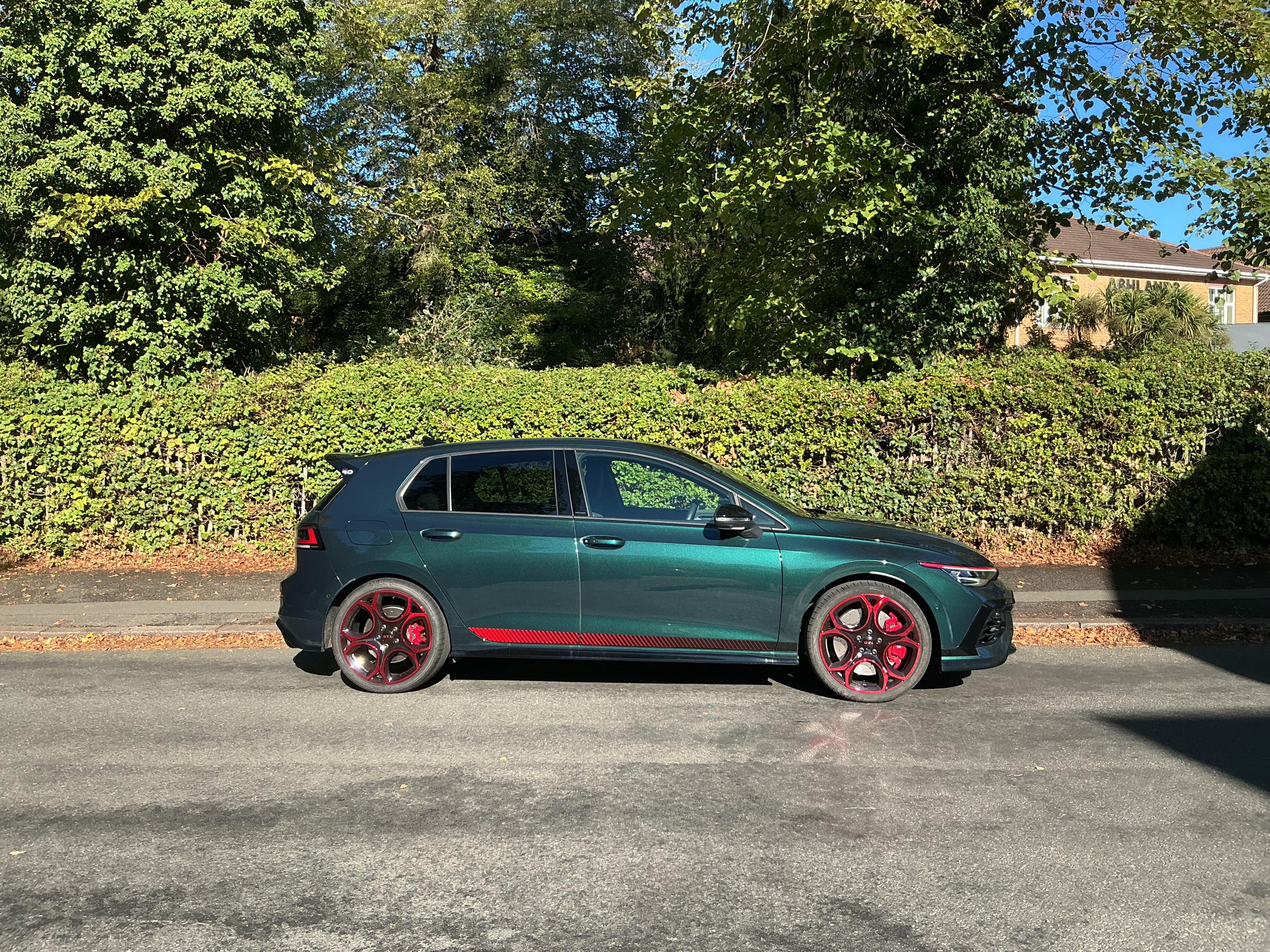
Seeing as we’re almost at the end of 2026, I thought I’d best get a few words in before it’s too late about the Volkswagen Golf GTI, deservedly celebrating its half-century with a special 50th anniversary edition.
The famous GTI has been around for so long that I confess I had taken it for granted rather too easily, forgetting both the remarkable story of its origins and the sad fact that I don’t think this pure-petrol-not-even-a-mild-hybrid car will be around to celebrate its 100th birthday. Then again, neither will I.
In due course, depending on politics and the periodic revisions to the zero emissions vehicle mandate, passenger vehicles such as this propelled solely by fossil fuels will pass into history, and finding a petrol station in which to fill up will become as frustrating as locating an NHS dentist. So there’s a slight tinge of sadness as well as nostalgia that comes as standard on what must be the last generation of the conventional Golf GTIs.
Certainly I cannot see how anything quite like the original, 1976 Golf could be invented again in today’s world. It was the product of a samizdat project involving a cell of six highly motivated petrolheads at VW HQ, who took it upon themselves to take a standard three-door front-wheel-drive basic Golf and transform it into a practical sports car, at a time when safety and emissions regulations were threatening to take the fun out of driving (plus ça change). They extracted 100 brake horsepower out of the old 1.6-litre engine using fuel injection, uprated brakes and other bits, and, with their German sense of humour, replaced the old gear knob with an actual golf ball.
With some cosmetic touches such as red highlights and tartan seats apparently inspired by contemporary London punk fashion, a star was born and by the 1990s every manufacturer from Peugeot to Proton was paying tribute. Today, only a few rivals persist, the mechanically similar cousins from Audi, Skoda and Cupra (the latter also offering useful estate variants), plus the premium offerings from Mercedes-Benz and BMW, the Honda Civic Type R having come off sale last year.
THE SPEC
Volkswagen Golf GTI Edition 50
Price: £52,113 (starts at £48,075)
Engine capacity: 2.0l petrol, 4-cyl, 7sp auto
Power output (hp): 325
Top speed (mph): 168
0 to 60 (seconds): 5.3
Fuel economy (mpg): 37.1
CO2 emissions (WLTP, g/km): 173
The good news is that the current range of GTIs is the best yet. In the spirit of the original, the Edition 50 pushes things a little further, with power outputs of 265 horsepower for the standard GTI, 300 for the GTI Clubsport and 325 for the Edition 50. They’re all only five door jobs now, with no manual gearshifts, and the engine is turbocharged, but the power still goes through the front wheels, and with more grip control than you’d have any right to expect.
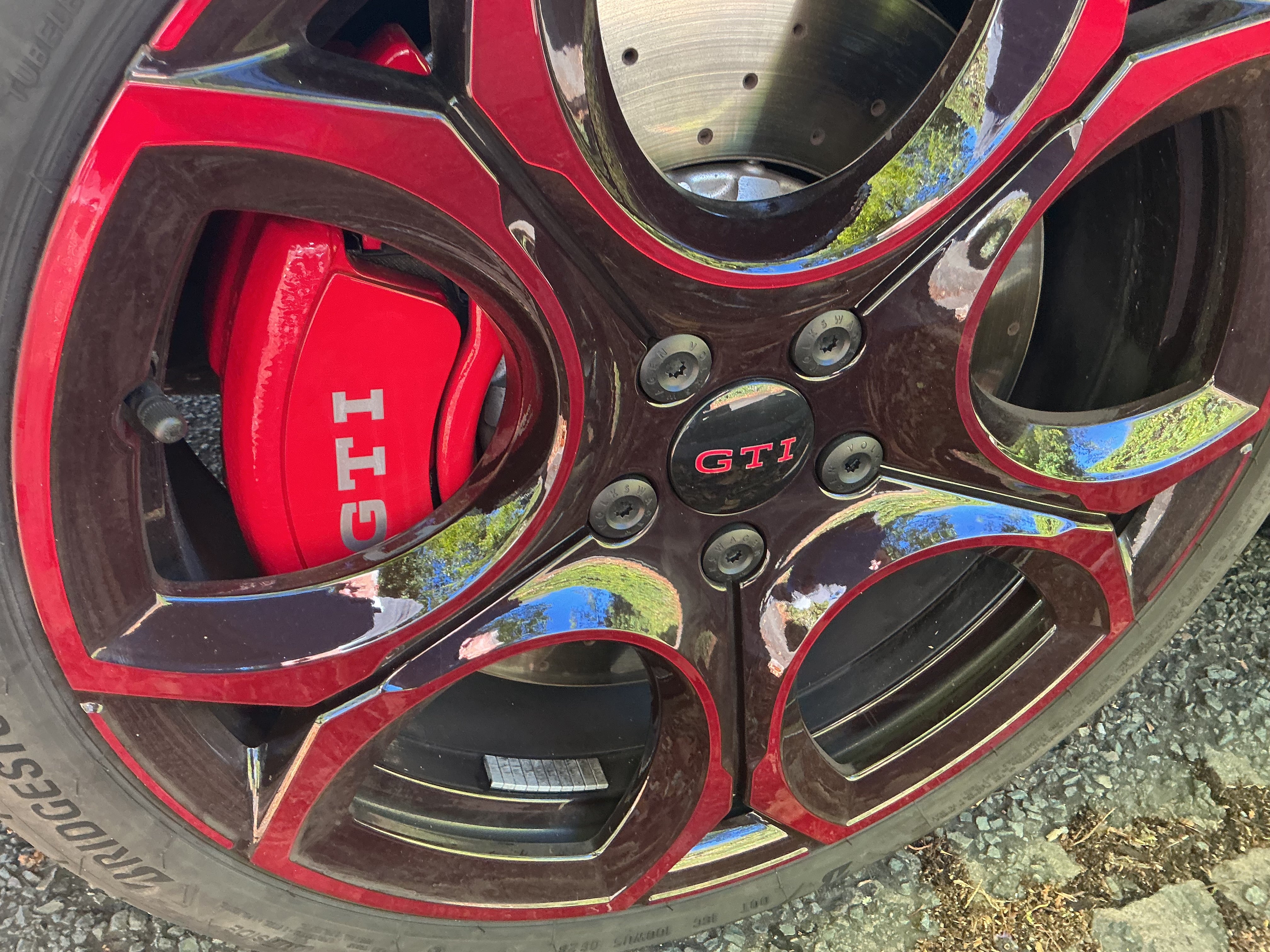
The Edition 50 comes with a lightweight performance pack including slightly lowered suspension, stiffer springs, an Akrapovič titanium exhaust and striking 19-inch forged alloy wheels with pleasingly razor-like edges to the spokes. Pub bores, which of course I’m not, will be attracted to the prospect of discussing the many special drive modes and settings are also on offer, including a bespoke one for the Nürburgring.
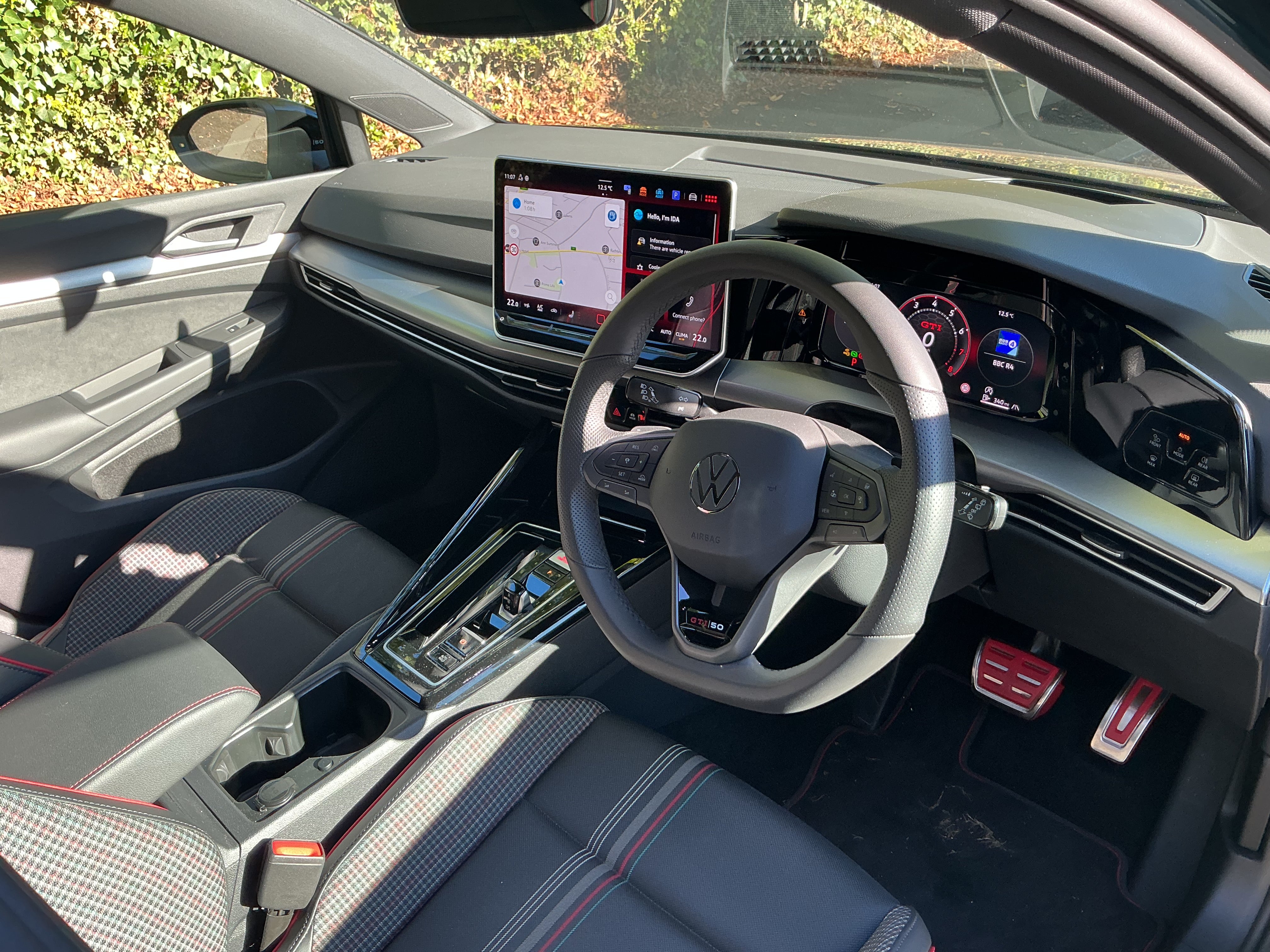
Despite its sporting credentials, the Golf is a smooth and calm machine in everyday use. Following revisions a couple of years ago, the touchscreen and haptic heating controls work much better, as does the dual-clutch seven-speed automatic gearbox that was once (a few generations back) the car’s most irritating flaw. As with every Golf GTI the Edition 50 badging is tastefully applied, and the lovely moss-green pain of my example perfectly finished.
So 2.5 million GTIs on from the original this is in almost all respects the best GTI ever, and as a default choice for people who can’t waste time on this sort of thing, an excellent option. (No one can really make full use of the GTI’s faster four-wheel drive sibling, the Golf R).
My real quibble, or, more accurately, shock was the price – some £52,113 for my fully-specced example. In 1976 you could personally import an early left-hand drive GTI for about £4,000, and not much more when the official imports arrived three years later. That’s only £28,126 in today’s money. I know the modern car costs billions to develop, is vastly safer and more luxurious, not to mention bigger and faster, but maybe we’ve lost something on the road from 1976.


