
Want to bookmark your favourite articles and stories to read or reference later? Start your Independent Membership today.
Already a member?
Log in
If you’re looking for botanical inspiration to decorate your Christmas table, plantswoman and author Sarah Raven has plenty of ideas.
During the festive season at her home, Perch Hill, a 16th-century Elizabethan farmhouse in East Sussex where she holds courses and events, and trials plants and bulbs, Christmas flora and fauna is in abundance inside and out.
“I do go quite over the top at Christmas, but it’s all very natural; so no glitter, no tinsel, just things from the garden, lots of fairy lights, candles and forced bulbs,” she says.
“I pick branches of silver birch and Chinese lanterns a little bit before, and allium seedheads, agapanthus seedheads and lots of willow branches. There’s one called Salix ‘Nancy Saunders’ which has lovely red stems.
“I very much use the garden as the inspiration. I really don’t buy much, apart from the odd new bauble.”
She says you can make use of vegetables, berries and foliage to add a festive feel to your home, even if you don’t have the rich bounty that she does.
Many of her ideas are featured in her new book, Sarah Raven’s Pocket Christmas, which offers a guide to Christmas decorations, food and flowers, bringing the outside in for the festive season.
It could be anything as simple as covering a jam jar with sprigs of fragrant shrubs such as rosemary or lavender secured with festive ribbon, and filling the jar with paperwhite daffodils, hellebores and silver birch twigs, or making garlands of home-grown evergreens such as camellias or branches of elaeagnus and mixing them with eucalyptus and rosemary and adding colour with chillies.
Here, she offers three ideas on easy natural decorations to enhance the festive table.
1. Winter scented blossom
“There’s a quite prominent plant called Viburnum tinus, which is incredibly widely available and very good value from florists because it’s used as a filler,” she recommends.
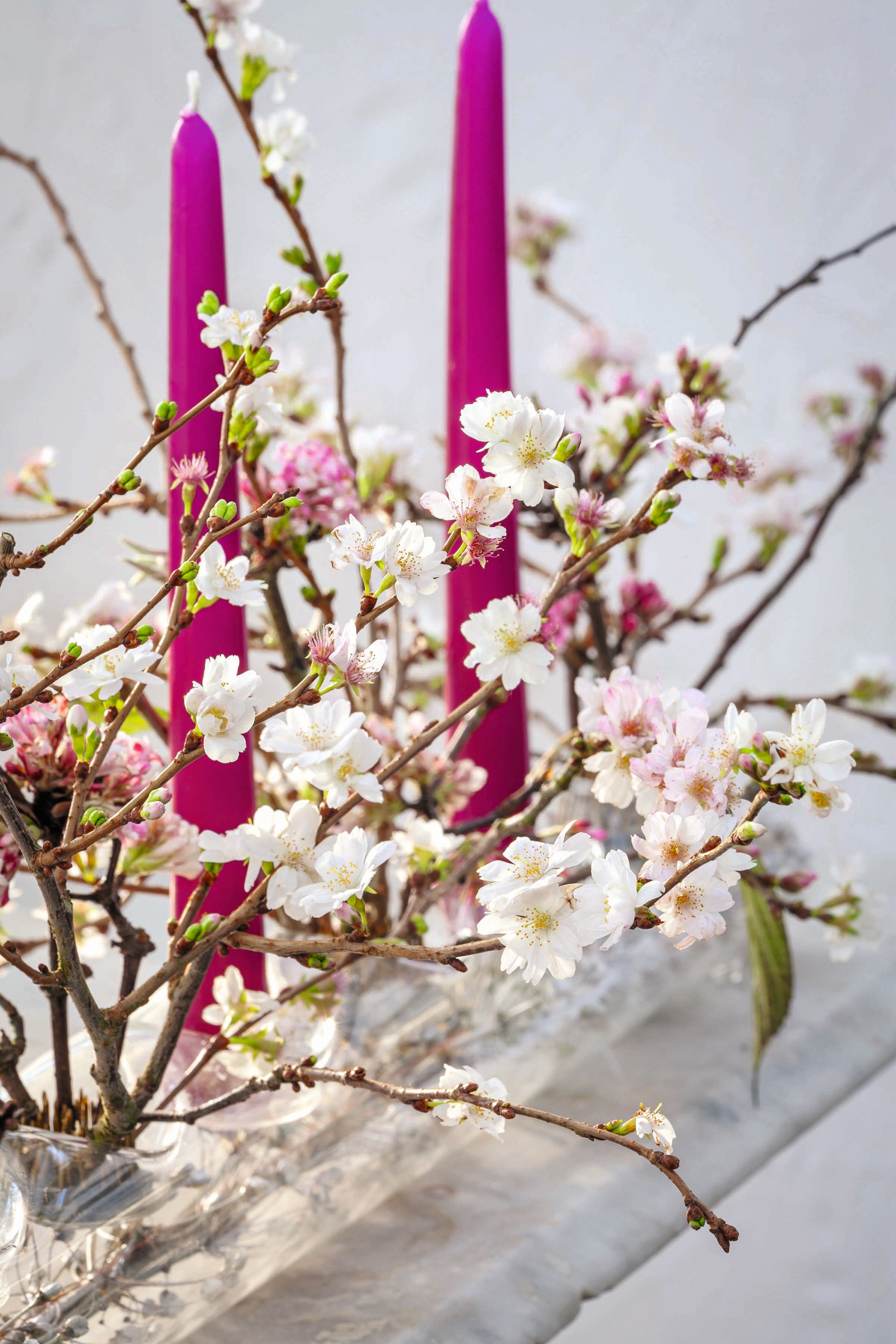
“It has gently scented flowers and heavy evergreen leaves, so I would get sharp scissors and remove those leaves, just leaving one or two. Then I like to use a test tube vase, narrow necked, and I might put some hellebores with that, their stem ends seared in boiling water to make them last.
“I also use paperwhite narcissi, widely available at Christmas, which don’t have a very long life so you have to be careful not to leave them near a radiator, but I use them a lot.”
What you’ll need:
Sprigs of winter-scented blossom such as Viburnum bodnantense and Prunus autumnalis; waterproof glue tack; candles; glass log nightlight holder with seven dimples; four small pin holders.
Method
With a small lump of waterproof glue tack, secure the candles firmly into every other shallow dimple in the glass log. Attach a small pin holder in the dimples in between. Fill these dimples with water and stick a few blossom branches into each pin holder. Add coordinated coloured candles between.
2. Silvered artichokes and runner beans
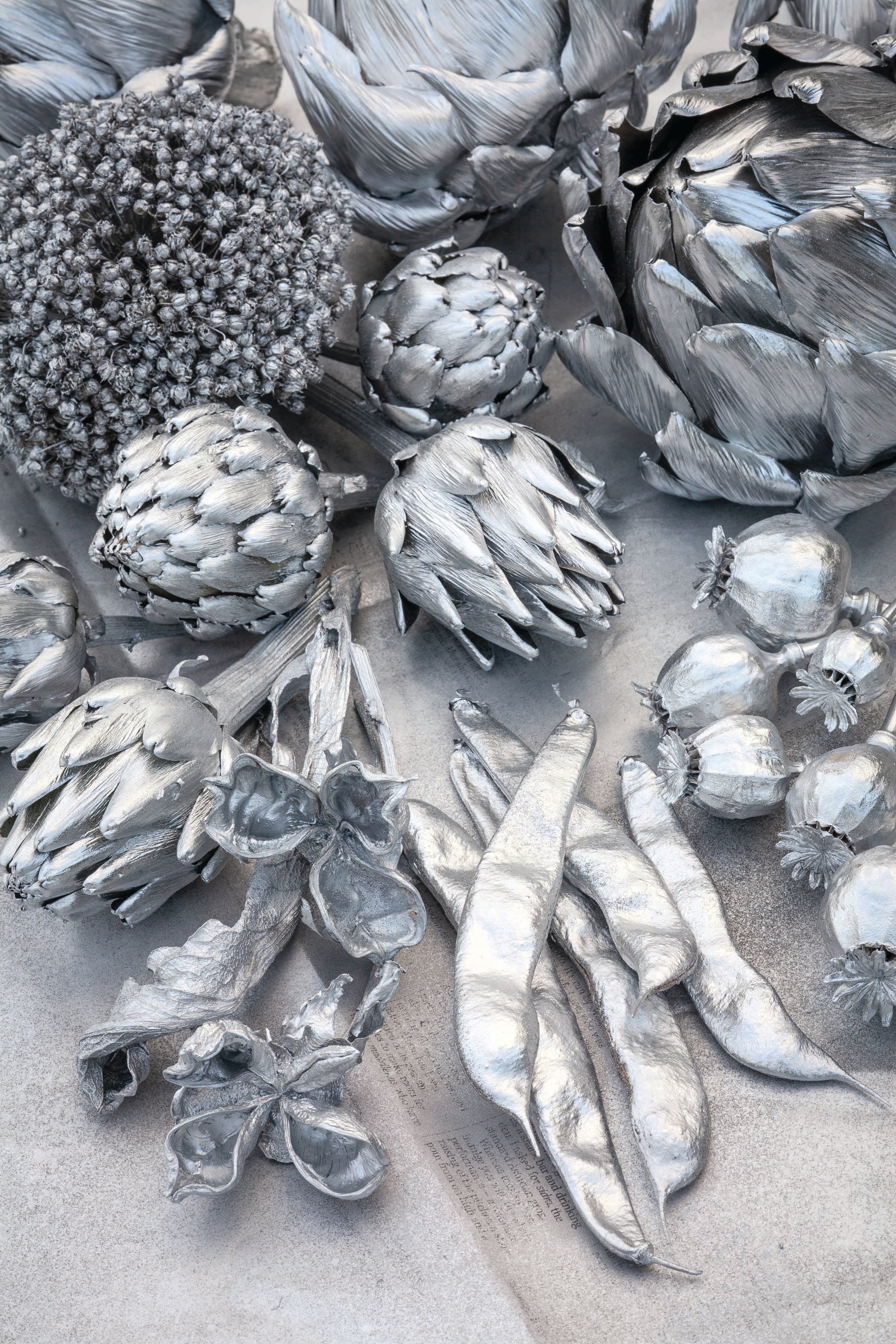
“I love artichokes and I grow quite a lot, but they’re also widely available to buy at Christmas from good greengrocers and quite a few supermarkets,” Raven explains.
“They have such a bold architectural shape and look like Christmas baubles but are natural.”
What you need
Globe artichoke buds; borlotti or runner (try ‘Rob Roy’ or ‘Rob Splash’) beans; silver spray or dipping paint; florists’ wire or ribbon.
Method
Pick the artichokes before they are damaged too much by the rain. It doesn’t matter if they are turning brown because you’ll be covering them with spray anyway.
Cut them with a length of stem and a leaf or two and leave them somewhere airy and cool (not in a damp garden shed), so that they dry.
After a few days, spray them and leave to dry. The artichokes may open up as they become more dry so you may need to spray the inner leaf scales again.
Use plenty of newspaper and gloves, and make sure the area where you are spraying is well ventilated.
Scatter the artichokes and beans over your Christmas table or along the length of a mantelpiece or window ledge.
“I quite often just collect five in a bowl and put some Christmas baubles between them so you have more colour contrast.”
3. Chinese lantern and spindle table runners
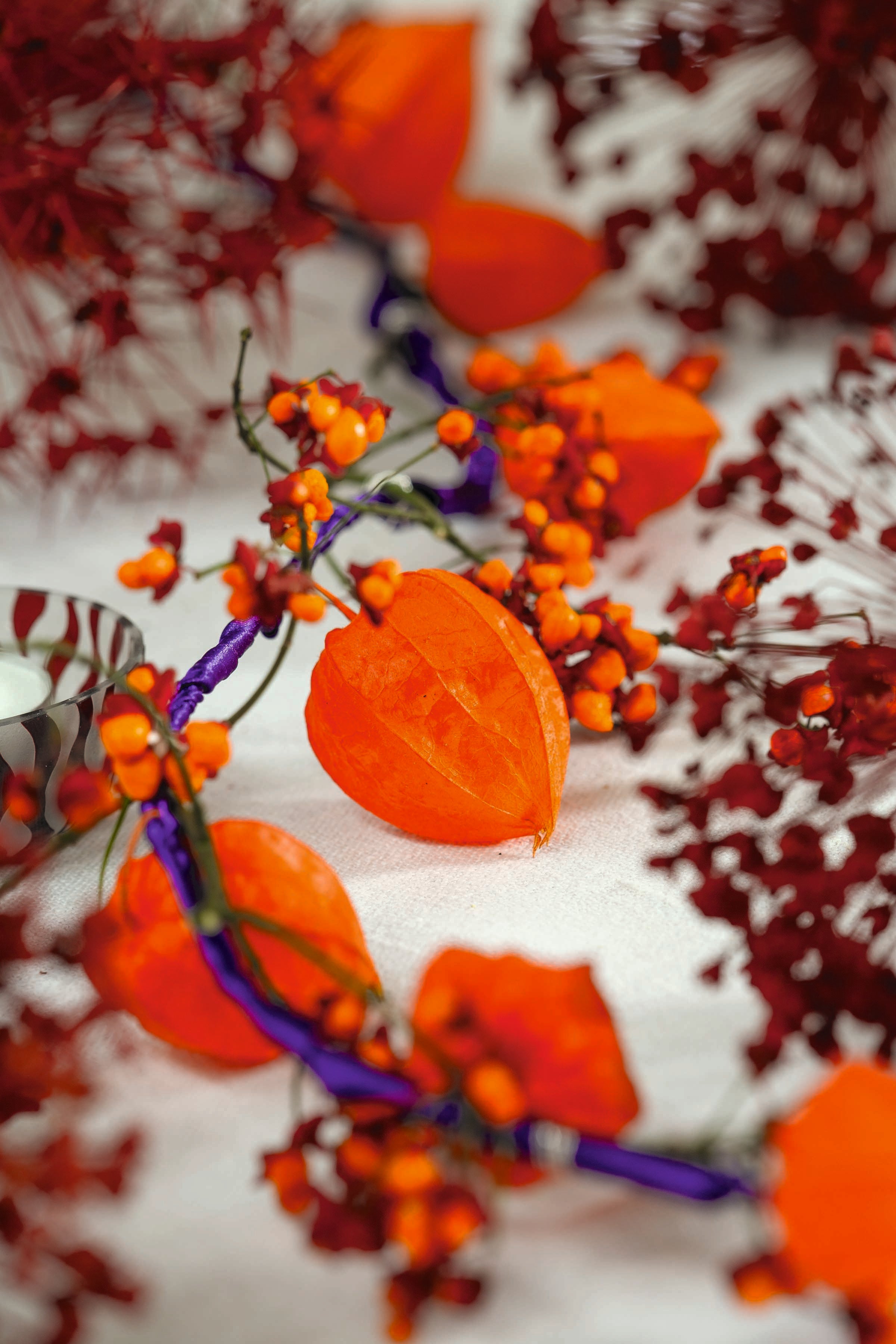
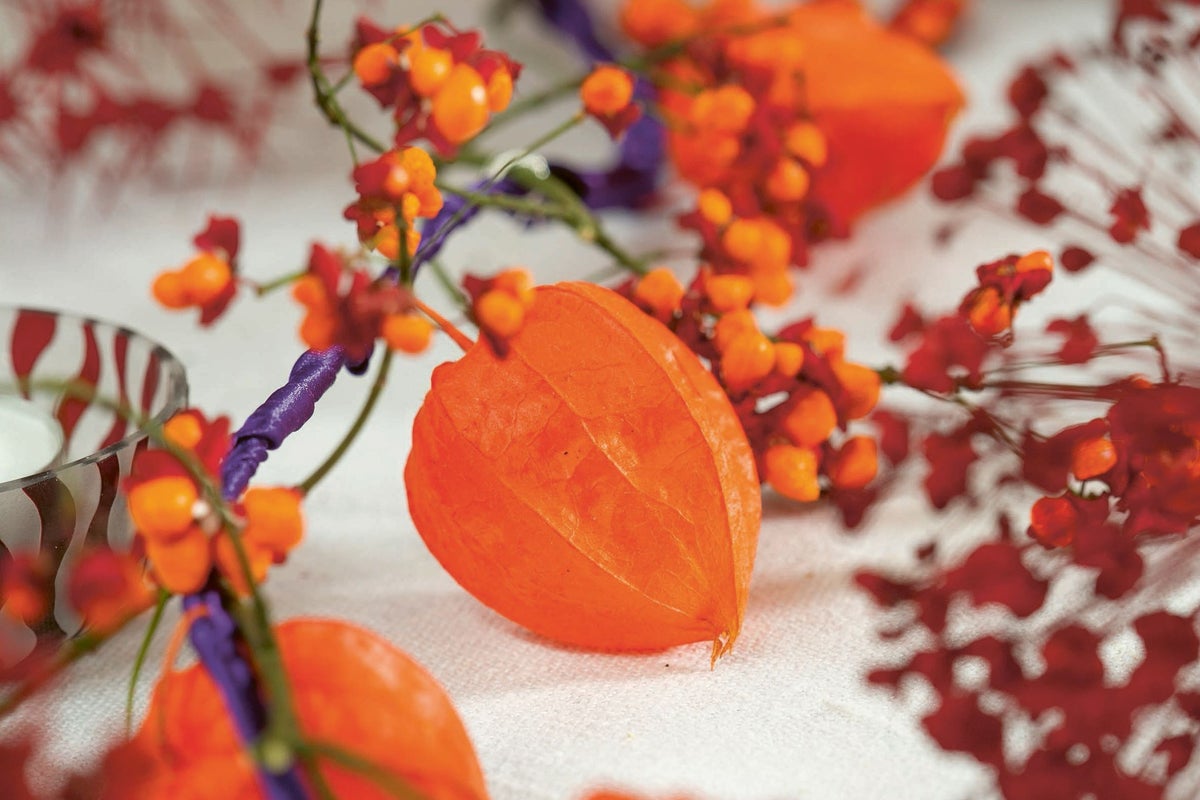
“You can buy Chinese lanterns (Physalis alkekengi) any time between now and Christmas. They are very popular at Halloween and you just want to hang them upside down and they’ll dry and keep their colour,” she says.
“Alternatively you can put them in a jam jar with a bit of water and let the water evaporate, or you can dilute, putting a little bit of glycerin into the water which allows them to keep their texture so they don’t become brittle.
“When they’ve dried on the stem, just get a slightly thicker than normal sewing needle, like a darning needle, and some velvet ribbon or wool and thread them into a chain. You could run them along the table or mantelpiece or they look lovely as napkin rings.”
What you need
Chinese lanterns (Physalis alkekengi); florists’ wire; spindle berries; ribbon; Allium schubertii seedheads, sprayed crimson.
Method
To make the chain, segment the Chinese lantern stems to give you a lantern and a bit of stem on each, then thread these sections on to a length of florists’ wire – the stems are virtually hollow, so it’s not difficult – leaving a gap between each lantern. Fill the gaps by threading the spindle berries into them.
Wind ribbon along the length of your chain before laying it across the table, scattering Allium schubertii heads sprayed crimson.
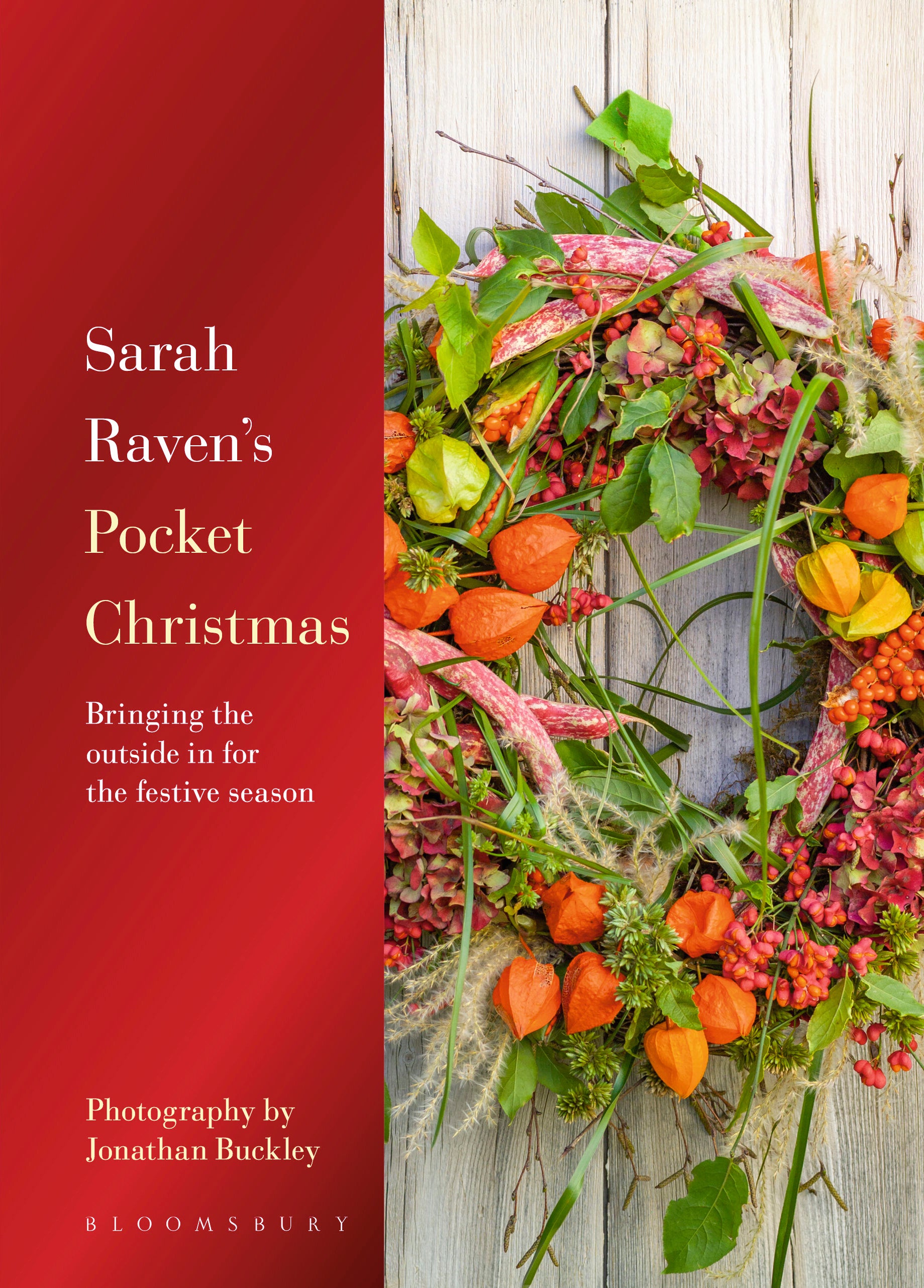
Sarah Raven’s Pocket Christmas by Sarah Raven is published by Bloomsbury, priced £16.99. Photography by Jonathan Buckley. Available now


