
Ghulam Sakina lives in a small straw-and-bamboo cottage on the coast of Sindh. There is no road traffic here, no nearby factory fumes, no crowds.
However, she is among the people hit hardest by climate change. There is no clean drinking water, so she walks miles to get it. Her husband is a fisherman, but some days the nets come back empty. Hunger is visible on their tired faces.
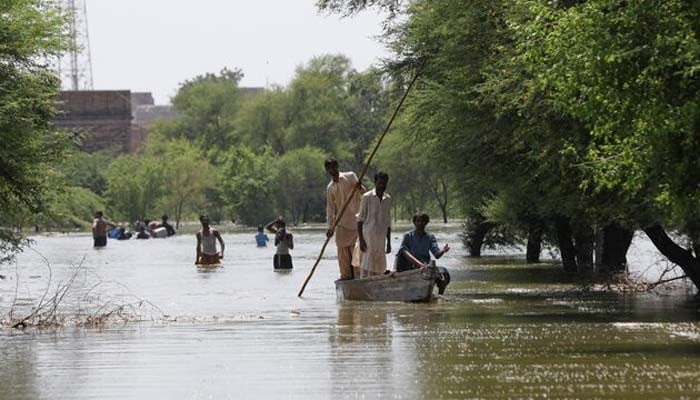
Far away, in a village in Gilgit-Baltistan, another woman lives beneath tall mountains. A flash flood washes away her home and nearly everything she owns.
Most historical greenhouse gas emissions have come from industrialised countries, while China is now the world’s largest annual emitter. Yet the damage crosses borders and falls heavily on people like these two women.
Pakistan produces less than 1% of global emissions, yet it pays a heavy price. The 2022 floods killed more than 1,700 people and affected 33 million. By early August 2026, at least 136 people had died in the monsoon-related incidents, according to the National Disaster Management Authority.
So, the real test of climate diplomacy is simple: what changes in the lives of people like Sakina? From November 9 to 20, world leaders will meet for COP31 in Antalya, Turkiye. The COP process has delivered important agreements, most notably the Paris Agreement. But after more than three decades of climate negotiations, the gap between promises and implementation remains difficult to defend.
Take the Loss and Damage Fund. At COP27 in 2022, countries agreed to it as a historic win for vulnerable nations. Four years later, pledges stand at about $822 million, and campaign groups say only about $449 million has been paid in as of April 2026. Experts say developing countries may need $200 to $400 billion every year to deal with climate losses. The pledges are a tiny fraction of that, and campaigners warn the fund could run dry by 2027.
The story is similar elsewhere. At COP29, countries agreed to a new climate-finance goal of $300 billion a year for developing countries by 2035, while calling for efforts to scale total climate finance towards $1.3 trillion annually. At COP30 in Belem, countries agreed to push for a major increase in adaptation finance, but failed to agree on a clear roadmap for moving away from fossil fuels. Each year brings new commitments, while accountability for previous ones remains weak.
Meanwhile, military budgets continue to expand. The Stockholm International Peace Research Institute (SIPRI) says the world spent a record $2.89 trillion on militaries in 2025, the eleventh increase in a row. That is nearly $8 billion every day. At that rate, the entire $822 million pledged to the Loss and Damage Fund represents less than three hours of global military spending.
Now look at this year. The US-Israel war on Iran began on February 28, 2026. The US Congressional Budget Office says it cost the Pentagon more than $38 billion by August 1, and it still adds about $3 billion a month. That is roughly forty-six times everything pledged to the Loss and Damage Fund, and it counts only one side’s costs.
War also hurts the climate directly. Bombs, burning oil facilities and fighter jets release huge amounts of carbon. One research group estimated that the first two weeks of the Iran war alone produced more than five million tonnes of carbon dioxide, more than Iceland emits in a year. Military emissions are also largely missing from the reports that countries send to the UN. Rebuilding demolished cities adds still more pollution later.
Then there is the cost to ordinary people. Wars push up fuel and food prices, and energy-importing countries like Pakistan feel it quickly. When budgets are stretched, climate promises are usually the first to be cut.
Military spending and climate finance are not interchangeable budget lines, and governments have legitimate security responsibilities. The comparison is nevertheless revealing. It shows what the international system can mobilise when leaders perceive a threat as an immediate security priority. Climate vulnerability deserves similar urgency, particularly in countries where floods, droughts, heatwaves and water insecurity already threaten lives and livelihoods.
War and climate change, then, are not separate problems. War drains the money that could protect people and adds to the pollution that endangers them.
That is why I suggest that COP31 should put the climate-security nexus higher on the agenda as a major theme. This does not need to be only a slogan. The first step is honest counting: countries should report military emissions openly, like any other source of pollution. The second is moving a small share of money. If just 1% of global military spending went to climate-affected communities, it would come to about $29 billion a year, which is thirty-five times what the Loss and Damage Fund has been promised up to now.
The talks also need honest tracking. A public yearly report should show what each country promised, what it paid, and what actually reached communities. Finally, money must reach the people who need it. It should flow directly to local, community-led solutions such as clean water and flood-resistant homes, climate-smart agriculture, instead of getting stuck in reports and consultants’ fees.
Climate diplomacy matters, and the people working through these negotiations deserve credit for the agreements already achieved. But the climate crisis is moving faster than the pace of implementation. COP must now match the scale and urgency of the emergency it was created to address.
Ghulam Sakina will not follow the negotiations in Antalya. She will wake up tomorrow, walk miles for water and hope the fish come back. If COP31 cannot reach people like her, then climate diplomacy has not yet reached its purpose. It is time to recognise that the security of people like Sakina is also security, and that climate resilience deserves the political urgency and resources the world can mobilise for other threats.
The writer is an assistant director of climate change adaptation with the Pakistan Red Crescent Society.
Disclaimer: The viewpoints expressed in this piece are the writer’s own and don’t necessarily reflect Geo.tv’s editorial policy.
Originally published in The News


