
- PTI’s Barrister Gohar, Advocate Salman Khan file seperate pleas.
- PTI asks PHC to declare emergency, governor’s rule unconstitutional.
- Plea cites terrorism in Balochistan to oppose KP emergency move.
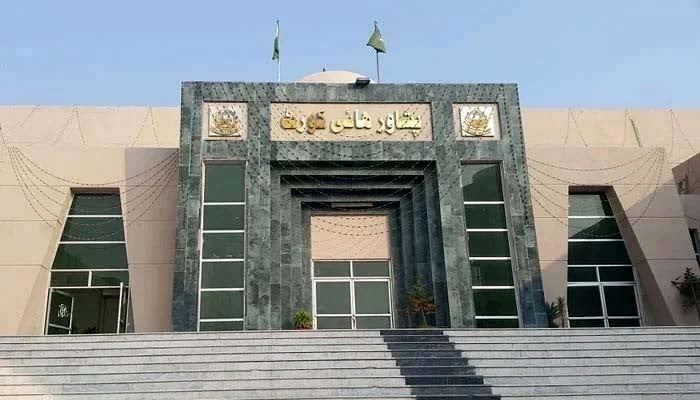
The Peshawar High Court (PHC) has fixed October 20 for hearing petitions challenging the imposition of governor’s rule and emergency in Khyber Pakhtunkhwa.
Pakistan Tehreek-e-Insaf (PTI) Chairman Barrister Gohar Khan and Advocate Salman Khan have filed separate petitions against the measures.
The petitions name the Federation of Pakistan, the president, the prime minister, the Khyber Pakhtunkhwa governor and other relevant authorities as respondents.
The emergency was imposed on October 11 after President Asif Ali Zardari approved the move on the advice of Prime Minister Shehbaz Sharif under Articles 232 and 234 of the Constitution.
The federal government cited the province’s deteriorating security situation and concerns over counterterrorism efforts. The Imran Khan-founded PTI, which leads the provincial government, has opposed the imposition of emergency and governor’s rule.
Governor Faisal Karim Kundi has taken charge of running the province on behalf of the federal government, assisted by an 11-member technocratic KP Advisory Council.
A day ago, Parliament approved the imposition of an emergency and governor’s rule in Khyber Pakhtunkhwa during a joint sitting as the opposition alliance Tehreek Tahaffuz Aiyeen-e-Pakistan (TTAP) announced ending negotiations with the Centre over “unconstitutional measures”.
The resolutions, moved by Federal Minister for Parliamentary Affairs Tariq Fazal Chaudhary to seek approval of the presidential proclamations issued on October 11 under Articles 232 and 234 of the Constitution, were adopted during a joint sitting of parliament after a heated debate between treasury and opposition members.
PTI’s plea
In the plea filed before the PHC, the petitioner asked the court to declare the imposition of the emergency and governor’s rule unconstitutional and set them aside.
In its petition, filed through lawyer Ali Zaman, the PTI argued that using terrorism as grounds to curtail the powers of an elected provincial government amounted to discriminatory treatment.
It maintained that the federal government could not strip the provincial administration of its powers on the basis of political differences.
The petition cited the absence of governor’s rule in Balochistan despite terrorism and loss of life there, as well as in Khyber Pakhtunkhwa between 2007 and 2015, arguing that the measures against the current provincial government were discriminatory.
The party said it supported counterterrorism operations and efforts to restore peace in the province, but alleged that accusations of failing to take effective action against terrorism were being used to increase political pressure.
It also maintained that the PTI had secured a two-thirds majority in KP in the 2024 general elections.
The petition argued that governor’s rule must meet the constitutional requirements and procedure laid down in Article 234.
It also called for the emergency declaration to be examined under Article 232 and the relevant parliamentary requirements. The PTI further maintained that no illegal action had been planned during its long march.


