
NEWYou can now listen to Fox News articles!
Strengthening the core improves balance and stability, which supports movement and physical performance, experts say.
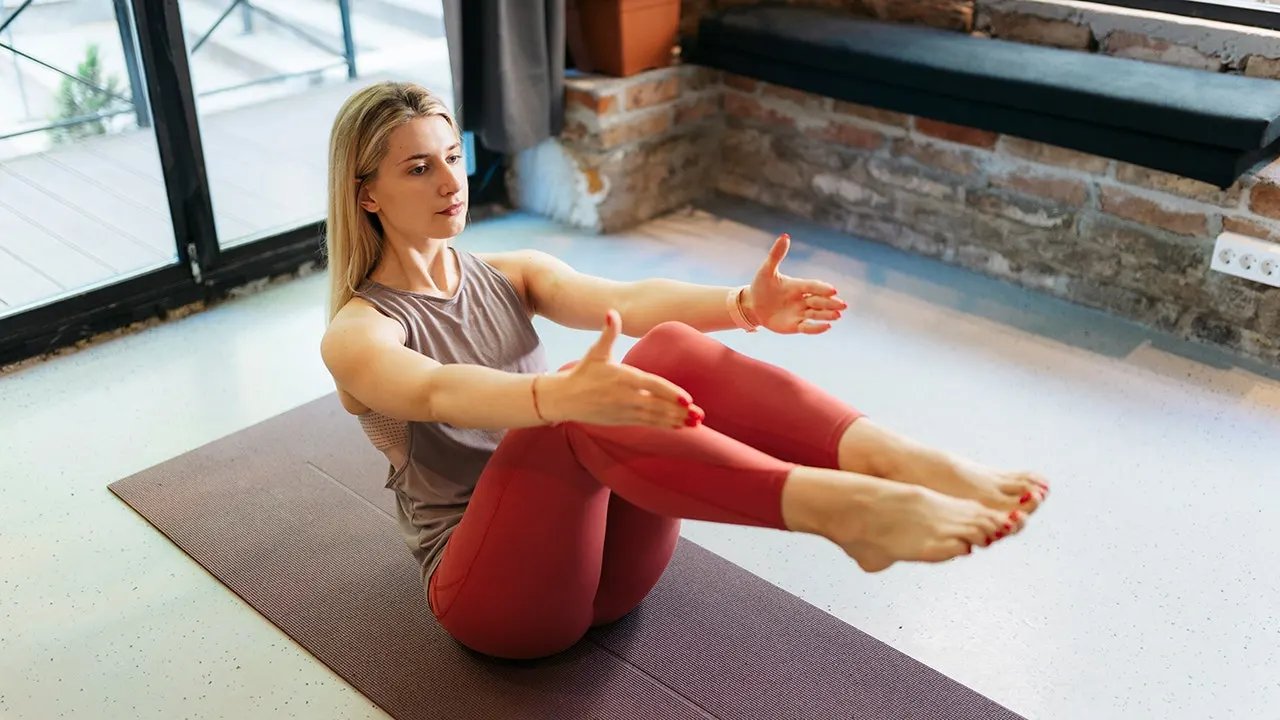
While traditional abdominal exercises can be effective, one yoga pose may offer added benefits. Boat pose, or Navasana, forms the body into a “V” and challenges multiple muscles involved in core stability.
Melissa Leach, a certified yoga instructor and strength and conditioning coach in Philadelphia, said a strong core provides a foundation for both exercise and everyday movement.
FITNESS EXPERTS REVEALS SIMPLE RULE TO GET IN SHAPE WITHOUT DREADING THE GYM: ‘JUST MOVE’
“Ab exercises help support that by strengthening key muscles such as the obliques, lower back, and deep stabilizers like the transverse abdominis,” she told Fox News Digital.
A yoga instructor demonstrates a boat pose. (Yoga-Go)
“Together, these muscles work to stabilize your spine, creating a strong foundation for movement and allowing you to transfer force more efficiently between your upper and lower body.”
Many routine activities, from carrying groceries to getting up from a chair, engage the core muscles to stabilize the trunk, maintain balance and support controlled movement.
PEOPLE ARE USING VIBRATION PLATES FOR WEIGHT LOSS: DO THEY WORK?
A strong core can also help reduce the risk of lower back pain by improving stability in the spine and ensuring control during lifting and other physically demanding movements, the expert said.
“While injury risk isn’t determined by core strength alone, a well-conditioned core provides a stable foundation for movement in everyday life,” she noted.
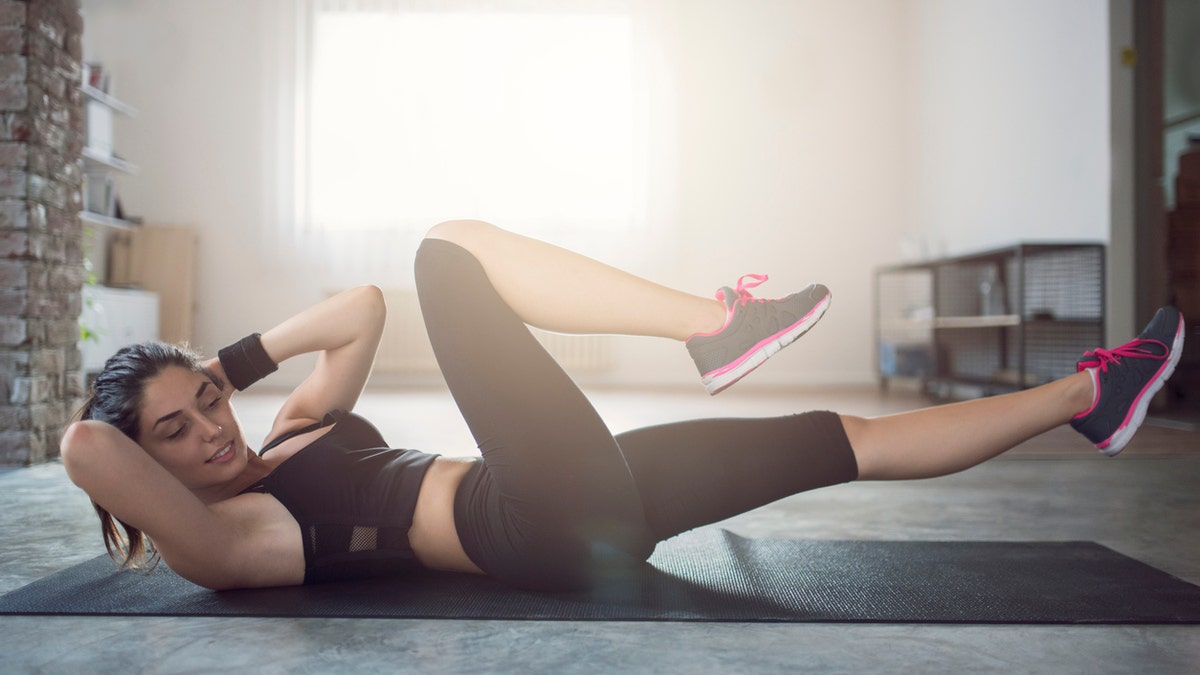
Many routine activities, from carrying groceries to getting up from a chair, engage the core muscles to stabilize the trunk, maintain balance and support controlled movement. (iStock)
Core benefits
Boat pose challenges the ab muscles while also engaging the hip flexors, glutes and back, according to Leach. This helps to build functional core strength rather than just targeting a single muscle group.
Compared to the traditional sit-up, which is carried out in “one plane of motion,” the boat pose requires the entire core to “work together to keep you balanced and lifted, which places greater demands on core stability, balance and control,” Leach said.
TEST YOURSELF WITH OUR LATEST LIFESTYLE QUIZ
“Whether you’re holding the pose or moving dynamically, you’re training the muscles that stabilize your spine and pelvis, rather than primarily strengthening the muscles required for trunk flexion, as a sit-up does,” she went on.
“Both have their place, but boat pose challenges the core to work as an integrated system rather than focusing on one movement pattern.”
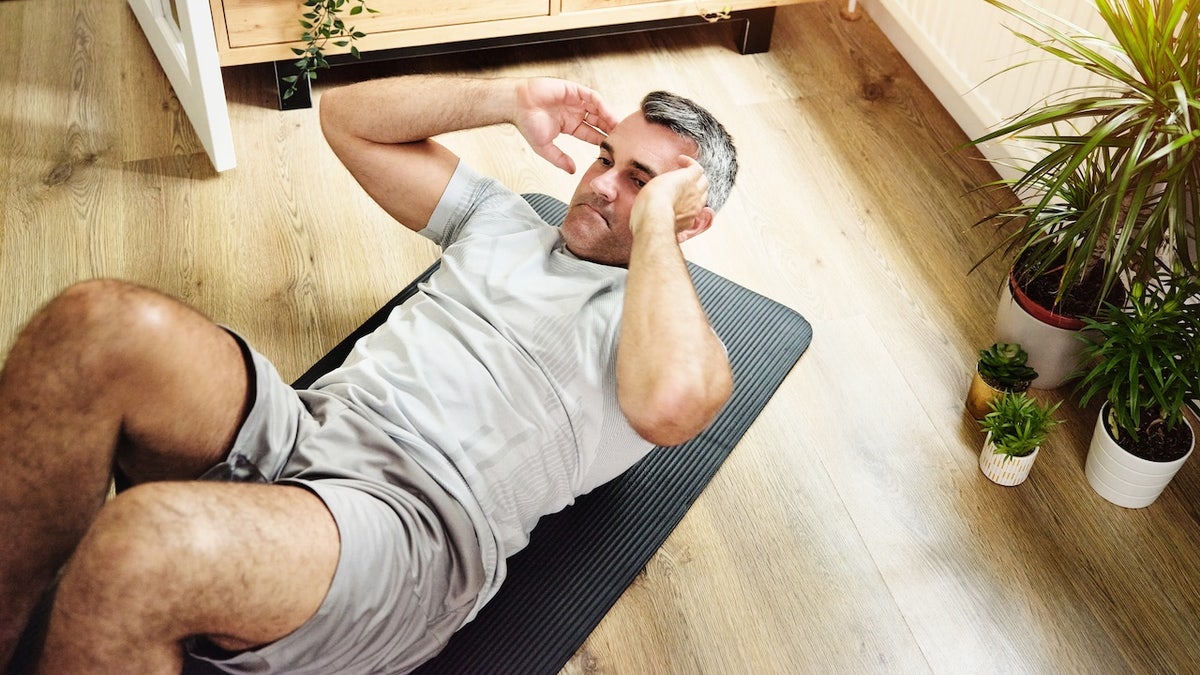
Compared to the traditional sit-up, which is carried out in “one plane of motion,” the boat pose engages the entire core. (iStock)
The pose develops both stability and muscular endurance, according to Leach.
“The position requires your deep core muscles, the ones that support your spine and pelvis, to stay engaged throughout,” she said. “Over time, this can translate into better posture, a stronger lower back and a core that supports everyday movement.”
How to do a boat pose
Leach shared the following steps for performing the boat pose safely and with proper form.
CLICK HERE FOR MORE HEALTH STORIES
- Sit down on a mat or the floor with the knees bent and feet flat on the ground.
- Lean back slightly onto the sit bones, keeping the lower back straight.
- Lift the feet off the ground, keeping the shins parallel with the floor. If possible, extend the legs upward for the full pose.
- Reach the arms forward, keeping them parallel to the ground.
- Engage the core muscles and balance.
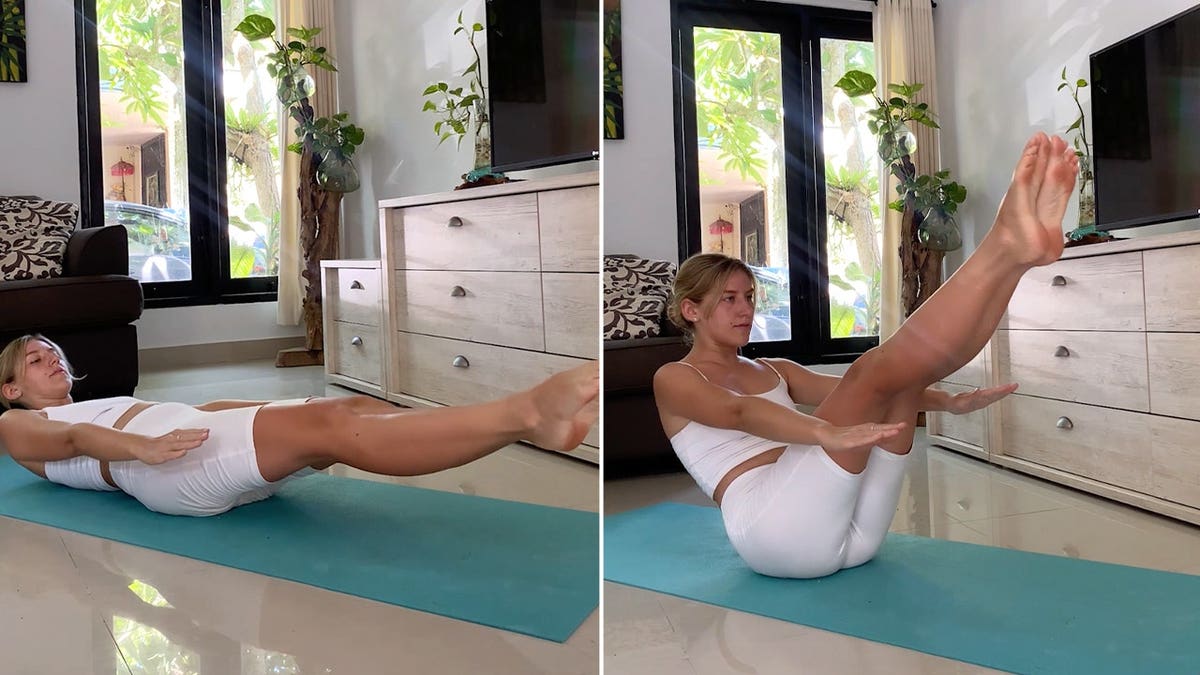
A yoga instructor demonstrates an active boat pose. (Yoga-Go)
Those looking to make the exercise more dynamic can move in and out of the pose rather than holding it, the expert said.
- Lie flat on your back on the floor or a mat.
- Use the core muscles to lift the legs and upper body off the mat, reaching the final “V” shape of the boat pose.
- Extend the body back down to the floor or mat and repeat.
CLICK HERE TO SIGN UP FOR OUR HEALTH NEWSLETTER
For beginners, Leach recommended some modifications.
- Keep the legs bent in a half boat pose instead of straight, which can reduce core strain and effort.
- Hold the backs of your thighs lightly to provide support and help with balance.
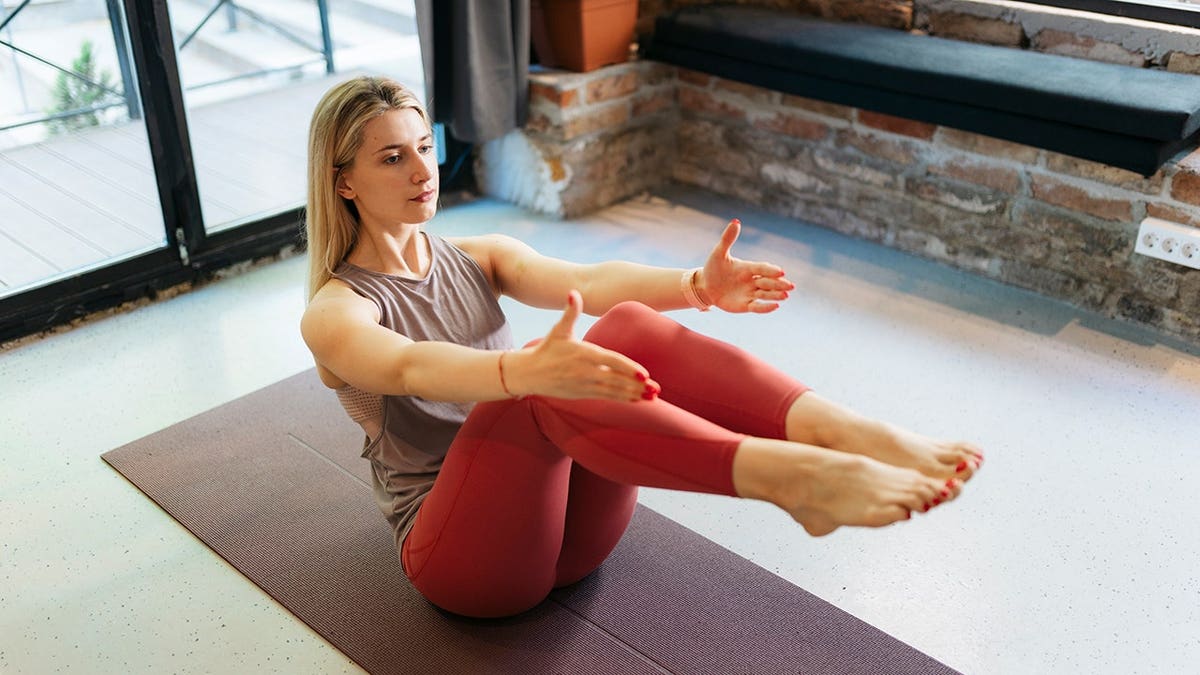
A boat pose with legs bent can reduce core strain, the expert said. (iStock)
Those who struggle with balance and maintaining a straight spine can sit on a folded blanket or cushion to help tilt the pelvis forward, Leach suggested.
Another option is to sit with the back a few inches from the wall “for reassurance,” she said, “while still allowing enough space for you to perform the crunching movement without hitting your head.”
CLICK HERE TO DOWNLOAD THE FOX NEWS APP
For seniors or anyone with limited core strength, Leach recommends trying a chair-supported version. Sit toward the front edge of a sturdy chair, hold the sides for support, and lean back slightly while lifting one or both feet a few inches off the floor.
“This builds the same engagement without the demand of balancing unsupported, and you can progress to the floor version once you feel steadier,” she advised.

