
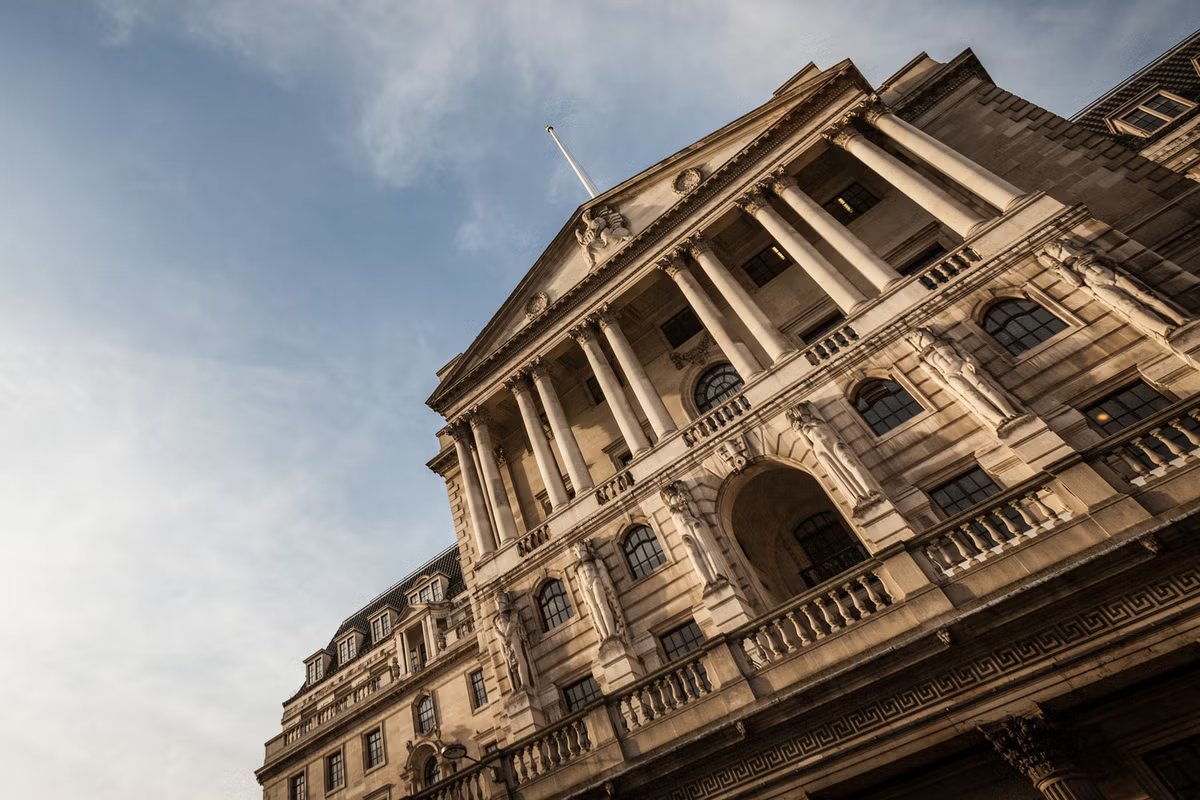
The Bank of England’s (BoE) next meeting to determine interest rates is on Thursday 30 July and all eyes will be on the Monetary Policy Committee (MPC) and its members’ response to domestic economic pressures, the ongoing Middle East conflict and the early approach of the new prime minister and chancellor.
The base rate – sitting now at 3.75 per cent after being cut four times last year – impacts business, consumers and taxpayers through everything from mortgages to loans and savings, so what do experts foresee, both this week and beyond?
Will interest rates be cut?
Rates were cut just before Christmas to the lowest point in almost three years and more was expected to come across 2026.
In fact, up until mid-February there was a strong chance of a rate cut in March or April, with an expected second cut later in the summer. But everything changed with the Iran war which has sent oil prices soaring, raising energy costs and with inflation still predicted to rise once more.
While rates were near-zero for a long time after the financial crisis, most analysts and economists now expect the “neutral rate” – how low the bank will cut to and then leave it, where the economy continues to grow but inflation is suppressed – will be higher this time, perhaps 3 per cent.
That means only another three cuts might come in total during this cycle, and as we get closer to that rate, the cuts could be spaced out further.
However, events in the Middle East have thrown those expectations into disarray and there is now real uncertainty which way rates will go in the nearer term, particularly after hostilities resumed recently following a short-lived ceasefire.
Analysts expect the rate to be held at 3.75 per cent for this vote in late July, though some have argued for raising rates earlier this time to head off worse inflation down the line.
.jpeg)
Influential factors

Get a free fractional share worth up to £100.
Capital at risk.
Terms and conditions apply.
ADVERTISEMENT
Get a free fractional share worth up to £100.
Capital at risk.
Terms and conditions apply.
ADVERTISEMENT
Interest rate decisions take into account multiple factors over long periods of time, as well as expectations about what lies ahead – and 2026 again looks tricky in both regards.
The MPC has nine members, and their votes decide whether the base rate is cut, raised, or kept the same.
Among the elements MPC members will have been looking at are job and wages data, the level of inflation across the UK, and economic growth.
Higher inflation is a reason to keep interest rates up, as that can discourage businesses from investing in new projects or hiring – things that in turn raise earnings and spending power, lifting demand and keeping prices rising even further.
Conversely, fewer jobs and lower wages means less spending power and lower demand for goods and services, which helps to stem any further price rises.
During 2026, economic data has shown salary growth slowing and unemployment rising, though wages are still rising faster than inflation.
These are factors that can argue for interest rates to be lowered, while there are also external factors that can affect the UK, which the government and Bank of England can have little or no control over – like energy price shocks or supply constraints which push prices up.
UK outlook
As well as the domestic situation of higher-for-longer inflation, there has been rising unemployment across the UK. Very slow economic growth is another factor to weigh up.
Now there’s also the possibility of a change of direction to consider with regards to national finances, with new prime minister Andy Burnham appointing John Healey as chancellor.
But the big economic impact this year is still the war in Iran and the surging price in oil and gas, which when sending energy bills higher adds to a return to high inflation, despite June figures showing inflation falling to 2.6 per cent. That is expected to be the low point, before a return to higher figures starting from July data.
“Nothing in this inflation release changes the calculation for the July interest rate decision,” predicted Daniel Mahoney, senior UK economist at Handelsbanken. “Financial markets are now pricing in two rate hikes by March next year, but the relatively weak labour market in the UK along with major uncertainty about the geopolitical situation means the MPC will in all likelihood continues its ‘wait and see’ approach and hold rates at the meeting next week.”
AJ Bell’s Danni Hewson, head of financial analysis, agreed, saying: “For the Bank of England, it’s likely to buy them another month to consider their options. Market expectation of an interest rate hold at next week’s meeting firmed up on release of the data.
“But rate setters will face the real test in September. The vote split and updated forecast will be closely watched for clues about how many hikes may be required to keep the economy in check.”
Elsewhere, it’s worth remembering that with mortgages in particular, many products are priced using future expectations of the interest rate (swap rates), so changes in that market can already be accounted for.
For savers, though, whether or not an immediate cut to variable rates is coming, it’s always worth checking the best offers on the market to make sure your money is earning as much as it can for you.

What about the rest of 2026?
The further into the future we look, the more murky the picture is – and it can change rapidly anyway as we saw last year with tariffs, Budget uncertainty, oil shocks and more. The US repeatedly wavering between ceasefire talks and missile strikes on Iran further muddies the waters.
Markets have wavered wildly recently between expecting only one cut this year and up to three rises occurring if the situation in the Middle East is prolonged.
Currently, the money markets are pricing in almost two hikes, though note that this is not always the same as economists actually expecting the Bank of England will follow suit – as evidenced by that market dropping rapidly once an initial peace deal was agreed between the US and Iran.
The next MPC vote date is on 17 September.

