
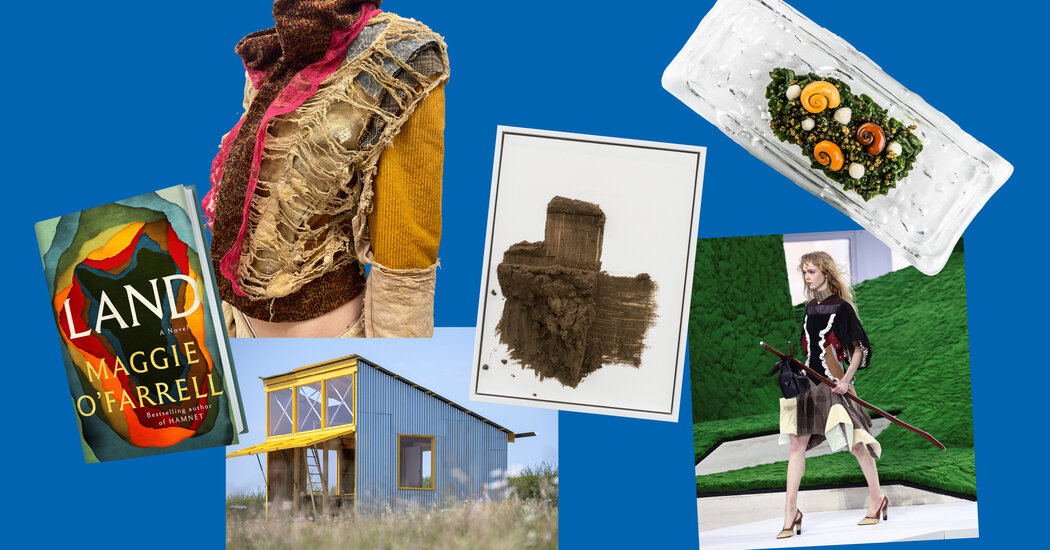
In prehistoric northern Europe, peatlands — areas of waterlogged soil rich with decaying plant matter — were considered spiritual sites. Since then, swords, jewelry and even human bodies have been found fossilized in their sludgy depths. More recently, however, many of these bogs have been depleted by overharvesting, neglect and development. But as awareness of their important role in removing carbon dioxide from the atmosphere grows, more wetlands are being restored, while also serving as unlikely creative inspiration. Here’s how bogs are showing up in the culture.
Fashion
At fall 2026 Paris Fashion Week, several houses — including Louis Vuitton (above left) and Hermès — staged shows amid mossy sets featuring spongy green structures and mounds of vegetation. And the Danish fashion brand Solitude Studios is distressing its eerie, grungy looks (above right) by submerging them in a local peat bog.
Contemporary Art
For her exhibition at California’s San José Museum of Art, on view through October, the Chalon Nation artist Christine Howard Sandoval is presenting sculptures, drawings and plant-dyed works (above) exploring how the state’s wetlands were once sites of Indigenous resistance and community. This month, at Storm King Art Center in New York’s Hudson Valley, the conceptual artist Anicka Yi will unveil an outdoor installation featuring six-foot-tall transparent columns holding algae-rich ecosystems cultivated from nearby pond water and soil.
Architecture and Design
The Bog Bothy (above), a mobile design project by the Dublin-based architecture practice 12th Field in collaboration with the Irish Architecture Foundation, was inspired by the makeshift huts once used by peat cutters who harvested the material for fuel. After debuting in the Irish Midlands last year, it’ll tour the region again this summer. In Edinburgh, the designer Oisín Gallagher is making doorstops from subfossilized bog-oak scraps carbon-dated to 3300 B.C.
Fine Dining
At La Grenouillère on France’s north coast, the chef Alexandre Gauthier reflects the restaurant’s reedy, frog-filled river valley landscape with dishes like a “marsh bubble” of herbs encased in hardened sugar. This spring, Aponiente — the chef Ángel León’s restaurant inside a 19th-century tidal mill on Spain’s Bay of Cádiz — added an outdoor dining area on a pier above the neighboring marshland, serving local sea grasses and salt marsh flowers alongside seafood (above) from the estuary.
Literature
The Irish British writer Maggie O’Farrell’s forthcoming novel, “Land,” about an Irish cartographer and his son surveying the island in 1865 after the Great Famine, depicts haunting encounters with the verdant landscape, including its plentiful oozing bogs.

