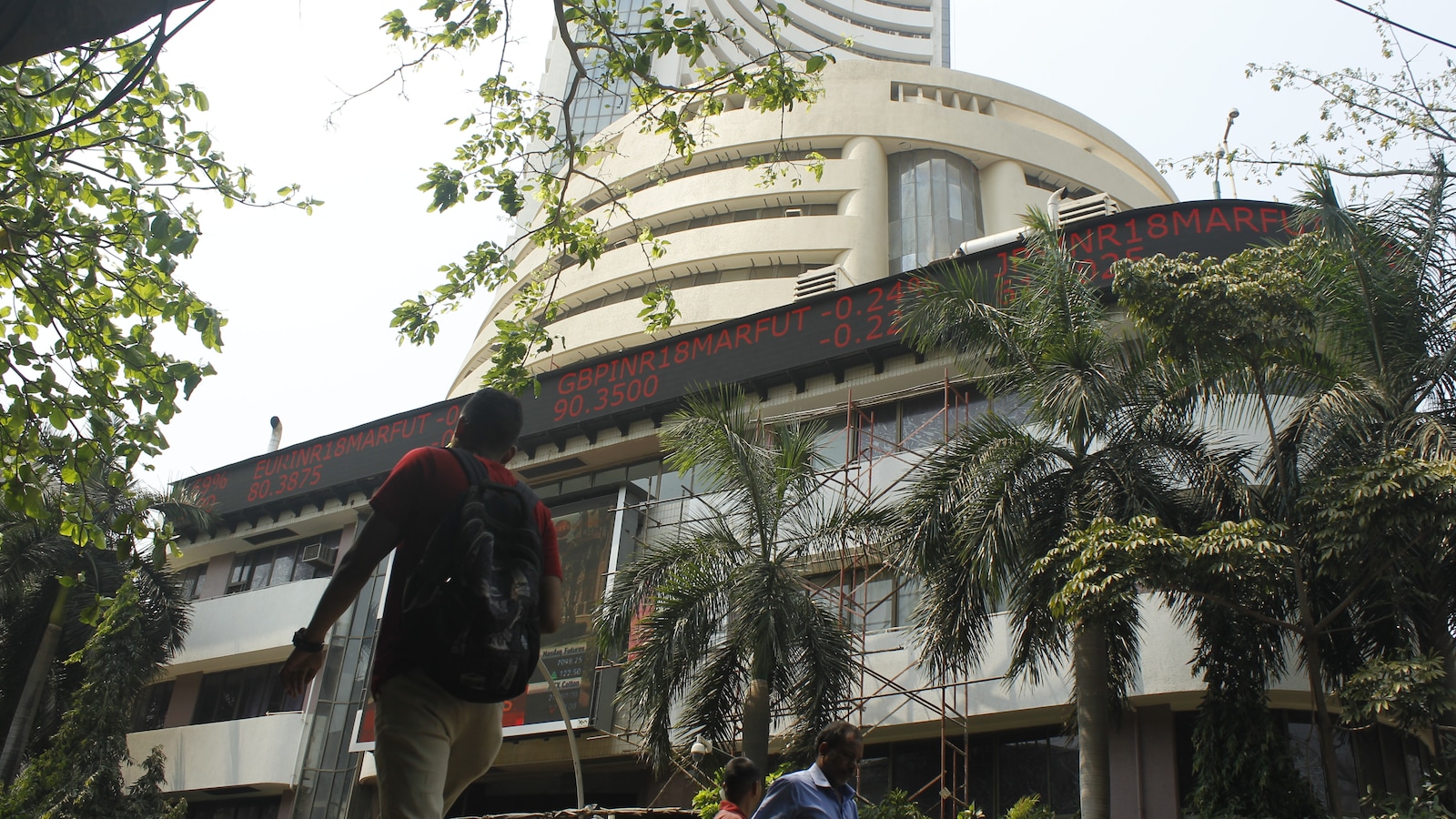
Indian equity markets faced another round of selloff on Thursday, as the benchmark indices crashed in first half of the trade. The NSE Nifty 50 fell 247.9 points, or 1.1%, to 22,355.15 by 12:04 pm, whereas the BSE Sensex was down 721.61 points, or 0.99%, at 71,917.
This comes a day after the markets closed deep in the red, with Nifty settling 0.76% lower and Sensex ending 429 points down on Wednesday. The fresh weakness comes on the cusp of India’s corporate earnings season, with Tata Consultancy Services (TCS) to be the first major listed company to declare its second-quarter results today.
Here’s a look at the three primary reasons behind the dampened start for Indian stock market today:
Also Read | Layoffs Are Rising In Tech, But These Skills Are Helping People Unlock Better Pay
Crude Jitters
Fresh escalation of tensions in the Middle East, with American media reporting that US President Donald Trump may be planning a military strike on Iran before the November mid-term polls, has further stoked the crude oil prices. Brent futures were trading 2.06% higher at $102.26.
The elevated crude spells concern for an oil-importing country like India, as higher oil prices could boost imported inflation, thereby hurting the prospects of companies betting on a resilient demand to improve their earnings. The jump in oil rates also strengthens the dollar, adding further pressure on the rupee. The dwindling of the local unit is one of the primary drivers behind the exodus of foreign instutional investors, whose cumulative selloff of Indian equities has topped Rs 22,000 crore so far in October.
ALSO READ: LIVE: Sensex, Nifty 50 Trade Lower; TCS Gains Ahead Of Q2 Results; ITC, Paytm, One Mobikwik Drop
Weak Global Cues
The Dalal Street was also under pressure due to weak global cues, as the US stock market settled in the red on Wednesday. The Dow Jones Industrial Average lost 341.1 points, whereas S&P 500 and Nasdaq Composite ended 0.22% lower each.
A ripple effect was seen in the Asian market as well. Japan’s Nikkei 225 was down 1% to 69,339.80, while the South Korean Kospi traded 1% lower at 6,731.75 as of 10:12 a.m. JST and 10:07 a.m. KST, respectively. Further, the Australian Securities Exchange S&P/ASX 200 fell 0.51% to 8,682.90. Overall, MSCI’s Asia Pacific Index slipped 0.5%.
RBI’s Hawkish Tilt
Market sentiment, which soured due to the RBI’s hawkish commentary on Wednesday, continued to remain weak on Thursday. Traders are cautious after the central bank’s switch to “calibrated tightening”, say analysts.
Historical trading patterns show that rate-hike days have consistently applied downward pressure on headline indices, according to Shlok Srivastav, co-founder and chief operating officer at cross-border investment platform Appreciate.
“An analysis of 72 RBI policy announcements between 2014 and 2025 found that the Nifty 50 averaged a 0.50% drop on rate-hike announcement days, compared with a 0.66% gain following rate cuts,” he said.
While Srivastav emphasised that these patterns do not imply domestic equities will slide after every hike, tighter liquidity conditions maintain elevated equity-market risk that warrants geographical hedging.
Essential Business Intelligence,
Sharp Market Insights,
Practical Personal Finance Advice, Daily Fuel, Gold and Silver Prices and Latest Stories — On NDTV Profit.