
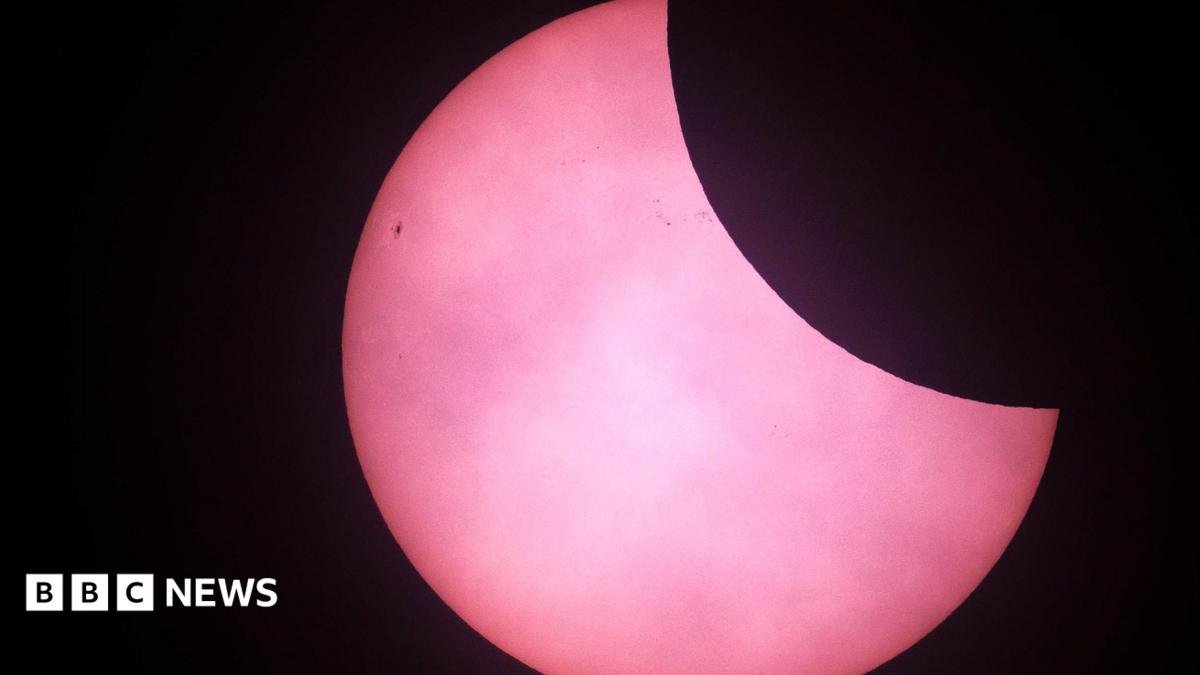
In Guernsey, Dr Jean Dean, from La Société Guernesiaise’s astronomy section, advised people to head to the west coast of the Channel Island to enjoy the spectacle.
She said people needed to use eclipse glasses or have their back to the sun and project it onto a piece of card.
Eclipse glasses have been given out are Les Bourgs Hospice charity shops in St Martins and St Sampsons.
Dean warned that if anyone looked directly at the sun they would “burn your retina in your eye and you will be permanently blind”.
She stressed people should not use the eclipse glasses with other optical equipment such as binoculars, but could put them over spectacles.
Jersey Astronomy Club said it was setting up several solar telescopes by the slip at Le Braye on St Ouens Bay and it planned to have a supply of solar glasses for people to wear.
The club warned people not to attempt to look through binoculars or telescopes which did not have proper solar filters as they could collect more light than the human eye could cope with, risking blindness.
It said, without proper solar filters, “the only safe way to observe an eclipse is to use the telescope or binoculars to project an image, not into your eye but onto a piece of white paper or card”, and removing or taping over the front of the finder scope “to prevent any accidents”.
Follow BBC Cornwall on X, external, Facebook, external and Instagram, external. Follow BBC Devon on X, external, Facebook, external and Instagram, external. Send your South West story ideas to spotlight@bbc.co.uk, external.
Follow BBC Guernsey on X, external and Facebook, external. Follow BBC Jersey on X, external and Facebook, external. Send your Channel Island story ideas to channel.islands@bbc.co.uk, external.

