
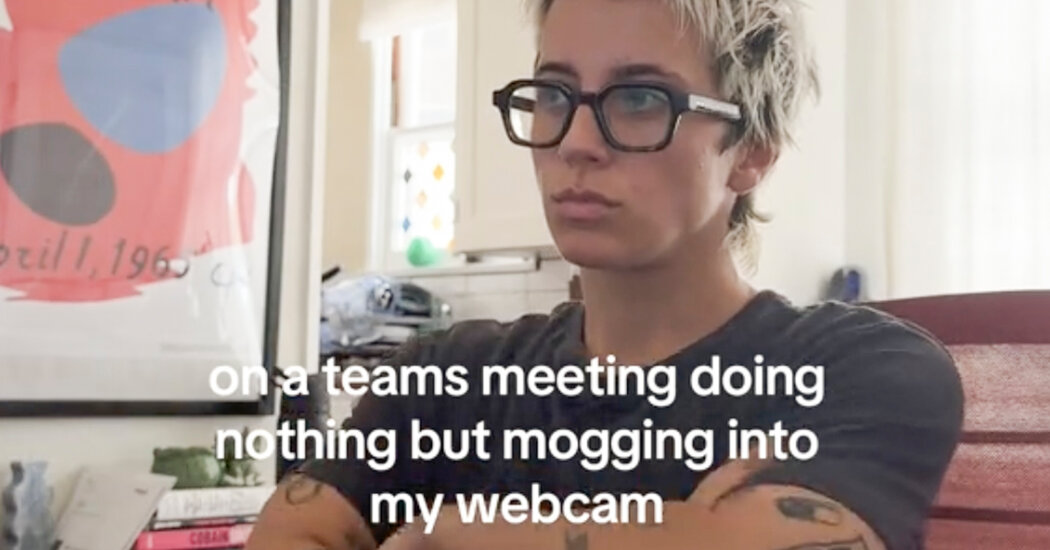
Her understanding of the term changed after seeing TikTok videos posted by Clavicular, the influencer whose real name is Braden Peters and who has become a de facto face of the term. He is also deeply associated with looksmaxxing, an adjacent concept that holds male attractiveness as the key to success. (“So much of what I know about this is, like, totally against my will,” Freed joked.)
Many now also use it ironically, distancing themselves from its origins.
“It could be used in the context of looks, style — outshining somebody in anything,” said Matthew Klein, 23, who has used the word satirically on TikTok. In February, he posted a video that amassed millions of views in which he described a viral moment during which Clavicular appeared to be mogged by a student at Arizona State University as a “significant historical event.”
The word is perhaps most used by Gen Alpha, Aleksic said, though Gen Z has picked it up, too.
“The people who are most willing to adopt new language are typically middle schoolers who are extremely flexible in their sense of self,” he said, “and they’re trying to build their identities and differentiate themselves from adults and build a shared kind of framework for themselves.” He added that they adopted vocabulary from online streamers.
Paula Simoni, a 25-year-old bartender in Miami, said that she used the phrase with her 9-, 10- and 11-year-old nieces, to mixed reception.
“To them,” she said, “I’m like the cringey aunt.”
Simoni learned about the term earlier this year, when a trend on TikTok involving users showing pictures of people who are “outmogging” them. She posted a TikTok that zoomed out on a photo of her and her sisters, revealing additional people as the perspective expands.
The video now has more than three million views. And yet, she said, one of the sisters pictured, who is not on TikTok, still doesn’t know what mogging means.

