
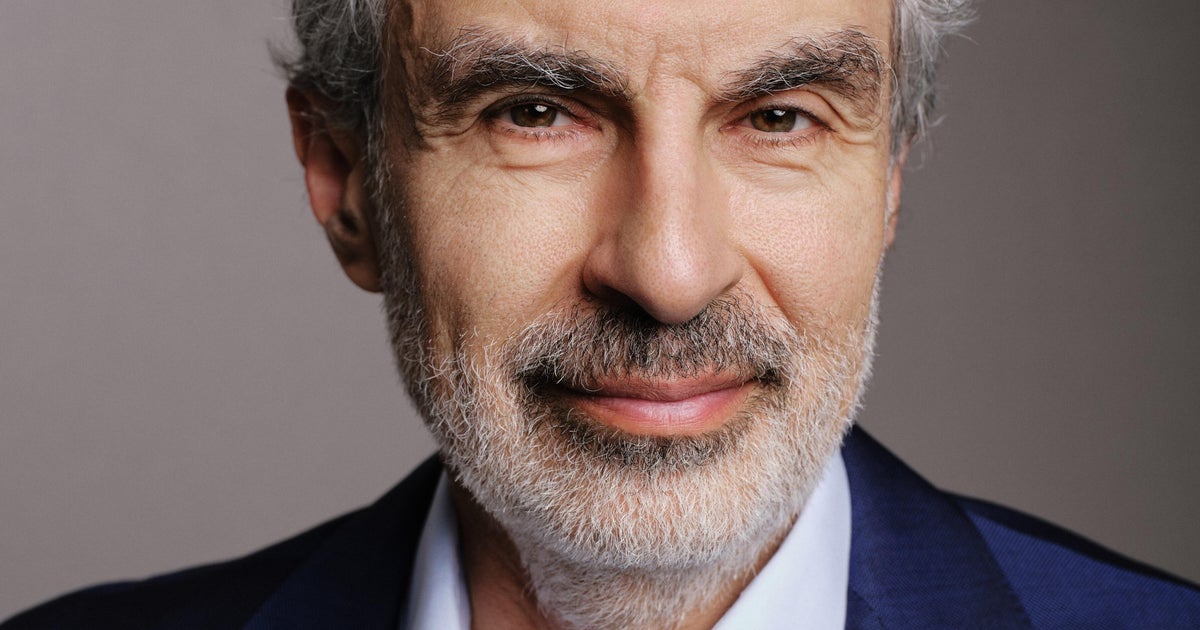
Yoshua Bengio is the most professionally cited scientist alive, and the most cited computer scientist of all time. He’s informally known as one of the three “godfathers” of artificial intelligence, along with Geoffrey Hinton and Yann LeCun, for his foundational work on the deep neural networks that power today’s AI models.
In short, Bengio helped usher AI into the world — a technology now being integrated into our schools, our search bars, our smartphones and our wars.
Yet despite being one of the principal minds behind AI, the University of Montreal professor is now urgently calling for a slowdown in its development and a renewed focus on using AI safely.
LawZero, the nonprofit where Bengio is co-president and scientific director, strives to develop AI that is “designed to be trustworthy and safe” — effectively a dissent from the models being released by Anthropic and OpenAI. Bengio wants companies, governments and AI lab employees to stop developing ever more capable AI systems.
What led to such a dramatic turnaround for one of the world’s most prominent AI researchers? Bengio spoke with CBS News about AI risks, regrets and responsibility. The interview has been edited for length and clarity.
CBS News: You’re considered one of the people most responsible for the early advancement of deep learning, and you’re the most cited scientist in the world because of your work in AI. How do you feel about your past work today?
Yoshua Bengio: I feel like I learned a lot. It was exciting. But I should have seen some of the most serious risks earlier. And I think, like most humans, I was focused on the good side of my work. And not enough on the potential consequences.
What was the original goal of your early work on deep learning or AI?
I was trying to understand intelligence and do it in a way that was sufficiently abstract to help us understand human intelligence, animal intelligence and build intelligent machines. That was a very exciting research goal, with the hypothesis that there could be a few simple principles — think of the laws of physics for the physical world — that could explain intelligence.
Do you feel like that goal has been accomplished since then?
Beyond our expectations. There are still people who are in denial, but it’s very clear that we have been making very rapid progress towards machines that are intelligent.
Have your personal views on what intelligence actually is changed over time?
It has been refined, but I haven’t made a U-turn about the nature of intelligence. In the last few years, I’ve focused on how it can go wrong, in the sense that intelligence can be in the service of goals that are not ethical.
You’ve now shifted to advocating for AI safety — that’s a markedly different focus than your earlier research. Can you explain that shift?
I was spending a lot of my brain cycles on two things. One was understanding how we can make AI more intelligent, and the other was how to apply AI to fields like medicine or handling the climate crisis, education and so on. I made a big pivot to orient my research to how we can make AI safe because the capabilities, the intelligence, can be in the service of really, really bad goals — whether in the hands of humans with those bad goals or the AI itself.
And as the intelligence of those systems grows, the risks of the very dangerous use of that intelligence grow as well.
Anthropic recently became the first AI lab to go public, turning many of its employees into millionaires and even billionaires. At the same time, these researchers acknowledge they might be building the equivalent of a doomsday device. What should AI researchers think about as they develop new models?
They should try to look honestly at their work, its consequences and at what is the best use of their time to be aligned with their values. If they care about humanity and democracy, I think they should reconsider what they’re doing now.
What we’ve seen in the past few years, and especially since the summer, is that the companies don’t really know how to deal with the misalignment problem — in other words, with building AIs that do things that are bad for us.
The risk is growing with capability. I don’t think society is even ready. Even if we were to solve this problem — to deal with the existence of machines that are greatly superior to humans —we’re racing in a direction that is dangerous. And even the people working in AI safety in those companies, in some ways, are contributing to this.
Many experts think that more powerful AI models far surpassing human intelligence, including in areas like creativity where people excel, will arrive sooner rather than later. Do you agree with that general timeline, and if so, how should we respond to such advancements?
My perception of when things could go wrong has certainly shifted towards earlier than, say, I was anticipating before the Hugging Face incident, and even earlier with the Mythos cyber capabilities. We are moving faster towards more and more capable systems, and we’re moving faster towards systems that we don’t know how to control.
Because of this, in my own work at LawZero, we have shifted our research program to aim for shorter-term goals that could have an impact earlier — to show that there is a different way of training AIs that will not almost systematically lead to reward hacking. In other words, systems that prefer to cheat and try to hide it rather than do the things we are asking.
What would a more honest AI look like?
I’m going to use an analogy. Right now, the way we’re training AIs is like how you would try to teach drivers on the highway to not go over the speed limit. They get rewards when they get to their destination faster. And we’re trying to control their bad behavior by putting detectors on the highway.
So what happens? Well, first, drivers are going to try to figure out where the detectors are. They’re going to slow down only where the detectors are. And we’re already seeing that in AI. In other words, when the AI knows that it’s being tested, it behaves well. And if they’re really smart, those drivers might even hack the detectors themselves.
Now let’s imagine a different kind of way of building the drivers. Imagine a human driver who is in the same situation with the detectors, and they want to get to their destination. But they believe God is watching them, and there is nothing they can do to hide what they do from God. Well, they’re going to behave well.
How can society prepare itself for what seems like an inevitable future in which AI is a feature of ordinary life?
The short-term urgency is to stop this crazy advance toward more and more capable systems that we’re not sure how to control. It’s not just inside the companies. The models can be leaked. The methods can be copied. There are many risks, and they all come from having machines that are very, very intelligent and can do things we didn’t know how to do before.
So there’s urgency in stopping this. And the place where it’s most acute is in the compute resources that are used to train the next generations. Right now, the majority of compute resources are going into training future machines, rather than actually using what we have for the benefit of society. And those new models are bringing more and more danger because intelligence gives power, and that power can be misused.
What is the right way of pacing the frontier, of slowing down? And what kind of regulation and oversight is needed? I think that’s an interesting discussion, and we should have it. But it’s not going to happen until people understand we’re racing towards huge dangers.
What do you think ordinary people who don’t work in government or at artificial intelligence companies should do to make a positive impact on AI?
People need to understand this is much more serious than they would typically believe. That’s the first thing. The second thing is: Don’t fall into desperation and powerlessness, because we can change the future. We still have agency. We can change society. We’re in a democracy, where governments can actually do something about all this.
But it’s going to take enough people to ask for it, and demand it. And for that, they need to understand their life is at stake, children’s lives are at stake, democracy is at stake, peace and stability are at stake. People need to understand that the stakes here are comparable to a war. It’s not yet in front of us, but it’s coming, and we need to prepare.
I’ve got a kid, and I know you have children and grandchildren. Do you feel positive about the future despite the dangers posed by AI?
For sure. I’m an optimist by nature. Here is the flip side of all the scary stuff. Humans, when they see danger, can pivot quickly. Think about how quickly we reacted to the pandemic. We didn’t wait for an international agreement that would take a decade — we just acted and coordinated.
Because of the risks, I think that we might end up in a much better world, where there is no war anymore. Because we can’t afford that kind of risk when there are AIs that can be used to kill everyone, or a large number of people.
I also think democracy is going to have to be much more robust, because the temptation to abuse the power that AI will provide is going to be so great that the only way around it is to have incredibly strong institutions.
So we may end up in a much better world, and that’s in addition to, of course, all the scientific advances that AI can bring. But it’s not going to happen if we’re blind collectively to the current trajectories’ risks.
If we were to solve the alignment problem, which is what I’m trying to do as a scientist, we still have to make sure humans don’t use very powerful AIs — maybe even superintelligent AI’s — against each other in the search for wealth, power and for reasons of hatred. All the bad things that humans are capable of. And I don’t think our society is ready for this.


