

Want to bookmark your favourite articles and stories to read or reference later? Start your Independent Membership today.
Already a member?
Log in
When my companion climbed into the new Mitsubishi Outlander, she was immediately struck by the comfortable, well-appointed interior of this highly capable SUV. It has immense “showroom appeal”. You are immediately impressed by the sumptuous leather seats, a warm tan shade in my test example, and a solidly built interior. Mitsubishis have long been popular with rural types for their durability, with the rugged L200 pick-up probably second only to the Toyota HiLux in durability, and the Outlander imbues its users with that sense that it will look after them whatever the circumstances.
Its reputation goes before it, and even though the marque has been absent from the UK for five years, thanks to stiff competition and some disadvantageous changes to taxation of plug- in hybrids, it’s not been forgotten by a fairly loyal band of customers.
Now, with fuel prices being where they are, the cars are back, and it’s a very welcome return. Here is an excellent blend of luxury, go-anywhere adjustable four-wheel drive and reliability that is actually quite uncommon. More reliable than a Land Rover, more of a known quantity than a Jaecoo, cheaper than a Mercedes-Benz, if you will. Plus an outstanding range on a single tank of petrol and a fully charged battery – about 50 miles in EV only, and 500-plus in total.
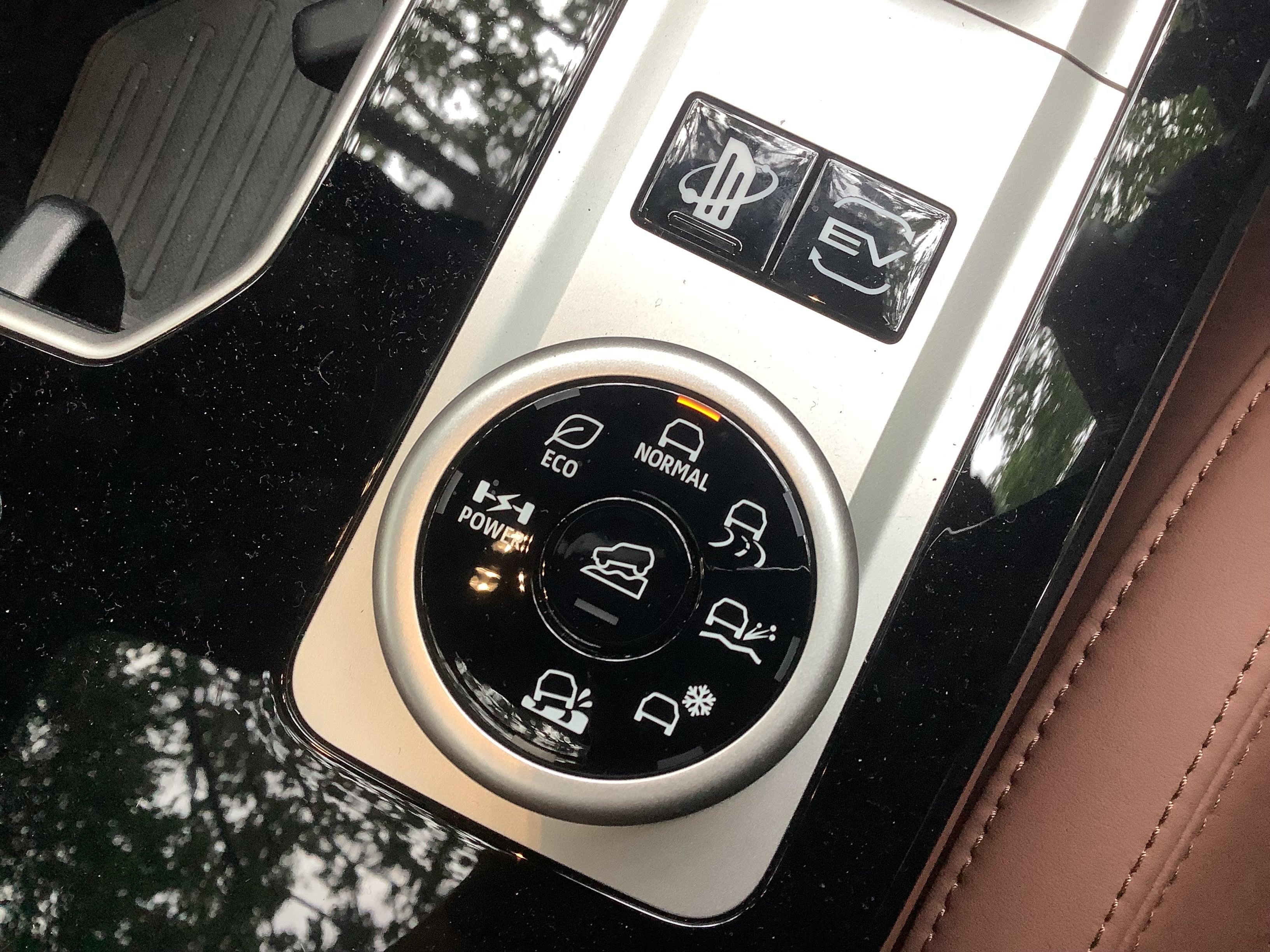
Go anywhere indeed, with a big switch in the centre console that will automatically optimise for tarmac, snow, gravel, mud, power and fuel-saving “eco”. “Power” mode gives the beast a fair old chunk of extra performance, but at greatly disproportionate cost in mpg. For off-road, there’s the choice of low and standard range gears. The choice extends to two trim levels, Nativa and Diamond (which is extra lush), and you can choose a five- or seven-seater.
The Spec
Mitsubishi Outlander Diamond PHEV
Price: £49,995 (as tested, range starts at £46,995)
Engine capacity: 2.4lpetrol, 4-cyl + 22.7kWh battery, CVT auto 4WD
Power output (PS): 299
Top speed (mph): 106
0 to 60 (seconds): 7.9
Fuel economy (mpg): 313, with full plug-in usage
CO2 emissions (WLTP, g/km): 20 with full plug-in usage
All and any of the many potential driving adventures take place in a welcoming cabin. That, indeed, is a great attraction in this model, and especially if you’ve found yourself over-exposed to the stark, overly sombre and simplified interiors that have grown so fashionable in recent years.
Partly under the influence of the very advanced electronics favoured by the Chinese makes, but also because the world’s car designers became obsessed with the iPad as the apogee of good taste and efficiency, common sense, durability and safety were all compromised. It’s an old theme of mine, but every time I see the pendulum swinging back to the more conventional style of controls, ie knobs, buttons and dials, I feel like the automotive world is healing.
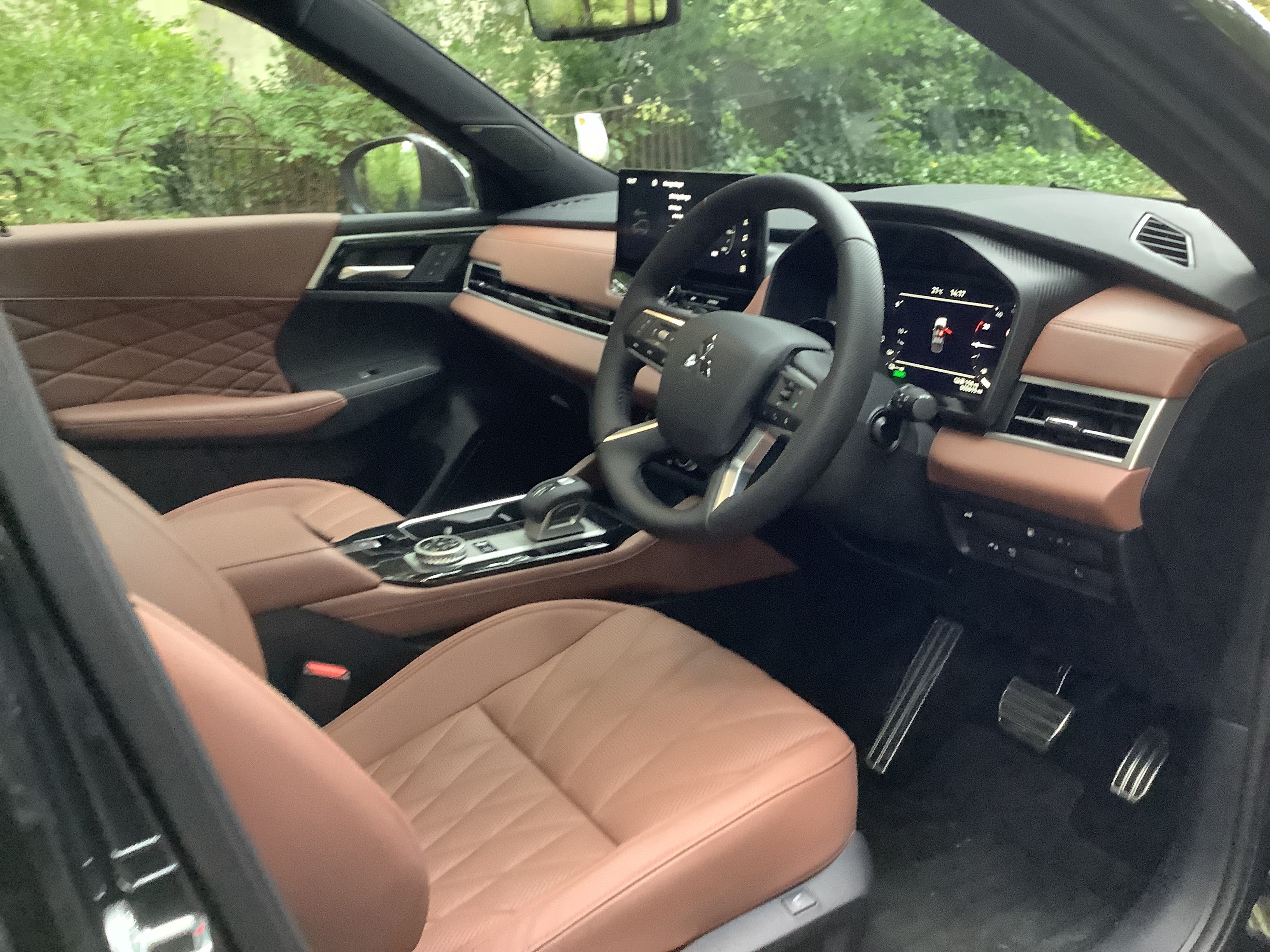
So it is with this Outlander. Mitsubishi’s UK importers, International Motor Group claim that this model is new “from the ground up”, and it is, but there are a couple of important caveats to add. First, this iteration of the Outlander series dates back to 2021, just when Mitsubishi gave up on the British market – so not entirely fresh, and I believe there’s a facelift on the way.
Second, the Outlander shares a good deal of its underpinnings with the Nissan X-Trail, even if the siblings have different drivetrains (the makes have financial links). Both essentially work with their respective petrol engines generating the electricity to motors that drive the wheels, supplementing the charge emanating from the 22.7kWh battery. But, if needs be, unlike the Nissan, the Outlander’s engine can also supply varying amounts of propulsion direct to the wheels.
Both, therefore, offer most of the economy, smoothness and refinement found in true electric cars. The Mitsubishi also draws upon long experience of PHEV technology, and the Outlander was a pioneer when first introduced in 2014. Then everyone copied it, which became a problem, and still is.
The choice of vehicles in this sector is legion, but I’d feel obliged to mention the Jaecoo 8, Mazda CX-5, stunning Hyundai Santa Fe, trad Volvo XC90 and Skoda Kodiaq as some of the more interesting alternatives, broadly speaking (plus the Nissan X-Trail). In the case of any PHEVs, the usual rule applies; to get the best out of them they should be plugged in and charged up. Otherwise you’ve just got a petrol vehicle carrying a heavy battery pack doing 35mpg.
As you can gather, I like the Mitsubishi because, despite the Nissan links, there’s something very authentic about it, and it’s an unpretentious affair. It doesn’t have to try too hard to be what it is, and I found it lends that self-confidence to its keeper.
The “face” is a bit challenging, I’ll admit, a little “too outlandish”, but with a long partnership of human and machine ahead, you will have time to grow accustomed to it. Nothing outlandish about that, you know.


