Want to bookmark your favourite articles and stories to read or reference later? Start your Independent Membership today.
Already a member?
Log in
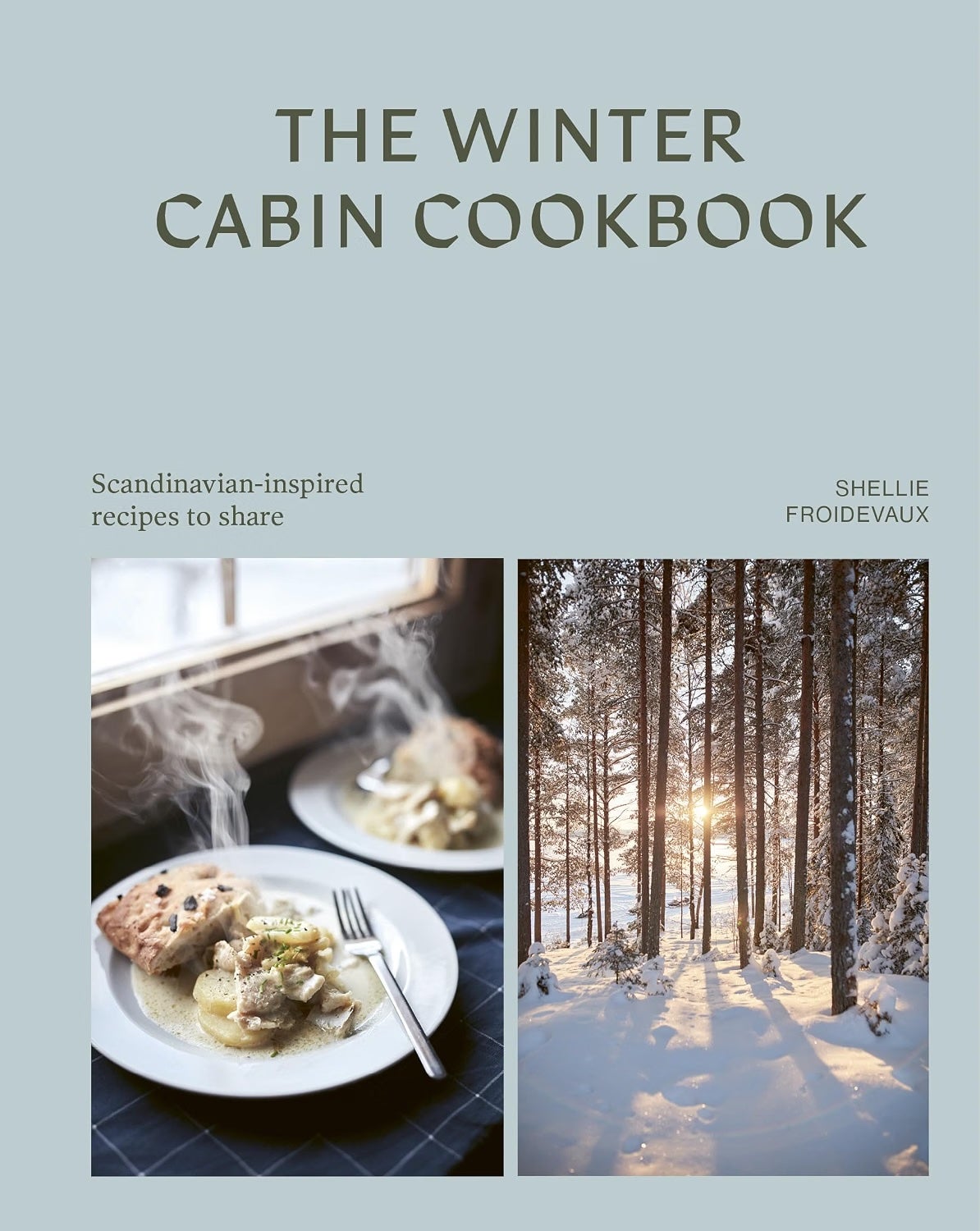
Food stylist and photographer turned cook and recipe maker Shellie Froidevaux fell in love with northern Norway and Sweden when she started visiting more than a decade ago.
Her husband Ewen, a travel photographer, was working on photography tours of the two countries when they met. “We spent three weeks in Arctic Sweden in a friend’s little cabin,” the 41-year-old says. “Since then we’ve gone up in the winter time.”
Known as @ironchefshellie on social media, the Australian now shares recipes inspired by spending three months a year in a cabin in the depths of the Arctic region, staying in simple, remote dwellings, and cooking up the comforting, warming cuisine – a world away from her usual life in Melbourne.
Her debut cookbook, The Winter Cabin Cookbook, brings together recipes from friends and classics cooked with whatever is available in the pantry, and gives a glimpse into cosy cabin life during sometimes harsh winters.
“It’s proving that you can entertain a group of friends or your family without having a fussy menu, and just you can pull it all together pretty quickly,” she says.
Think of winter differently
“Cabin life changes your mindset,” she writes. Embracing this next season may be all about seeing the positives – the chance to rest, reset and regenerate. And if the weather is harsh, think like the Northern Europeans do.
“They have a saying up there, that ‘There’s no such thing as bad weather, only bad clothing’. So make sure you’ve got the best clothing and cosy food,” Froidevaux says.
What made her fall in love with this region of the world was the snow and the northern lights. “The people are so lovely, I haven’t met someone who hasn’t been helpful and friendly. People up there have a ‘can do’ attitude. Nothing is ever a problem. It’s like, yeah we can do that, we can chop down that tree if you need.”
To embrace the season at home she suggests: “Light a few tea lights, create that cosy atmosphere, have a simple meal with some lovely soft lighting, turn off the TV and just embrace being together.”
Make do with your weekly shop
Many people live a quick walk or drive from a supermarket or shop, so it’s all too easy to pop out to pick up that extra ingredient. It becomes an altogether different kettle of fish if you imagine being isolated in a remote cabin, possibly snowed in.
“We like to say, make do with what you have,” says Froidevaux. “Often, when we’re in a cabin, it’s maybe an hour from a major supermarket or something. So you do your shop for the week and if you’ve left something at the shops, you just have to make do. It’s great if you can rely on your neighbours close by if you’re really in need of something.
Community, she says, is a key part of cabin life in this region.
Enjoy a slower pace
Winter encapsulates the feeling of hunkering down and hibernating – at least as much as possible, while still working, raising kids and having a social life. And she says this is key to embracing the Scandi winter way.
“It’s a way of slowing down and just really enjoying life,” she says. [People living in cities] could definitely learn to slow down. Here [in Melbourne], I have so many restaurants and so many cafes and something opening up every couple of days.
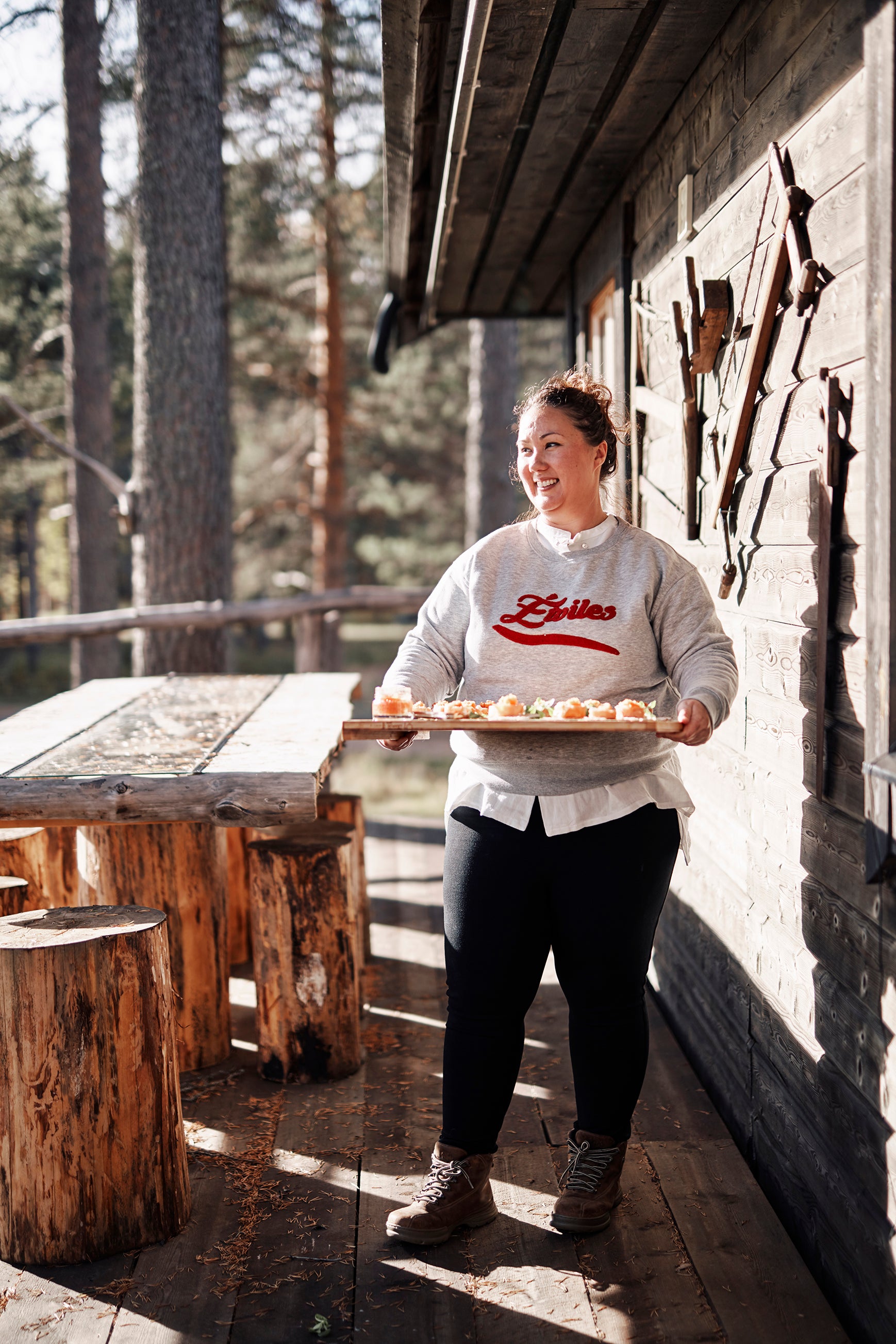
“When we go to Norway, we’ve got nothing. We’ve got a community house that opens up on a Wednesday for waffles, so that’s really good to hang out with the locals. But most of time time, it’s ‘pick from the pantry’ and enjoy life like it used to be.”
One of the most memorable meals she says she’s eaten was when a friend stopped by with a smoked halibut they’d caught and cured – “sliced thin and shared until the plate was empty,” she writes in the book, “It’s a reminder that when you stop chasing something better, the simple joys have more room to find you.”
Try classic flavours from Sweden, Norway and Iceland
Tourists might have experienced reindeer and fish in northern Europe, and potatoes will be served with many meals. “I remember serving a meal to a family and they just sort of sat there and were like, ‘Oh, we’re waiting for potatoes to arrive’,” she laughs. “I think potatoes play a massive role there.”
“A friend, Eva, taught me how to make this beautiful flatbread called gáhkku. It’s a traditional Sami bread, and I turned that into a pizza and put potatoes on it.
“There’s also a lot of root vegetables [in the cuisine], mainly they keep to seasonal, carrots, potatoes, celeriac… then a protein and usually with a creamy or buttery sauce. Things that help you adapt to the climate and feel warm.
Think, hot-smoked fish quiche, moose meatballs with potato rostis and junipur sauce and Arctic crab and shrimp spaghetti, alongside citrus and fennel winter salad, and lobster soup with white chocolate – “an unhinged combination” that “really works”, according to Froidevaux. The chocolate is caramelised under the grill and then frozen so it solidifies and is shaved into a parmesan-like consistancy.
“Sometimes you get these little chunks of white chocolate that just sort of melt in your mouth. There’s something about that sweet, savoury, creaminess that really works.”
Bring ‘Fika’ to your afternoons
A Swedish tradition that happens year-round but feels particularly fitting in winter, Fika, is a moment of pausing with a coffee or tea and a sweet treat, “It can be a bun, or cookies, it can be anything,” she says.
“In Sweden they have seven kinds of ‘kakor’ [called sju sorters kakor] where you invite someone to your home and it’s tradition that you serve them seven kinds of kakor – which could be cookies, cake or cinnamon buns.”
Make your own cinnamon buns
Many different varieties of cinnamon buns appear across Scandinavia – and Froidevaux’s recipes include a rasberry and cinnamon braids and a cinnamon, caradom and custard bun.
Froidevaux advises: “Don’t rush the resting time – let them prove for an hour to an hour and a half, and then the second proof as well, just to get that extra fluffiness.
“Enjoy them as fresh as you can. My husband doesn’t like to eat them if they’re more than a few hours old because he’s been spoiled with them straight out of the oven!”
Potato gáhkku pizza
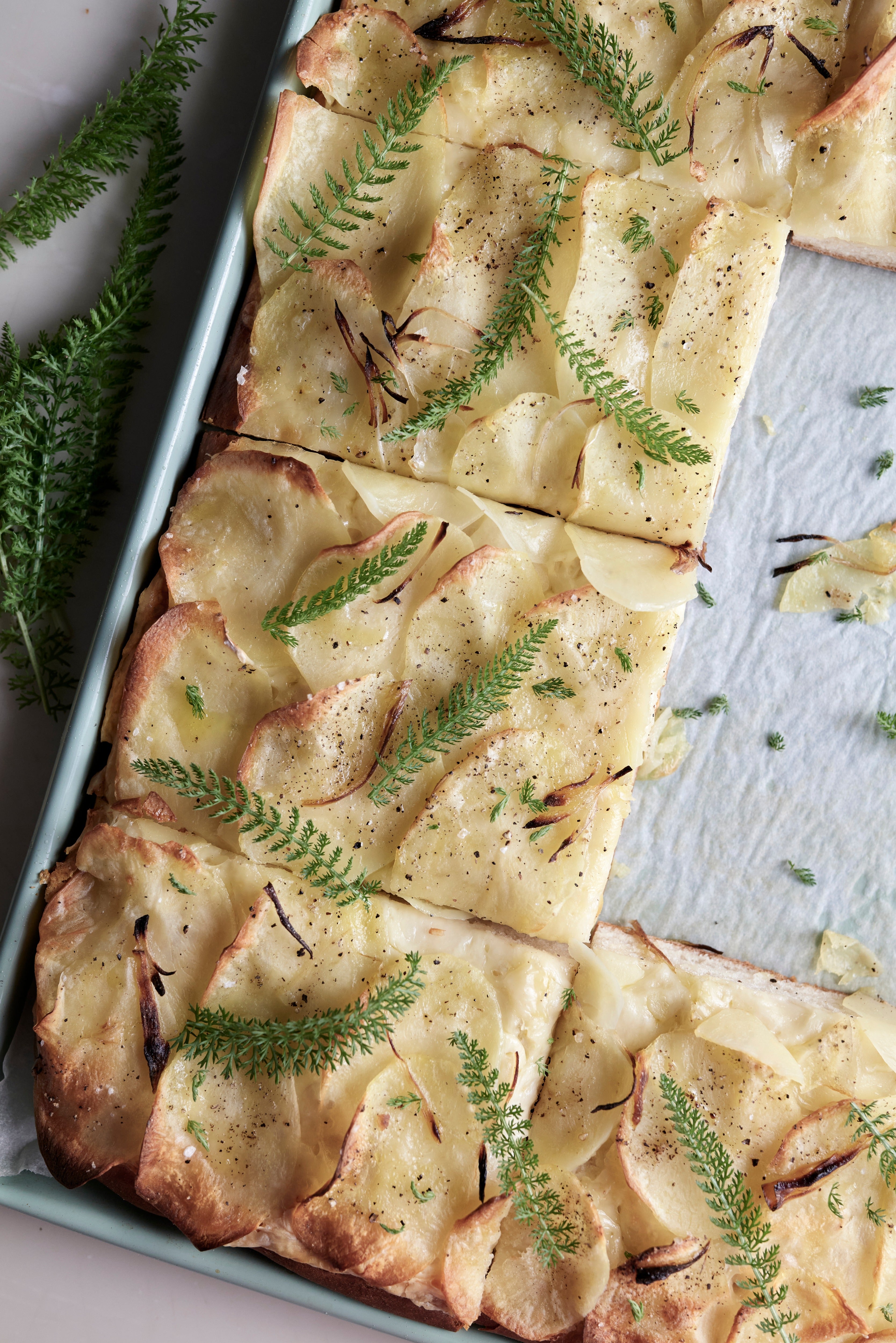
“My Swedish friend Eva taught me how to make gáhkku, a traditional Sámi flatbread. We usually enjoy it as the base for sandwiches, but I thought it would make an excellent pizza base too,” explains Froidevaux.
“When I topped it with thinly sliced potato, my Swedish guests absolutely lost their minds and jokingly crowned me a genius. They adore potatoes, yet had never considered putting them on pizza … and somehow still think bananas are acceptable!
“This recipe has a few resting stages, so you’ll need to start it well before you wish to serve. I use yarrow leaves to sprinkle over, but fresh thyme makes a great substitute – still aromatic, and perfect with the potato topping.”
Serves: 10-12 as small bites
Ingredients:
20g active dried yeast
350ml warm water (approx 37C/99F)
500g plain (all-purpose) flour, plus extra for rolling
1¼ tsp salt
1 tbsp ljus sirap (light syrup) or golden syrup (light corn syrup)
Topping:
1kg potatoes, peeled
200g gruyere cheese slices
1 French shallot, finely sliced
1 tbsp extra-virgin olive oil
10-15g yarrow or thyme leaves
Salt and black pepper
Method:
1. For the gáhkku, place the yeast and warm water in a jug, stir to combine, then set aside for 5 minutes, or until foamy. In the bowl of an electric mixer, combine the flour, salt and syrup. Pour in the yeast mixture and, using the dough hook attachment, knead for about 5 minutes, or until the dough forms a smooth ball and pulls away from the sides of the bowl. If kneading by hand, pour in the yeast mixture and mix with a wooden spoon until a shaggy dough forms.
2. Turn out onto a lightly floured surface and knead by hand for 8-10 minutes, until smooth and elastic. Add a little extra flour if needed. Cover with a damp kitchen towel and leave to prove at room temperature for 1 hour.
3. While the dough is rising, make the topping. Thinly slice the potatoes using a mandoline or sharp knife. Place the slices in a large bowl of water and soak for 1 hour. Drain the potato, then bring a large pot of salted water to the boil. Cook the slices for 5 minutes, drain, and leave them in a colander to dry until ready to assemble.
4. Preheat the oven to 230C (450F/gas 8). Line two 30 x 40cm baking trays (sheets) with baking paper. Turn the dough out onto a floured surface and divide it in half. Roll each portion to roughly the size of your baking trays, transfer to the trays, cover with a kitchen towel, and rest for 30 minutes.
5. Prick the bases all over with a fork. Divide the gruyere slices evenly over both bases. Arrange the potato slices neatly in rows on top, ensuring they lay flat for even cooking. Scatter over the shallot, season with salt and pepper, and drizzle with the olive oil.
6. Bake for 10-15 minutes, swapping the trays halfway through, until the potato slices are golden and the edges crisp. Finish with the fresh herb leaves and serve immediately.
Norwegian stuffed crepes
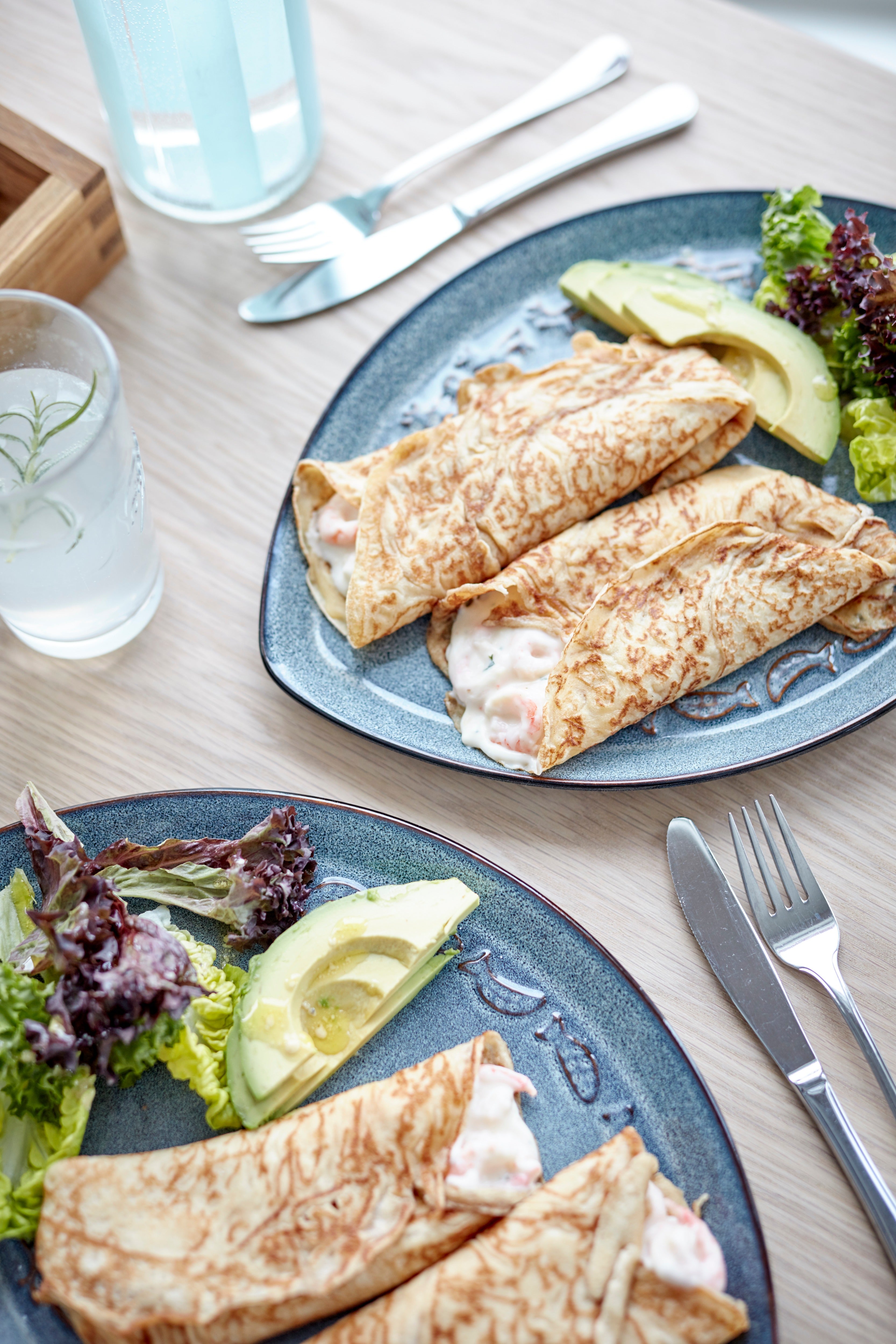
“When I first stayed in Lyngen in northern Norway, my friend Miriam told me how well known the area is for its shrimp, so we had to try some straight away.
“Around the same time, I’d been thinking about savoury stuffed crepes, and the two ideas came together in this dish. The local shrimp are larger and sweeter than what you usually find at the supermarket, but regular-sized shrimp (or prawns) work just as well if you give them a rough chop.
“We stayed at the cabins run by Miriam and her family, where cooking for passing travellers is part of everyday life, and this quickly became a favourite with our photography tour guests,” says Froidevaux.
Serves: 2
Ingredients:
2 eggs
170ml milk
100g plain (all-purpose) flour
Pinch of salt
Unsalted butter, for greasing
Filling:
20g unsalted butter
20g plain (all-purpose) flour
170ml milk
30g cheddar cheese, grated
1 tbsp finely chopped parsley
200g cooked peeled shrimp or prawns, roughly chopped
Salt and black pepper
To serve:
1 avocado, sliced
100g mixed lettuce leaves
1 tsp lemon juice
Extra-virgin olive oil, for drizzling
Method:
1. In a blender, combine the eggs, milk, flour and a pinch of salt and blend until smooth. Rest the batter for 30 minutes.
2. Heat a non-stick frying pan over medium heat and grease with a little butter. Pour in about a ¼ cup of the batter, swirling to cover the base, and cook for 1-3 minutes, or until golden. Flip and cook for 1 minute, then transfer to a plate. Repeat with the remaining batter, adding butter for greasing each time. This mixture makes more than four crêpes, allowing a little extra for any imperfect first attempts.
3. To make the filling, melt the butter in a medium saucepan. Whisk in the flour for 1 minute, then gradually add the milk, whisking between additions, until thickened. Stir in the cheddar, season with salt and pepper, then fold the parsley and shrimp through.
4. Fill each crêpe with about ¼ cup of the shrimp mixture, then roll up and arrange two per plate. Serve with sliced avocado and lettuce leaves drizzled with lemon juice, oil and salt and pepper.
Caramel cookies – kolakakor
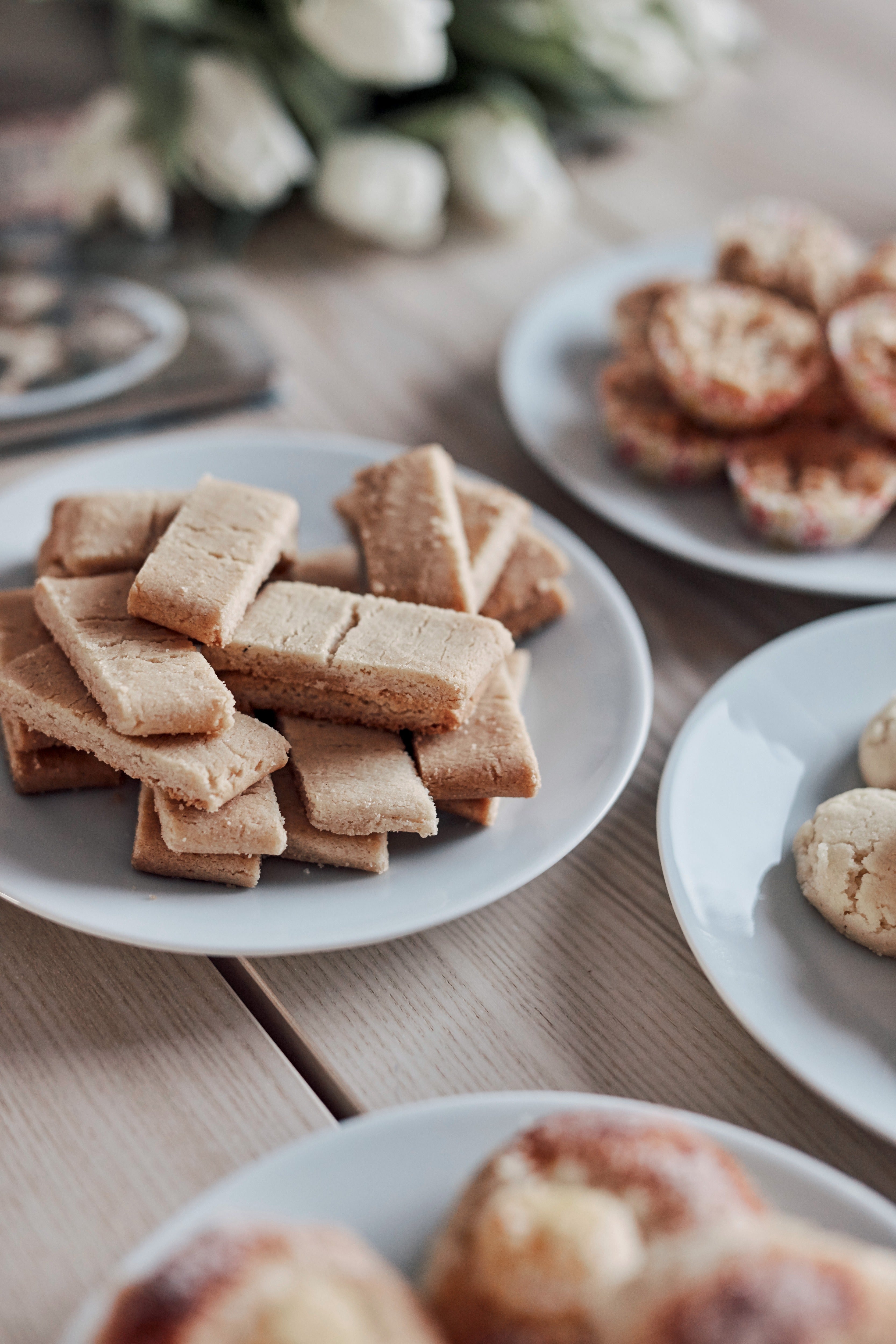
“These are a Swedish classic, with a chewy middle and crisp edges that give each bite a perfect contrast. I first tried them thanks to a lovely lady I met in Sweden, Britta. She shared with me how she makes her homemade version; these cookies are her favourite. They are the perfect size for enjoying alongside a cup of tea or coffee,” says Froidevaux.
Makes: 24
Ingredients:
100g unsalted butter, softened
80g caster (superfine) sugar
1 tsp vanilla extract
1 tbsp ljus sirap (light syrup) or golden syrup (light corn syrup)
150g plain (all-purpose) flour
1 tsp baking powder
Pinch of salt
Method:
1. Preheat the oven to 180C (350F/gas 4) and line a baking tray (sheet) with baking paper.
2. Put all the ingredients into the bowl of an electric mixer and beat for about 2-3 minutes, or until the mixture forms a smooth dough. If you don’t have an electric mixer, bring the mixture together by hand until you have a soft dough.
3. Divide the dough in half and shape each portion into a 30cm log. Place the logs onto the baking tray, leaving plenty of space between them. Flatten each log until it is about 5cm wide and 1cm thick.
4. Bake for 15-20 minutes, or until lightly golden. Remove from the oven and, while still hot, use a knife to straighten the edges of each log.
5. Allow the logs to rest for 2 minutes, then slice each one diagonally into 12 strips to make 24 cookies.
‘The Winter Cabin Cookbook’ by Shellie Froidevaux (Murdoch Books, £14.99).