
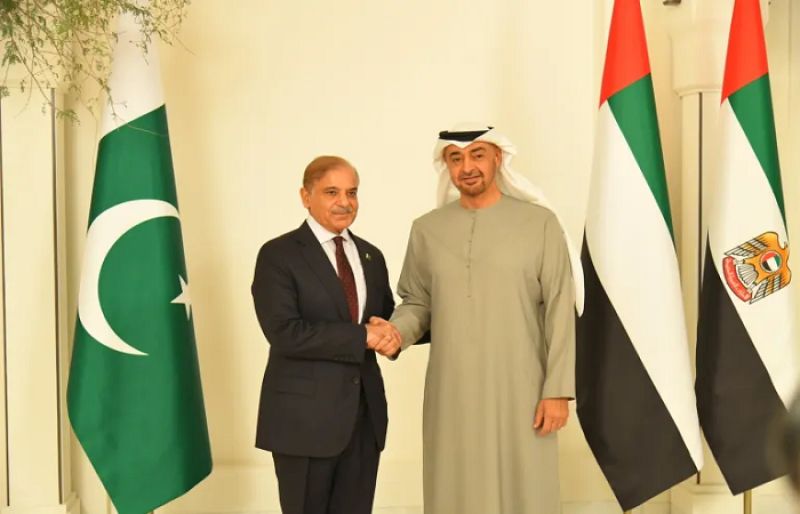
Pakistan’s external financing outlook has come under renewed pressure after it failed to reach an agreement with the United Arab Emirates to roll over $3 billion in debt for the first time in seven years.
The loan amounts to about 18% of Pakistan’s foreign exchange reserves, putting significant pressure on the country’s external buffers and threatening the currency at a time when high crude prices are draining its coffers.
The State Bank of Pakistan’s reserves stood at $16.4 billion as of March 27, enough to cover three months of imports.
It’s unclear what prompted the UAE to call in the loan now. The Foreign Office said on April 4 that the move was a “routine financial transaction”, seeking to downplay speculation of a possible political fallout between the two countries.
Local media reports pointed to a breakdown in negotiations over the terms of a rollover.
Pakistan managed to stabilise its economy in recent years with the help of loans from the International Monetary Fund and friendly donors like the UAE, China and Saudi Arabia.
That helped Pakistan rebuild its reserves and steady the currency, which has traded in a range of 278-282 against the dollar before the Iran conflict began.
The rupee has been little changed since the beginning of March while the nation’s benchmark KSE-100 Index is down 15% after years of global outperformance.
To offset the outflow of funds, the central bank may be forced to take unpopular steps, analysts said, such as restricting imports, raising interest rates or borrowing more from commercial banks.
“The UAE repayment was unexpected and lacked prior arrangement,” said Mohammed Sohail, chief executive officer at Topline Securities Ltd. “We think the central bank will opt for the old method of borrowing through commercial banks dollar swaps.
The IMF doesn’t like this and there are quarterly limits but this is a window that is available.”
IMF instalment
Draining reserves further, the government is due to make a $1.3 billion bond repayment this month to international investors. Pakistan is also still awaiting the latest loan instalment of $1.2 billion from the IMF. The Washington-based lender didn’t immediately respond to a request for comment.
Failure to roll over the UAE debt, a standard practice with Pakistan’s allies over the past decade, signals a shift in stance from Abu Dhabi and comes at a time when Pakistan is forging closer ties with Saudi Arabia. The UAE’s Ministry of Foreign Affairs didn’t immediately respond to a request for a comment.
“We must acknowledge that UAE’s help came at very crucial level when Pakistan was struggling to meet minimum financing arrangements to get the IMF program,” Sajid Amin, deputy executive director at Sustainable Development Policy Institute in Islamabad, said by phone. “I think the government decided to pay it back when it could not secure long-term rollover, despite paying a higher cost of 6.5%. However, one cannot completely rule out changing geopolitical situation.”
Pakistan previously tried to convert some of the UAE debt into equity. Deputy Prime Minister Ishaq Dar, who is also the country’s foreign minister, said in November that the UAE was looking to convert investments into equity stakes in subsidiaries of the military-managed Fauji Foundation.
UAE companies have made investments into Pakistan recently. The Abu Dhabi-based firm International Holding Co acquired a small Pakistani lender First Women Bank Ltd while AD Ports Group signed a 25-year concession pact for bulk and general cargo operations with Karachi Port Trust in 2024.
Pakistan has also offered its airports in government deals to Middle East countries.
While some analysts see enough liquidity in the foreign exchange market to prevent a freefall in the rupee, the drain on reserves could jeopardise the central bank’s ambitious target of reaching $20 billion by the end of 2026.
“Unless we see compensatory inflows from Saudi Arabia to offset the UAE repayment, reserves will go down substantially,” said Mohammad Shoaib, chief executive officer of Lucky Investments. “That doesn’t bode well for market sentiment.”
