
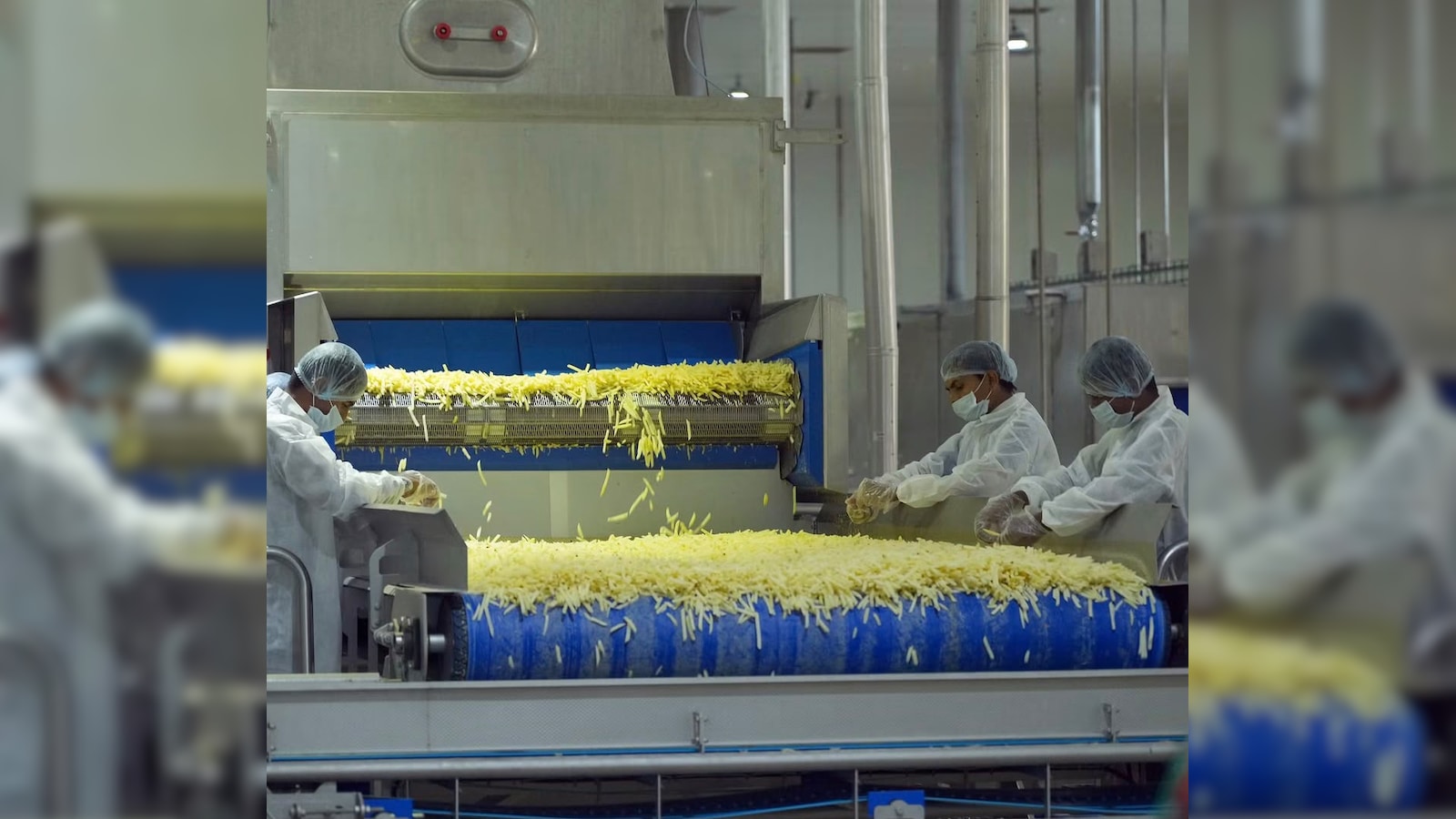
Prime Minister Narendra Modi shared glimpses of a large-scale French fries processing facility in Gujarat that he virtually inaugurated today as part of three major infrastructure and research projects launched for Banas Dairy.
Located at Sanadar in Deodar taluka near the Vav-Tharad region of Banaskantha district, the upgraded plant is capable of processing up to five tonnes of French fries every hour.
PM Modi posted a series of photographs from the facility on Instagram, offering a look at its automated production lines and processing operations.
Sharing the images, the Prime Minister wrote, “Farm to Factory to Fries. Made in India. Served to the World.”
A Rs 51.65 Crore Expansion
The French fries plant has been expanded for Rs 51.65 crore. Work on the upgrade began in April 2026, increasing the facility’s processing capacity from two tonnes per hour to five tonnes per hour.
The project is expected to create greater opportunities for Banaskantha’s potato growers by strengthening access to value-added food markets and processing channels.
Banas Dairy’s Seed-To-Fry Model
Banas Dairy entered the French fries segment under the Amul brand in 2019 and has since developed an integrated supply chain that covers everything from seed development to final processing.
The cooperative says it has built a complete production ecosystem that includes test-tube plantlet development, seed crop cultivation, cold storage, farmer procurement and retail distribution. According to the dairy, it is the only cooperative organisation in the country operating such an end-to-end potato processing system.
The model focuses on supplying disease-free planting material, producing certified seeds and procuring potatoes directly from farmers, helping ensure that the crop meets industrial processing standards.
Banas Dairy also says it follows a circular processing model, using organic waste generated during production to create biogas, while returning residual material to agricultural fields.
How Potato Farming Has Expanded In Banaskantha
Processing-grade potato cultivation in Banaskantha has witnessed substantial growth over the last 25 years. The cultivated area has expanded from around 400 hectares to more than 61,000 hectares.
In 2024-25, the district produced approximately 1.87 million tonnes of potatoes, with productivity estimated at around 30 tonnes per hectare.
Support For Farmers
A key feature of Banas Dairy’s programme is its advance procurement pricing mechanism. Under this system, procurement prices are fixed when seeds are supplied to farmers, providing them with greater certainty ahead of the harvest season.
The cooperative said it passed on an additional Rs 1.83 crore to potato farmers in 2023-24 through price difference payments. Its stated buyback prices were Rs 13 per unit in 2024-25 and Rs 14 per unit in 2025-26.
To further strengthen the supply chain, Banas Dairy set up a 10,000-tonne cold storage facility in 2024. It also signed an MoU with Bharatiya Beej Sahakari Samiti Ltd in November 2025 to improve the availability of certified potato seeds.
Growing Export Potential Of Potato Products
The expansion comes at a time when India’s exports of value-added potato products are growing. During 2025-26, the country exported nearly 2.77 lakh tonnes of such products, valued at around Rs 2,744.50 crore.
With its expanded capacity, the facility is expected to strengthen potato processing in the region while opening up wider market opportunities for farmers and supporting India’s growing presence in the global potato products sector.


