

Want to bookmark your favourite articles and stories to read or reference later? Start your Independent Membership today.
Already a member?
Log in
For an island nation, Britain has a surprisingly limited appetite for what comes out of the sea. Salmon, cod, haddock, tuna and prawns dominate our shopping baskets, while dozens of perfectly good alternatives are largely ignored. Most of us can cook a salmon fillet without too much fuss. Cuttlefish, on the other hand, might require a brief consultation with Google.
Lately, even that familiar salmon fillet has become rather more complicated. Earlier this month, Chris Packham joined a campaign urging M&S to stop selling farmed Scottish salmon, raising concerns about sea lice, chemical treatments and animal welfare. The controversy has raised uncomfortable questions about where our seafood comes from and what happens to it before it reaches our plates.
Perhaps it’s time to broaden our horizons. At The Sea, The Sea, the Chelsea fishmonger and seafood bar that moved across Pavilion Road into a bigger bistro in May, head chef Nick Marsden is making a persuasive case for some of the sea’s less fashionable inhabitants. Having previously cooked at Dovetale, Pitt Cue and The Laughing Heart, Marsden champions lesser-used species alongside familiar favourites, proving that good seafood needn’t always mean salmon or an expensive piece of turbot.
His three autumn recipes are a good place to start: delicate steamed hake with buttery Jerusalem artichokes and barley miso, lemon sole with butter beans and lovage, and a rich cuttlefish ragu tossed through pappardelle with rosemary crumbs. They’re interesting without being unnecessarily complicated, and a reminder that there’s rather more to a fish supper than the supermarket’s usual suspects.
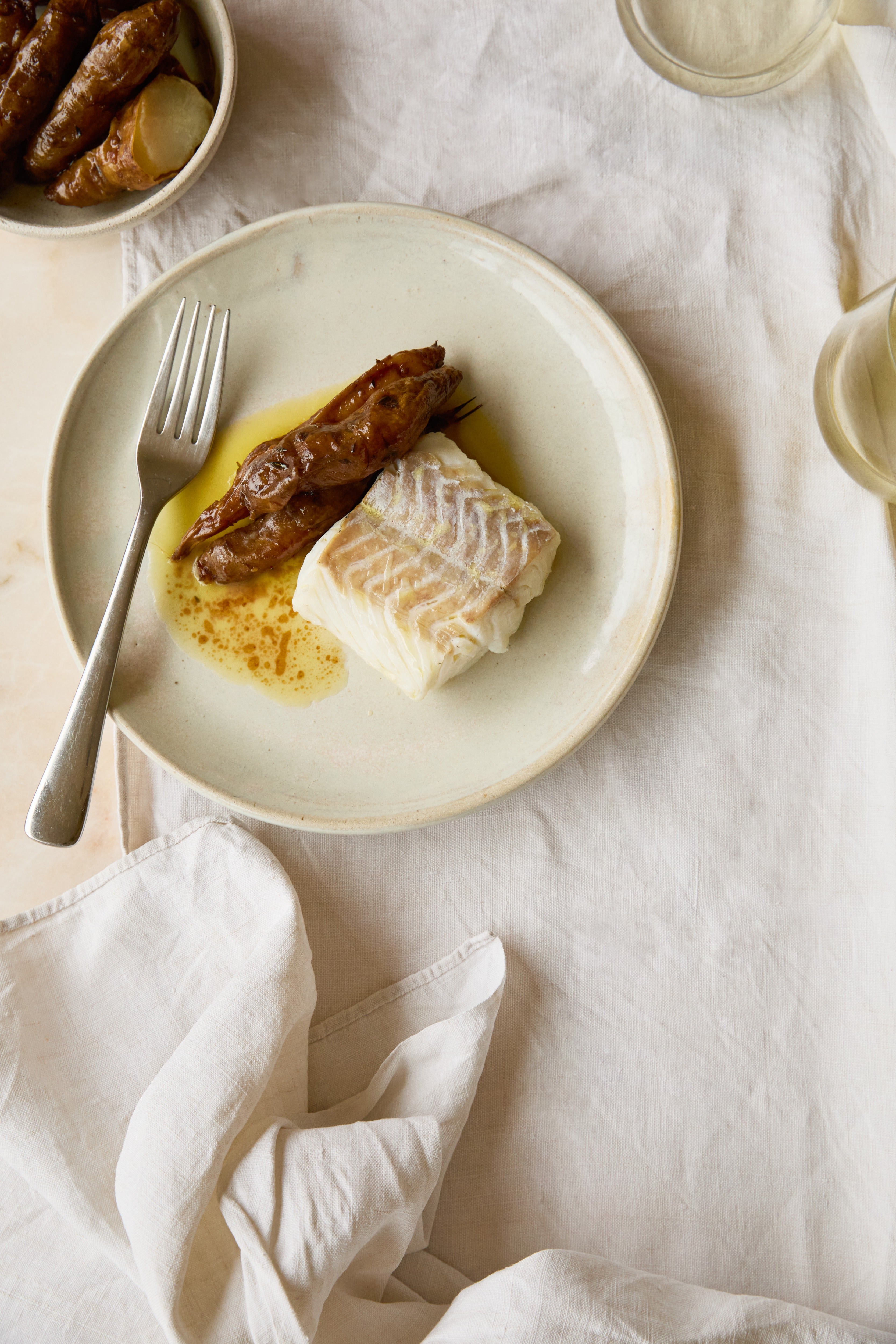
Steamed hake, buttered Jerusalem artichokes and barley miso
Serves: 2
Prep time: 15 minutes | Cook time: 25 minutes
Ingredients:
400g Jerusalem artichokes, washed, skin on
120g unsalted butter
2 sprigs thyme or rosemary
2 tbsp sherry vinegar
½ tbsp barley miso
1 tsp honey
Salt
2 hake fillets, skinless (approx 200g each – you can also use cod, haddock or pollock)
Method:
1. Wash the Jerusalem artichokes thoroughly, but do not peel. Trim and halve any larger ones so they cook evenly.
2. Place a wide frying pan over a medium heat and add 120g unsalted butter. Allow it to melt and foam.
3. Add the artichokes and thyme or rosemary. Cook gently in the foaming butter for 18-25 minutes, turning regularly so they colour evenly and cook through.
4. They are ready when a knife slides in easily and the outside is golden and lightly caramelised.
5. Add 2 tablespoons sherry vinegar, ½ tablespoon barley miso, and 1 teaspoon honey. Stir well so the artichokes are evenly coated.
6. Continue cooking for 2–3 minutes, allowing the miso to caramelise lightly and the glaze to become glossy. Remove the herbs.
7. Keep the buttery sauce left in the pan – this will be used for serving.
8. Lightly season the hake with salt and leave for 10 minutes before cooking.
9. Bring a pan with a steamer insert to a gentle simmer. Place the hake in the steamer, cover and cook for approximately 4 minutes, until just opaque. The flesh should flake easily but remain moist.
10. To serve, place the hake and glazed artichokes onto a plate, and spoon a small amount of the miso butter sauce around the fish.
11. Serve immediately.
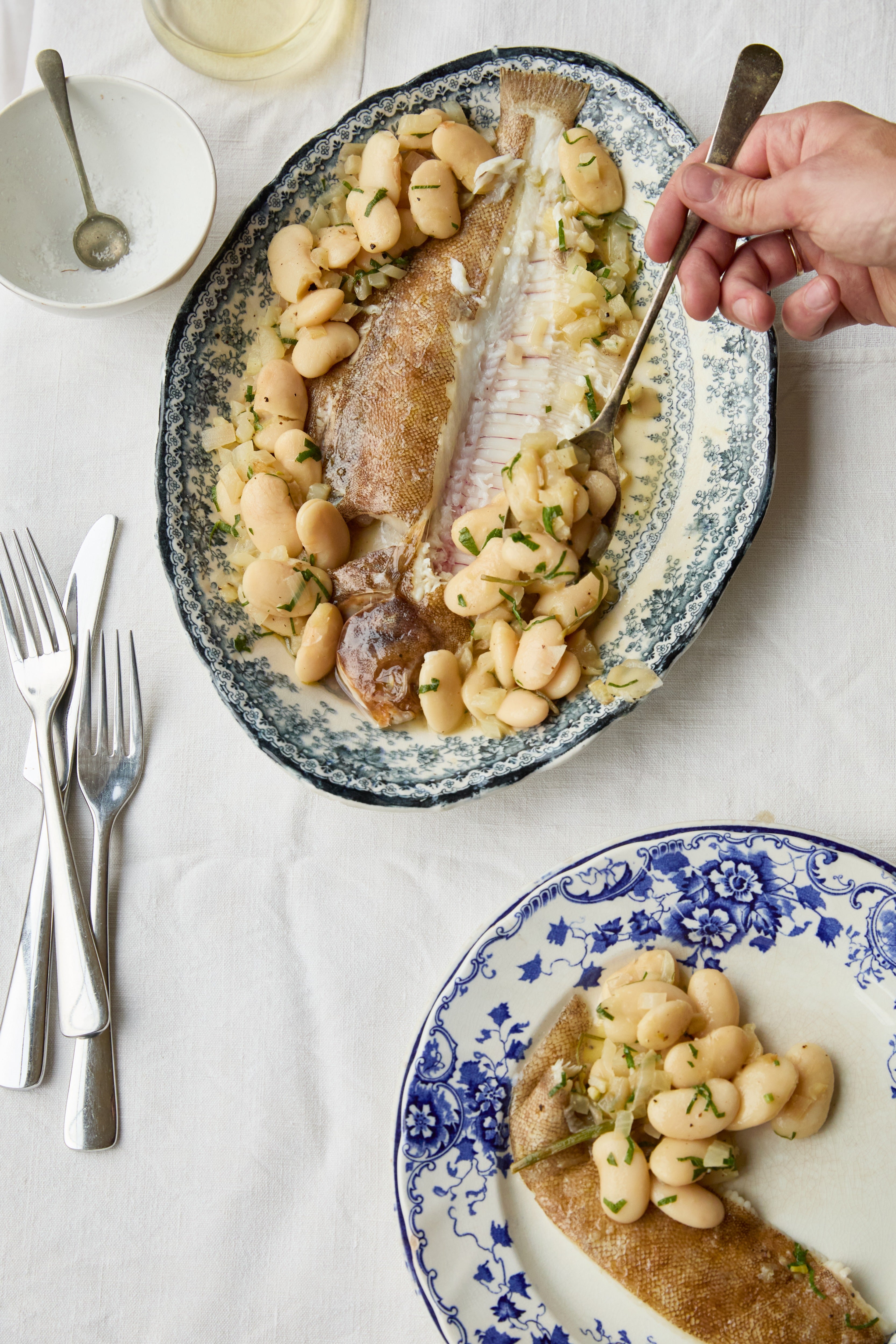
Lemon sole, butter beans and lovage
Serves: 2
Prep time: 20 minutes | Cook time: 15 minutes
Ingredients:
1 whole lemon sole (approx 800g), gutted, scaled, gills removed and bloodline cleaned, with the skin on.
Alternatively you can use dover sole, dover sole fillets, megrim or plaice
For the fish:
3 tbsp olive oil
2 garlic cloves, lightly crushed
2 sprigs thyme
2 bay leaves
1 lemon, sliced
100ml dry white wine
Salt
For the butter beans:
1 jar butter beans (approx 400g drained weight)
3 tbsp olive oil
1 shallot, finely diced
2 garlic cloves, finely sliced
½ small fennel bulb, finely diced
100ml dry white wine
50–75ml water
1 bay leaf
Zest of ½ lemon
To finish:
1-2 tsp colatura or fish sauce
Small handful lovage, chopped
Lemon juice
Extra virgin olive oil, to finish
Salt
Method:
1. Preheat the oven to 200C.
2. Ensure the lemon sole has been gutted, scaled, the gills removed and the bloodline cleaned. Pat dry thoroughly.
3. Using a sharp knife, make a long shallow cut down the backbone, and around the circumference of the top side of the fish. Ask your monger if you are unsure! This allows the flesh to cook evenly and lift away cleanly from the bone once cooked. If you prefer lemon sole fillets, fishmongers are always happy to fillet it for you.
4. Lay the lemon sole on a large sheet of baking paper set on a tray. Season lightly with salt and drizzle with olive oil. Tuck the garlic, thyme, bay leaf and lemon slices underneath the fish. Pour the white wine around (not directly over) the fish.Fold the paper tightly over the fish to create a sealed parcel.
5. Cook for 8-10 minutes. Remove from the oven and leave to rest for 5 minutes before opening – the trapped steam will gently finish cooking the fish.
6. Meanwhile, warm olive oil in a saucepan over a medium heat. Add the shallot, garlic and fennel with a pinch of salt. Cook slowly until soft and sweet, but without any colour.
7. Add the butter beans, bay leaf and white wine. Add 50-75ml water, and simmer gently for 8-10 minutes until slightly reduced but still loose and glossy.
8. Remove the bay leaf. Finish the beans with lemon zest, a few drops of colatura or fish sauce, chopped lovage, a squeeze of lemon juice and an extra drizzle of good olive oil. Taste and adjust seasoning.
9. Open the fish parcel carefully, keeping the cooking juices. Lift the lemon sole onto the plate and spoon over some of the fragrant liquor. Any remaining can be added to the butter beans before serving.
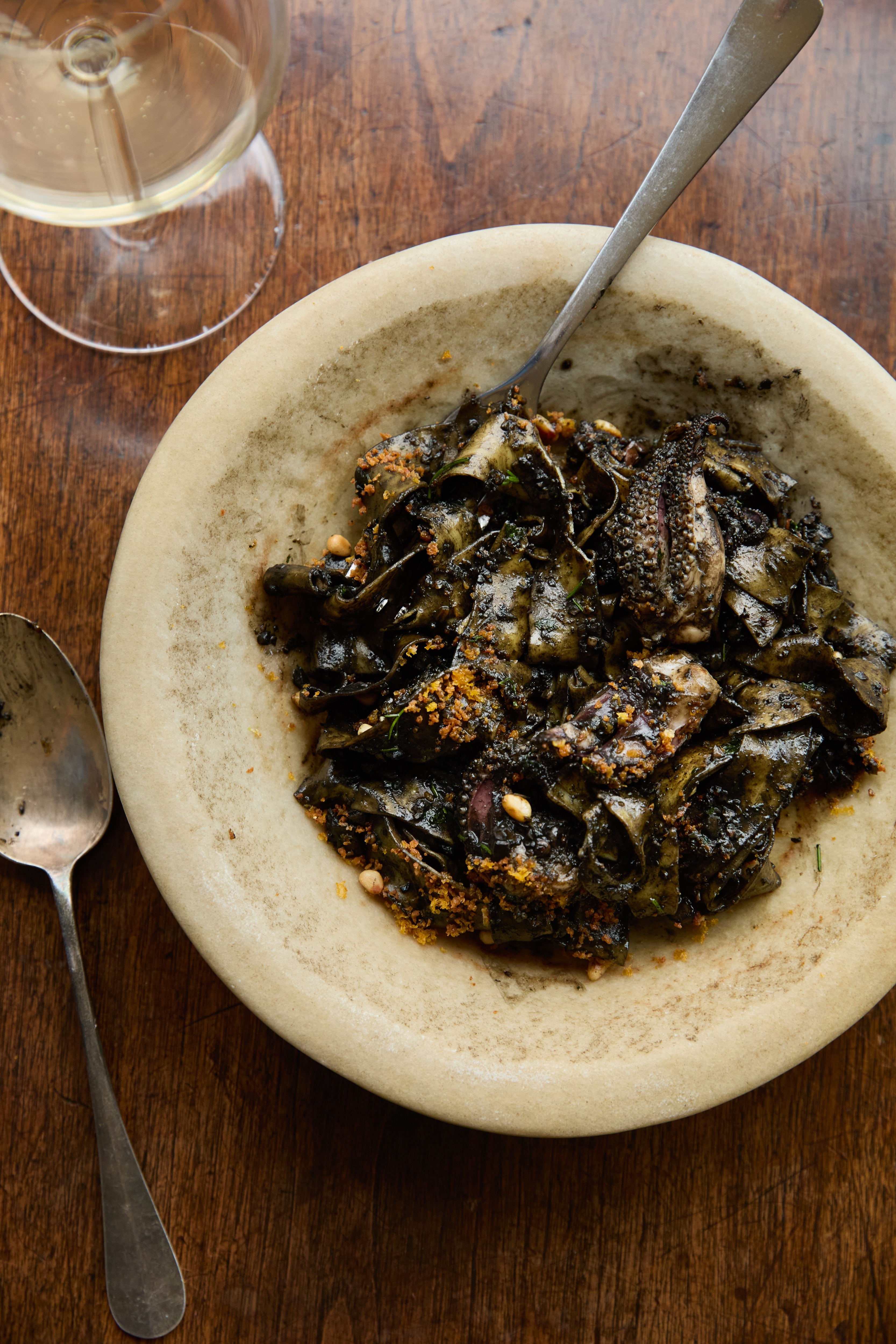
Cuttlefish ragu, pappardelle and rosemary crumbs
Serves: 4
Prep time: 30 minutes | Cook time: 45 minutes
Ingredients:
400g fresh pappardelle
For the cuttlefish ragu:
600g cuttlefish, cleaned
5 tbsp olive oil
1 small onion, finely chopped
1 small carrot, finely chopped
1 celery stick, finely chopped
100ml white wine
300ml water
2-3 strips lemon peel
2 sprigs thyme
Small bunch parsley (stems used)
2–3 tbsp squid ink
Salt
Fresh lemon juice
For the rosemary crumbs:
80g stale bread
40g butter
1 tbsp finely chopped rosemary
Zest of ½ lemon
Salt
To finish:
30g pine nuts, toasted
Small handful chervil, chopped
20g bottarga, finely grated
Method:
1. Heat the olive oil in a wide pan over a medium heat. Add the onion, carrot and celery and cook gently for 8-10 minutes until soft.
2. Slice the cuttlefish, Squid or Octopus , to your preference, into strips, leaving some of the smaller tentacles whole. Add to the pan with the lemon peel and cook for a few minutes. Pour in the white wine and allow it to reduce almost completely.
3. Add 300ml water along with the thyme and parsley stems (Or use whatever herbs you have lying around). The liquid should just come level with the cuttlefish. Cover and cook gently for 25-30 minutes until tender. Discard the herb stems and lemon peel.
4. Remove the larger pieces of cuttlefish, leaving the smaller tentacles in the pan. Finely chop the larger pieces, then return them to the sauce.
5. Uncover and simmer for 10-15 minutes until your ragu has reduced to a thick, spoonable consistency. Add the squid ink, stir through, and cook for a few minutes until glossy.
6. Cook the pappardelle in well-salted boiling water until al dente. Drain, reserving a little pasta water.
7. Add the pasta to the ragu and toss well. Season with salt and a squeeze of lemon juice, adjusting to taste. Add a splash of pasta water if needed to loosen.
8. For the crumbs, blend the stale bread into coarse crumbs. Fry gently in butter until golden and crisp. Remove from the heat and stir through the chopped rosemary, lemon zest and a pinch of salt.
9. Divide between bowls. Finish with toasted pine nuts, chopped chervil, grated bottarga and rosemary crumbs.
10. Serve immediately.


