

Want to bookmark your favourite articles and stories to read or reference later? Start your Independent Membership today.
Already a member?
Log in
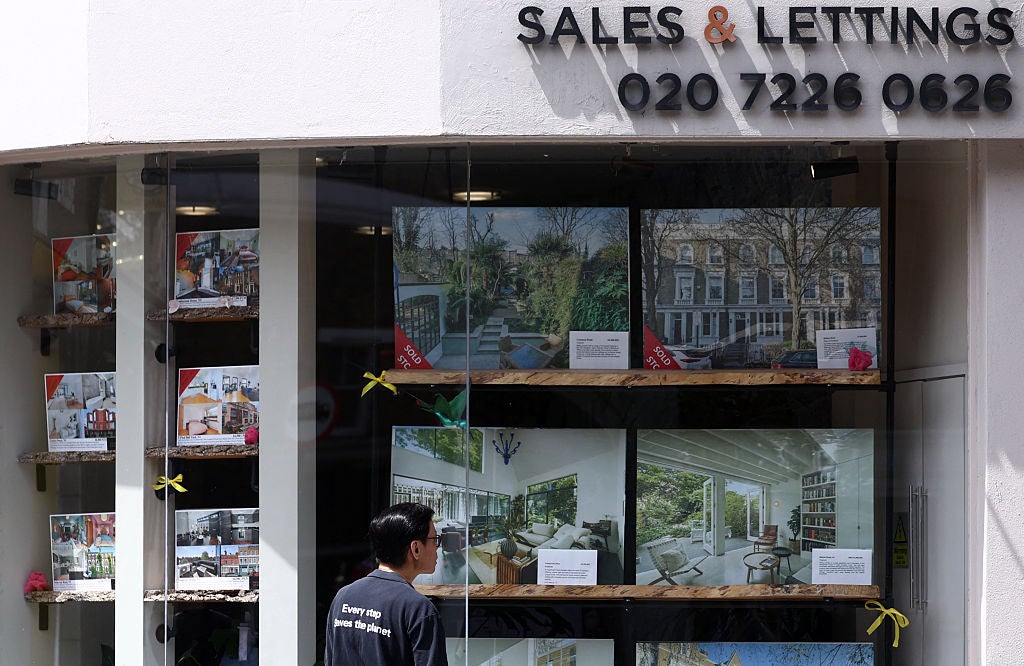
More than a third of homes across the UK sit in postcode areas where property values have dropped over the past year, Zoopla has estimated.
The property website put the figure at 35 per cent, up sharply from 12 per cent a year earlier, while many property value falls are concentrated in London and the South East of England.
At a localised level, 85 per cent of homes in London and the South East are estimated to be in postcode areas where prices have fallen.
Elsewhere, values are still climbing by more than 3% annually in some areas, particularly across the North West and Scotland, Zoopla said.
It said annual price growth above 4 per cent is being recorded in postcode areas in Liverpool, Carlisle and Kilmarnock.
Higher mortgage rates have pushed up the cost of buying, according to Zoopla, while buyers have become more selective.
The number of homes for sale is 7 per cent higher than last year, giving buyers more choice and room to negotiate, it said.
This is also putting pressure on sellers to price their properties competitively to attract buyer interest, it added.

Invest at least £100 in Stocks or ETFs of your choice. Get fractional shares worth £50!
Terms and conditions apply.
ADVERTISEMENT
Invest at least £100 in Stocks or ETFs of your choice. Get fractional shares worth £50!
Terms and conditions apply.
ADVERTISEMENT
Even so, the average UK house price remains 0.8 per cent higher than a year earlier, at £273,100, Zoopla said.
The figures come from Zoopla’s latest house price index, which covers the period up to the end of September 2026.
Richard Donnell, executive director at Zoopla, said: “The extra cost of mortgages has made home buyers more selective while greater choice of homes for sale has increased the scope to negotiate on price.
“The impact is being felt by sellers in southern England where house price falls are most concentrated as average prices continue to rise across the rest of the country.
“There is still demand to buy homes, and those that are well priced and presented are selling just as quickly as last year.
“Getting the price right from the start is essential.
“Overpricing significantly reduces the chances of selling, so sellers should seek advice from local agents on buyer demand and the right asking price for their home.”
The government recently unveiled the Your First Home initiative, which will give first-time buyers the chance to buy a new build property with a 2.5 per cent deposit, with the government stepping in to lend them an extra 20 per cent towards the cost.
Full details will be outlined in the Budget, including a household income cap and local property price caps, with the aim of ensuring the new support is targeted at those who need it.
The Budget will also include more than £1 billion for social and affordable housing and give England’s mayors and regional leaders greater powers and funding.
With the Budget looming on Wednesday, Mr Donnell said: “The biggest boost the Budget could provide to the housing market would be to create the conditions for lower mortgage rates.
“We expect activity to strengthen once mortgage rates start moving back below 5 per cent.
“Changes to stamp duty could support buyers and sellers, particularly in southern England where transaction costs are highest.
“The Your First Home scheme is positive for the new homes industry and, if designed well, could stimulate demand and support wider housing market activity in 2027.”
Nathan Emerson, chief executive at property professionals’ body Propertymark, said: “The housing market is becoming increasingly localised, with higher mortgage costs putting pressure on affordability, particularly in southern England.
“While increased choice is giving buyers greater scope to negotiate, realistic pricing and informed advice from property professionals remain essential to achieving successful sales.
“Despite regional price falls, demand remains, but buyers are increasingly selective and focused on value.
“Ultimately, market confidence will depend on improved affordability, access to suitable housing and the ability of buyers and sellers to move with confidence.”


