
On my second visit with Nancy Wexler at her Manhattan apartment, she had a gift for me. It was a copy of her newly published memoir, “My Life, My Science: Pursuing a Cure for Huntington’s Disease.”
It had been signed with a stamp of her signature — she isn’t able to sign it herself. Nor could she rise from her brown faux-leather recliner to greet me — she can’t get up unassisted. Speaking requires effort. She can manage at most a few badly slurred words or phrases or, with great difficulty, a short sentence.
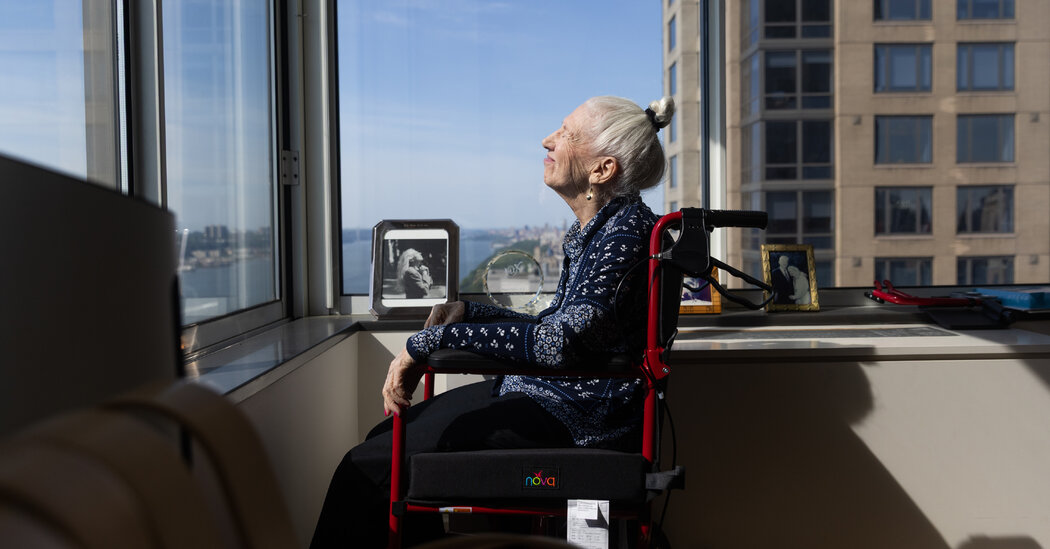
On that bright windy afternoon, Nancy and her sister, Alice Wexler, sat side by side in recliners, their backs to windows that offered a stunning view of the Hudson River far below. Alice lives in California, but she visits Nancy every other month.
At age 80, Nancy Wexler has Huntington’s disease, a dreaded brain disease that destroys a person’s ability to control movements. There is no treatment. There is no cure.
The disease is inherited: Nancy’s grandfather, three uncles and mother had it. Alice, however, does not: If a parent has Huntington’s, each child has a 50 percent chance of getting it. Their mother attempted suicide, a path that others with the disease have chosen, but ultimately died from Huntington’s.
Nancy is not just any Huntington’s disease patient. For decades, she led a research effort in a remote area of Venezuela that found the gene responsible for Huntington’s. That work yielded a blood test that enable at-risk people to find out if they are destined to get the disease. In honor of this work, Nancy has garnered numerous accolades and prizes, including two Lasker awards, among the most prestigious in science. She devoted her life to understanding what it’s like to be at risk for Huntington’s disease, what it’s like to have it.
What she did not know, though, was that she would get it herself. After helping lead the crucial research that allowed those at risk to find out if they would contract this terrible disease, Nancy chose not to be tested.
Now that the disease has progressed long past the point where she can keep contributing to the fight against Huntington’s, it is natural to wonder: How would her life and research have been different had she made the other choice? If your fate is sealed, is it better or worse to know?

