
Having spent four formative years in the Soviet Union in the 1980s, I have followed Russia’s changing fortunes with both intellectual and personal interest. I remember a country that, despite its contradictions and authoritarian institutions, regarded itself as a superpower equal to the US.
Few imagined that within a decade it would disappear, leaving behind fifteen independent republics and unresolved questions of identity, sovereignty and security. Reading Munir Ahmed’s ‘Ukraine War: Beyond the Headlines’ (Devcom, 2026), I was reminded how the consequences of that disintegration continue to haunt international politics. Munir Ahmed, a Pakistani geopolitical analyst and journalist, challenges the dominant Western interpretation of the Ukraine conflict through essays examining Nato expansion, Russian security concerns, American strategic interests, sanctions and the war’s global economic consequences.
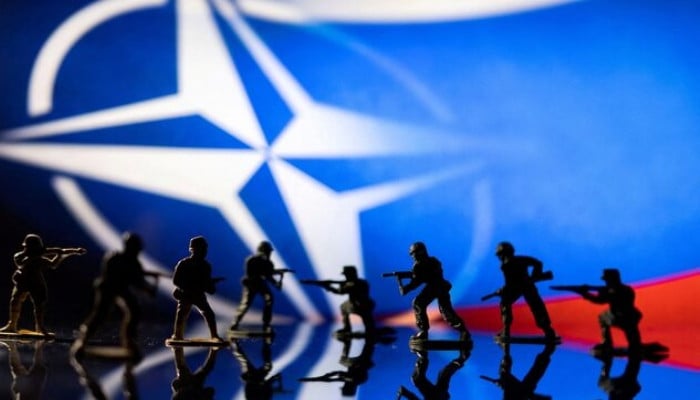
The book’s principal strength is its insistence that the conflict cannot be understood by beginning the story on February 24, 2022. Its origins lie partly in the failure to construct an inclusive European security order after the cold war. When the Soviet Union collapsed in 1991, the Warsaw Pact had already disappeared. Nato, established to contain Soviet power, nevertheless survived and expanded. Poland, Hungary and the Czech Republic joined in 1999; seven more countries, including the Baltic republics, followed in 2004. Yet Moscow saw an alliance originally established against the Soviet Union advancing towards Russia’s borders. The crucial issue was not merely Nato’s geographical expansion. It was the assumption that Western powers could determine Europe’s security architecture without adequately accommodating Russian concerns.
Washington celebrated the cold war’s conclusion as a victory; Moscow increasingly regarded the settlement as an unequal peace. The Nato summit in Bucharest in April 2008 marked a turning point. Under American pressure, the alliance declared that Ukraine and Georgia would eventually become members, although neither received a timetable or immediate security guarantees. Nato thus raised expectations while aggravating Russian apprehensions and leaving both countries exposed. The dangers were foreseeable.
In February 2008, William Burns, then American ambassador to Moscow and later CIA director, warned Washington that Ukrainian Nato membership crossed a sensitive Russian security boundary. His diplomatic cable, titled ‘Nyet Means Nyet’, explained that opposition extended beyond Vladimir Putin and warned of potentially serious consequences for Ukraine. Why, then, did Washington continue pursuing a policy whose dangers its own diplomats recognised?
Munir Ahmed repeatedly challenges the assumption that American policy represented a disinterested defence of European security. His chapters on Russia’s rationale for military intervention, Nato and Western arms supplies locate Ukraine within a larger contest for geopolitical predominance. Nato enlargement can reasonably be interpreted as an extension of American strategic influence. During my years in Moscow, rivalry between two superpowers dominated international relations. Each accused the other of expansionism and interference.
What strikes me today is that the disappearance of one superpower failed to produce the cooperative security settlement that might have ended the confrontation. Instead, Nato expanded while Russia’s economic and diplomatic marginalisation constrained its influence. The 1999 Nato bombing of Yugoslavia reinforced Moscow’s suspicion that Western governments would use force without Security Council authorisation. Nato’s invasion of Afghanistan in 2001 and of Iraq in 2003 further undermined Washington’s claims to consistent respect for sovereignty.
Ukraine’s crisis in 2014 deepened these contradictions. President Viktor Yanukovych’s removal followed mass protests, political confrontation and violence. Western governments supported the opposition, while Moscow interpreted the transition as a geopolitical realignment encouraged from abroad. The protests had genuine domestic origins, but external powers also sought influence. Russia’s seizure of Crimea and the outbreak of conflict in Donbas transformed the crisis into a prolonged confrontation.
Munir’s discussion of the Odessa tragedy of May 2014 is particularly disturbing. Forty-eight people died during violent clashes and the Trade Unions House fire. International investigations subsequently documented grave failures by Ukrainian authorities to prevent violence and rescue victims. The suffering of those opposing the post-Maidan government deserves recognition, without accepting unsupported allegations about the perpetrators.
The failure of the Minsk agreements raises further questions about the commitment of the parties to negotiated compromise. In December 2021, Moscow submitted draft security agreements to Washington and Nato demanding restrictions on further enlargement and military deployments. Some provisions would have constrained neighbouring states’ sovereignty, but others concerning missiles, military exercises and reciprocal guarantees offered possibilities for negotiation. Western governments engaged diplomatically but rejected Russia’s central demand to halt Nato enlargement. Whether compromise could have prevented the invasion remains uncertain; the failure to achieve one deserves scrutiny. Munir also questions the continuation of Western military assistance.
Ukraine has every right to defend itself, but supplying increasingly sophisticated weapons without a credible diplomatic settlement raises difficult questions about the duration and objectives of warfare. Defence manufacturers benefit from expanding military contracts, while governments justify rising expenditure. This does not establish that commercial interests caused the conflict, but it reveals how militarisation creates powerful constituencies. The consequences extend far beyond Europe. Disrupted grain exports, rising energy costs, inflation and economic instability have burdened developing countries that played no part in the strategic decisions producing the confrontation. Pakistan’s experience demonstrates how distant conflicts aggravate existing financial vulnerabilities.
Munir Ahmed’s emphasis on multipolarity is understandable. A world less dominated by Washington could create greater diplomatic space for developing countries. The crisis also raises uncomfortable questions about the political judgement of electorates increasingly attracted to celebrities and outsiders. US President Donald Trump came to the presidency from business and television, Volodymyr Zelensky from comedy and entertainment and Imran Khan from cricket stardom followed by political activism. Their backgrounds alone do not disqualify them from public office; democratic leadership need not be the monopoly of professional politicians. Yet electoral popularity, business success, sporting achievement or television fame cannot substitute for diplomatic experience, institutional understanding and sound political judgement.
Trump brought an unconventional, highly personalised approach to international relations; Zelensky entered office with limited political experience; and Imran Khan’s administration exposed the difficulties of translating populist promises into effective governance. The concern is not their former professions but the danger of confusing personal charisma with governing competence. When leaders lack institutional discipline or experienced advisers, the consequences can extend beyond national borders. There is another lesson Pakistan cannot ignore. The disintegration of countries seldom resolves ordinary people’s problems automatically; often it generates new ethnic tensions, territorial disputes and economic difficulties.
The Soviet Union’s collapse produced fifteen independent states but left conflicts over Crimea, Nagorno-Karabakh, Abkhazia, South Ossetia and Transnistria unresolved. Former administrative boundaries became international frontiers, transforming internal disputes into interstate confrontations. Pakistan must examine this experience alongside its own tragedy of 1971. Bangladesh’s emergence followed the refusal of Pakistan’s ruling establishment to recognise Bengali democratic and cultural aspirations, culminating in repression and war. The lesson is not that national unity should be maintained through coercion, but that a country’s survival must remain desirable for all its constituent peoples.
Today, Pakistan’s cohesion depends upon addressing grievances in Balochistan, Sindh, Khyber Pakhtunkhwa and elsewhere. Provincial autonomy, equitable resource distribution, cultural rights and democratic representation strengthen rather than weaken the federation. Fragmentation would not automatically eliminate poverty, unemployment or exploitation. New states could inherit existing inequalities while generating additional disputes over borders, water and resources. Equally, suppressing legitimate grievances in the name of unity would reproduce the conditions threatening national cohesion.
Munir Ahmed’s book has limitations. Its short essays occasionally repeat arguments, while some interpretations require stronger documentary evidence and greater engagement with Ukrainian perspectives. Nevertheless, it contributes by questioning the strategic assumptions underlying Western policy and exposing the human costs of geopolitical confrontation. The cold war’s end could have encouraged an inclusive security order. Instead, Western triumphalism, Russian grievances, competing national aspirations and failed diplomacy helped produce another devastating conflict.
The writer is dean of the faculty of liberal arts at a privateuniversity in Karachi. He tweets/posts @NaazirMahmood and can be reached at: [email protected]
Disclaimer: The viewpoints expressed in this piece are the writer’s own and don’t necessarily reflect Geo.tv’s editorial policy.
Originally published in The News


