
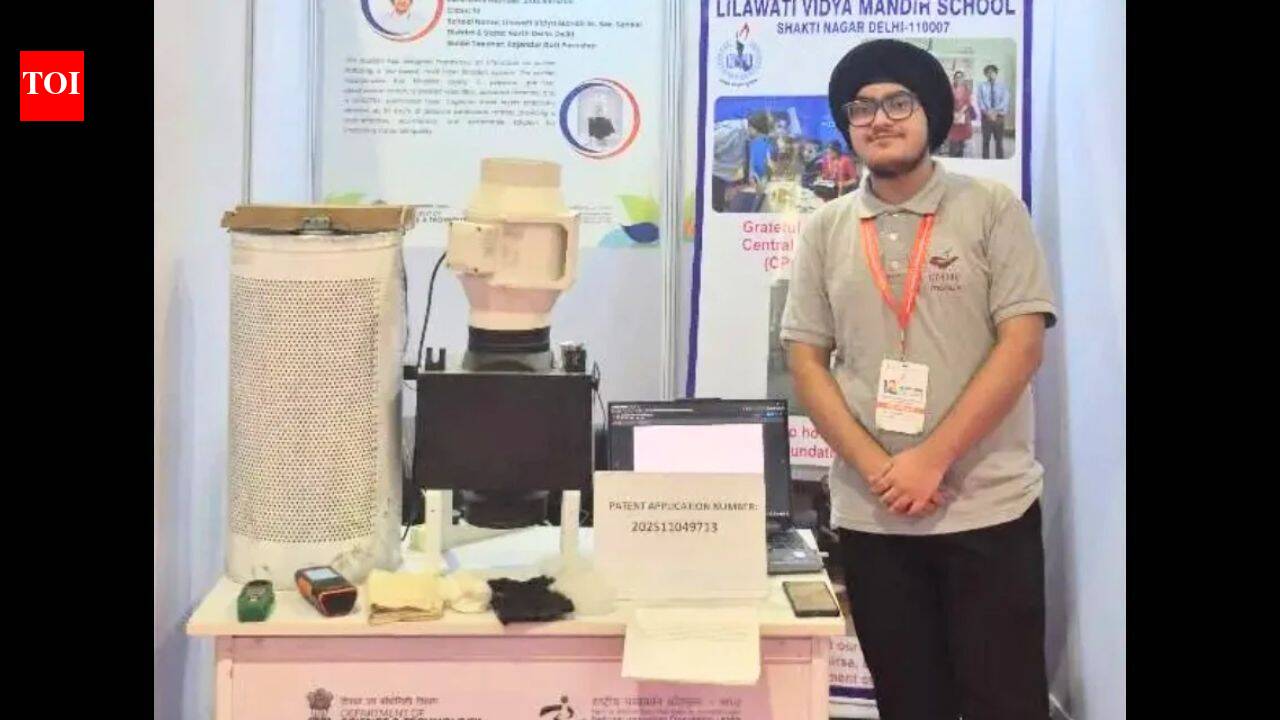
It’s that time of the year when air pollution has again fixed its place in common people’s lives. As the problem continues to be a major cause of concern in several Indian cities, a school student, understanding the criticality of the issue, attempted to find a more sustainable way of filtering indoor air has earned him national recognition. Meet Tanjot Singh, a student of Delhi Public School (DPS), R.K. Puram. The young student has developed an alternative to conventional HEPA filter media using compressed wool felt and electrostatic cotton. Intelligent, right?His innovation explores the possibility of using bio-based materials for air filtration while addressing concerns about the disposal of synthetic filter materials.His project has earned him a place among the top 60 national winners at the 12th National Level Exhibition and Project Competition (NLEPC) under the INSPIRE-MANAK programme, an initiative of the Department of Science and Technology (DST), Government of India, implemented in collaboration with the National Innovation Foundation (NIF)-India.An alternative to conventional HEPA filter mediaThe idea behind Tanjot’s product is to explore whether naturally derived materials can be used to develop effective air filtration systems. Conventional air purifiers commonly use High-Efficiency Particulate Air (HEPA) filters, ideal for capturing airborne particles as air passes through a dense network of filter fibres.
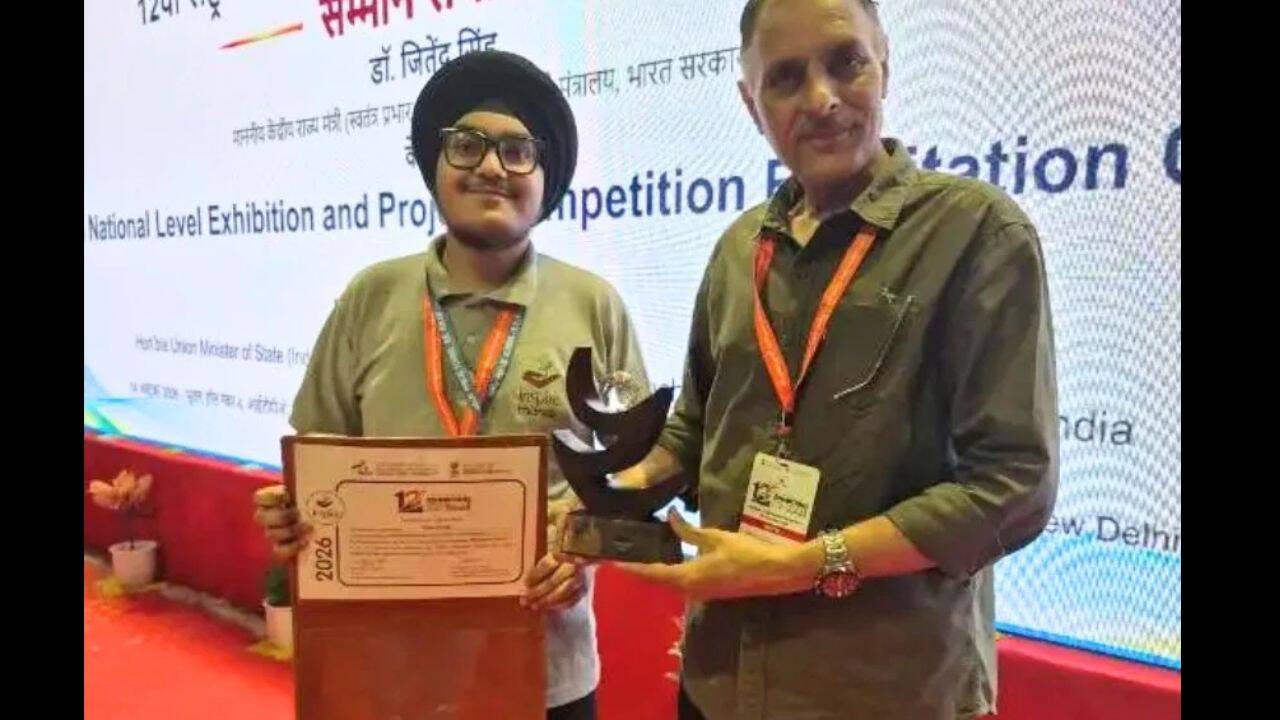
Tanjot Singh won the national INSPIRE-MANAK (PC: dpsrkp.net)
Although these filters play an important role in improving indoor air quality, their synthetic filter media eventually need replacement. This creates a recurring requirement for new filter materials and raises questions about the waste generated by discarded filters.Tanjot’s project explores a different approach. Developed through his initiative, PraaNavya, the prototype uses compressed wool felt and electrostatic cotton as bio-based alternatives to conventional synthetic HEPA filter media.As per DPS R.K. Puram’s account of the project, the prototype underwent internal particulate-removal experiments and comparative pressure-drop testing against a HEPA filter benchmark.The central ideaThe use of wool felt and electrostatic cotton is central to the idea. Instead of relying entirely on conventional synthetic filter materials, the project investigates whether these materials can offer a more sustainable approach to filtration.However, the prototype’s recognition should not be confused with certification as a replacement for commercial HEPA filters. Its filtration efficiency, performance across different particle sizes, durability and long-term usability would need independent testing before it could be considered a commercially viable alternative.National recognitionTanjot’s innovation journey began in 2024, when his idea was selected under the INSPIRE-MANAK programme. He received an INSPIRE Award of Rs 10,000 to develop his concept further.The journey involved several stages of evaluation. After receiving the initial recognition, he qualified through the State Level Exhibition and Project Competition (SLEPC) in December 2025. He subsequently received mentorship at IIT Delhi in February 2026 to refine his research and develop the prototype.His work was eventually selected among the top 60 national innovations at the 12th National Level Exhibition and Project Competition, held at Bharat Mandapam, New Delhi, from October 12 to 14, 2026.What is INSPIRE-MANAK?The INSPIRE-MANAK programme stands for Million Minds Augmenting National Aspirations and Knowledge. It is one of the flagship initiatives of the Department of Science and Technology and is implemented in collaboration with the National Innovation Foundation-India.
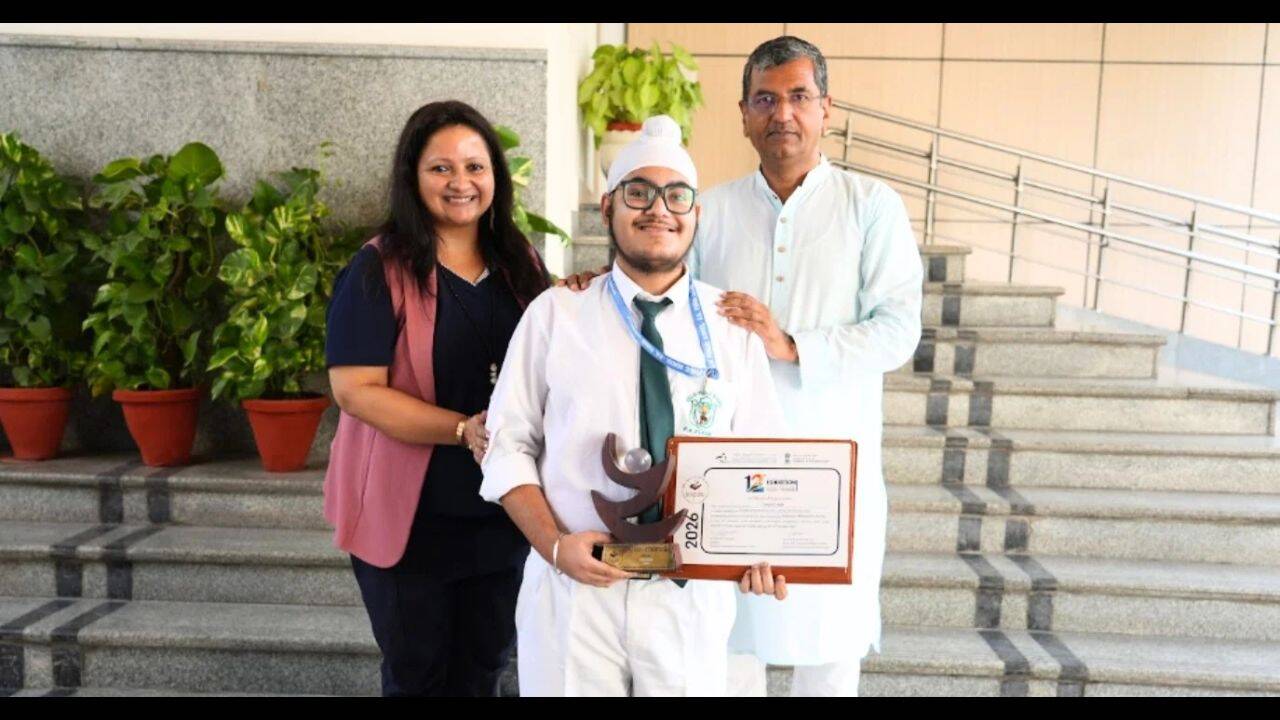
Tanjot Singh, Young Innovators Award (PC: dpsrkp.net)
Under the scheme, students whose ideas are shortlisted receive an initial financial grant of Rs 10,000 through direct benefit transfer. They then progress through district and state-level exhibitions, with selected innovations advancing to the national-level competition.The programme evaluates ideas on parameters such as originality, social applicability, environmental friendliness, user-friendliness and their comparative advantage over existing technologies. The top 60 innovations receive national recognition and may also be considered for further product development and commercialisation.Earlier recognition at the Young Innovators AwardsThe INSPIRE-MANAK recognition was not Tanjot’s first achievement for his air-filtration idea. In January 2026, his project also received recognition at the Young Innovators Awards organised during the InnoHEALTH conference.According to a report by The Young Achievers, he was declared the overall winner in the Young Innovators Awards, with the jury recognising the clarity of his problem statement and the innovation’s potential to scale.For now, Tanjot’s work represents an interesting intersection of scientific curiosity and environmental innovation.


