
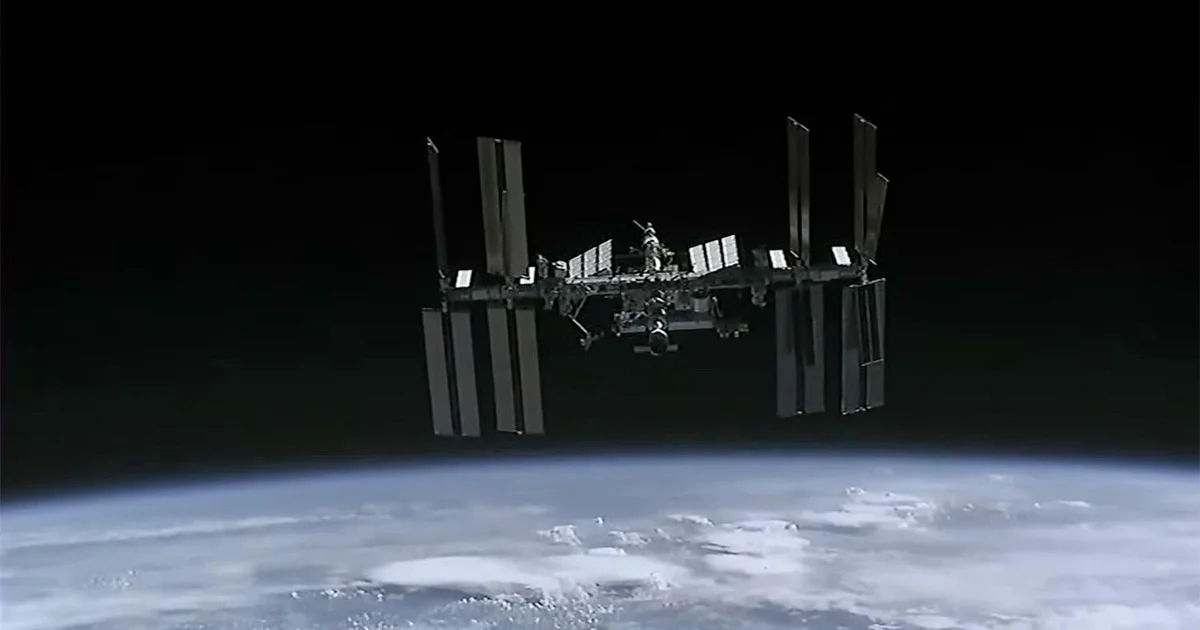
Out of an abundance of caution, NASA on Friday briefly directed five of the seven crew members aboard the International Space Station to wait inside the docked SpaceX Crew Dragon “Freedom” spacecraft — known as a “safe haven” — amid new concerns over some cracks in a transfer tunnel in the Russian module.
But Roscosmos, the agency that manages the Russian segment of the station, decided to hold off on the repair work, allowing cosmonauts Sergey Kud-Sverchkov and Sergey Mikaev to collect more measurements to better define the leak rate and possible remedies.
NASA then told the crew members — Crew Dragon commander Jessica Meir, Jack Hathaway, European Space Agency astronaut Sophie Adenot and cosmonaut Andrey Fedyaev, along with NASA Soyuz astronaut Chris Williams — that they were comfortable with backing out of the safe haven configuration and returning to normal operations.
“We look forward to working with Roscosmos on a collaborative approach to address the leaks,” NASA said in a statement.
The cracks have been the source of a small air leak that has persisted on and off for the last six years or so. The leak is considered a top safety risk. There have been several attempts over the years to pinpoint and repair the source, or sources, of the leakage, but they have had mixed results. The compartment is periodically sealed off and kept at lower pressure to minimize air loss.
“The cracks have always been a concern that NASA watches very closely,” the agency said.
Friday’s effort comes after Roscosmos noticed a slow pressure drop in the transfer tunnel last month following the arrival of a Russian cargo ship.
NASA said it and Roscosmos have been trying to determine the cause of the cracks while the Russian space agency addresses the issue through “operational mitigation measures and periodic partial-repair efforts.”
After new leaks appeared, NASA initially said Roscosmos decided to move forward with a more extensive repair operation Friday before the Russians decided only to perform measurements.
As the five crew members were gathering in the Dragon, mission control at the Johnson Space Center in Houston told them internal television cameras had been turned off, normal procedure when privacy might be needed.
“You just couldn’t watch any more of this, huh?” Meir joked.
“We love being on board with you guys, but we wanted to give you your privacy while you’re having family camp-out day in Dragon,” mission control replied.
There was no immediate indication on when the Russians might press ahead with the work that was called off Friday or what that “structural repair work” might entail.
“We continue to work with our Russian counterparts, along with the rest of the international community that supports the space station, to arrive at a more permanent resolution,” NASA said.

