

Want to bookmark your favourite articles and stories to read or reference later? Start your Independent Membership today.
Already a member?
Log in
Nory is a Business Reporter client
The kitchen has had its operating system for over a century. Now, the back office is finally getting one, too.
In the early 1900s, Auguste Escoffier solved one of the most complex operational problems in business: How do you get dozens of specialists to work in perfect coordination, at speed and under pressure, without everything falling apart?
His answer was the brigade de cuisine. Stations. Specialists. One executive chef at the top. Every role with a defined remit, every handoff deliberate, every output feeding the next. It was, in effect, the first restaurant operating system, and it worked so well that kitchens have run on it ever since.
The front of house got its own version. The kitchen perfected its version. The back office never did.
The back office is still running on gut feeling
Walk into most multi-site restaurant operations today, and you will find the same thing: a POS system, a labour scheduling tool, a stock management platform, a finance spreadsheet and a P&L that arrives weeks after the period it covers. None of these systems talk to each other.
Every week begins not with decisions, but with reconciliation – pulling data from five different places, piecing together what happened last week, already too late to change anything. Operators find out on Tuesday that they lost money on Friday. Demand spikes go unforecasted. Labour is scheduled on habit rather than data. Food is ordered on instinct rather than on what the numbers say is coming.
The result is an industry where many restaurants operate on margins of 3 to 5 per cent. Some of that pressure – energy, rates, wages – sits outside operators’ control. Much of what’s left comes down to operational infrastructure that was never built to give them the visibility they need to run their business.
Built by people who know the problem from the inside
Nory was founded by CEO Conor Sheridan, who came to the problem as an operator: he co-founded, and still runs, a restaurant group that doubles as a test kitchen for the platform. Much of the team that followed shares that background – former bar managers, restaurant operators and people with decades of experience on both sides of the pass.
This matters because the restaurant industry runs on nuance. A rainy Tuesday requires different staffing than a sunny Friday. A delayed morning delivery has consequences that cascade through the lunch service. These are not problems a team building in a vacuum would think to solve. Nory built its approach around direct, candid contact with operators – iterating quickly, staying close to the reality of the shift and deploying only when operators said it was working, not when engineering said it was done.
A crew of assistants, not a single tool
The insight that drives the platform is the same one that drove Escoffier: the answer to complexity at scale is not a single generalist tool. It is a coordinated crew of specialists, each owning one part of the operation, sharing one context and handing decisions to the person at the top ready to make.
Nory calls this the “crew of assistants”.
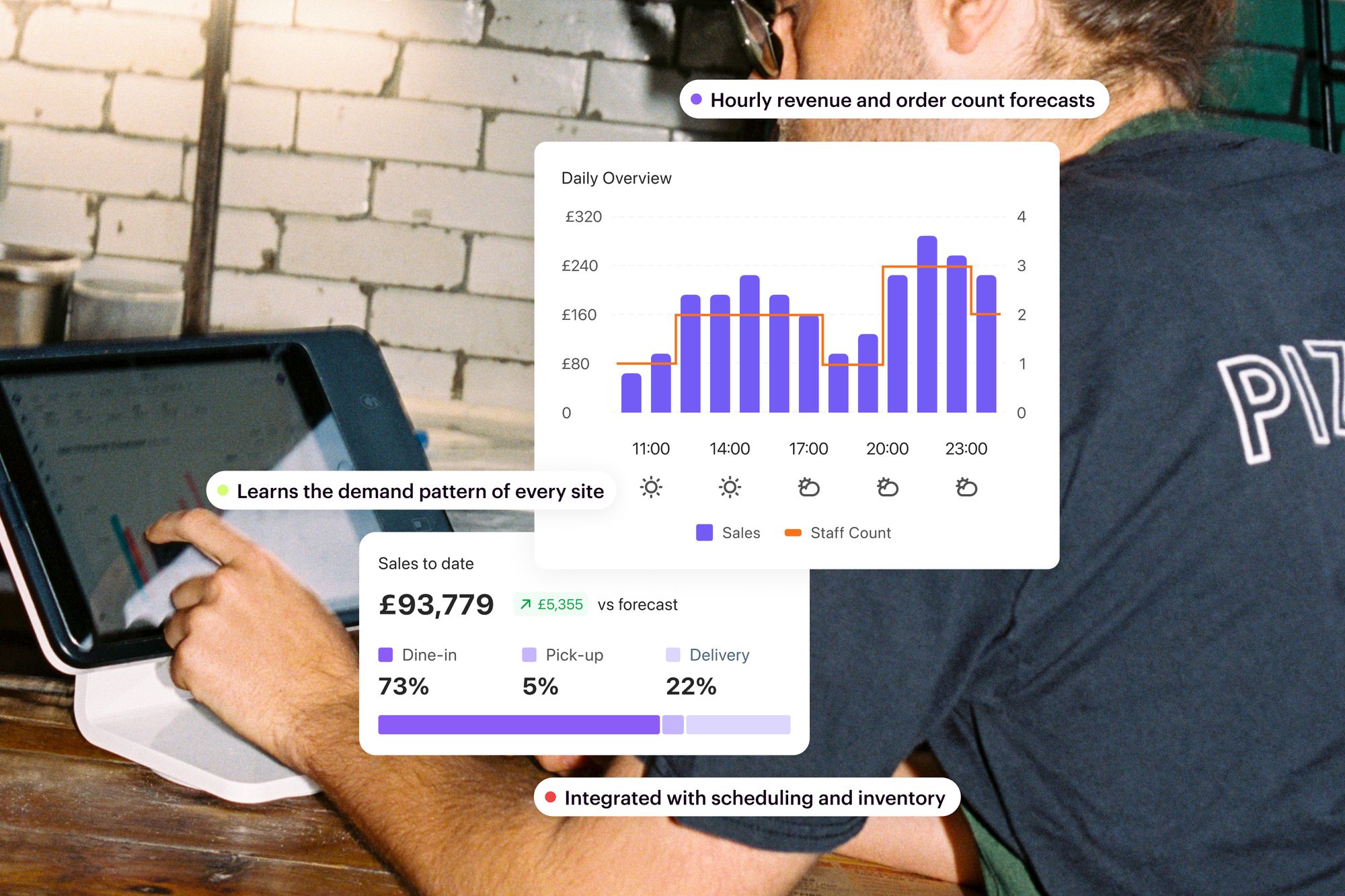
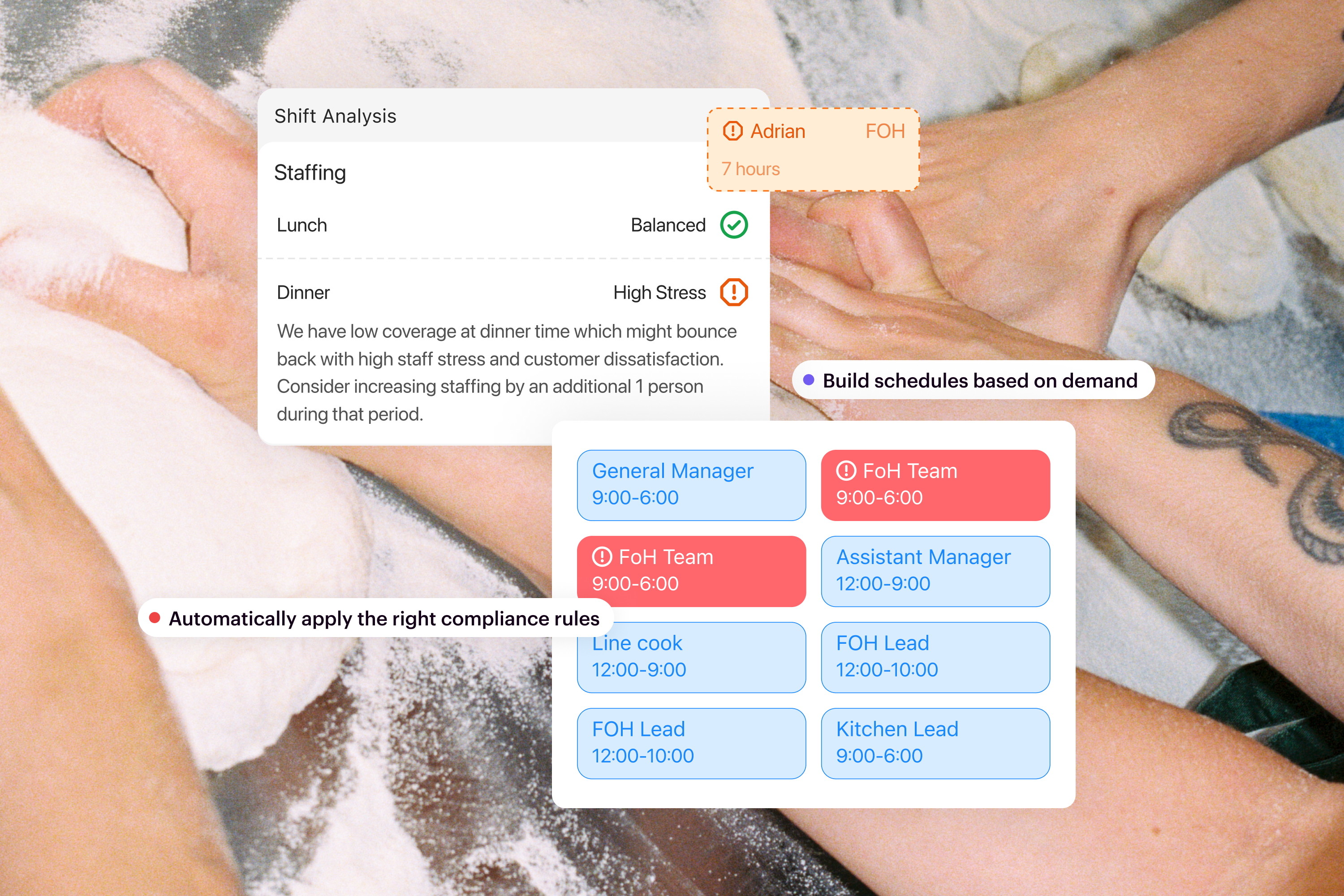
Each assistant owns one station of the back office. The Forecasting Assistant reads demand patterns across every site and builds a forecast the business can operate from. The Scheduling Assistant takes that forecast and builds a labour plan that matches it – not a copy of last week’s rota. The Ordering Assistant aligns purchasing to what the forecast says is coming. The Invoicing Assistant automatically matches every supplier invoice against the purchase order and delivery note, flagging discrepancies before anything gets approved, alongside assistants for payroll and compliance.
What makes the crew different from a stack of separate tools is that every assistant draws from the same source: one forecast, one view of the business across every site. The back office stops being a collection of disconnected inputs and starts behaving like a coordinated system. The operator is still the head chef. The crew gathers the context and hands the decision over, ready to make.
What this looks like in practice
Operators using the platform are reaching up to 97 per cent forecast accuracy. Finance and operations teams are recovering more than 100 hours per month previously spent on manual admin. Food waste has reduced by up to 50 per cent where demand-led ordering has replaced habit-led purchasing. A head of operations using Nory can oversee 10 times the surface area without 10 times the headcount.
These are not marginal gains. In an industry where a one-percentage-point improvement in food cost can be the difference between a profitable month and a loss, they represent a structural shift in what operators can control.
The right moment
The conditions for what Nory is building have never been better. The underlying AI capabilities that power the platform have matured rapidly. Cost pressures and labour market shifts have forced operators who were sceptical of technology to reconsider. And the industry is increasingly recognising that the answer to thinning margins is not working harder – it is working with better information.
Escoffier worked out more than a century ago that running at scale takes a system, not just effort. The back office is finally getting its brigade.
To find out more, visit nory.ai.


