
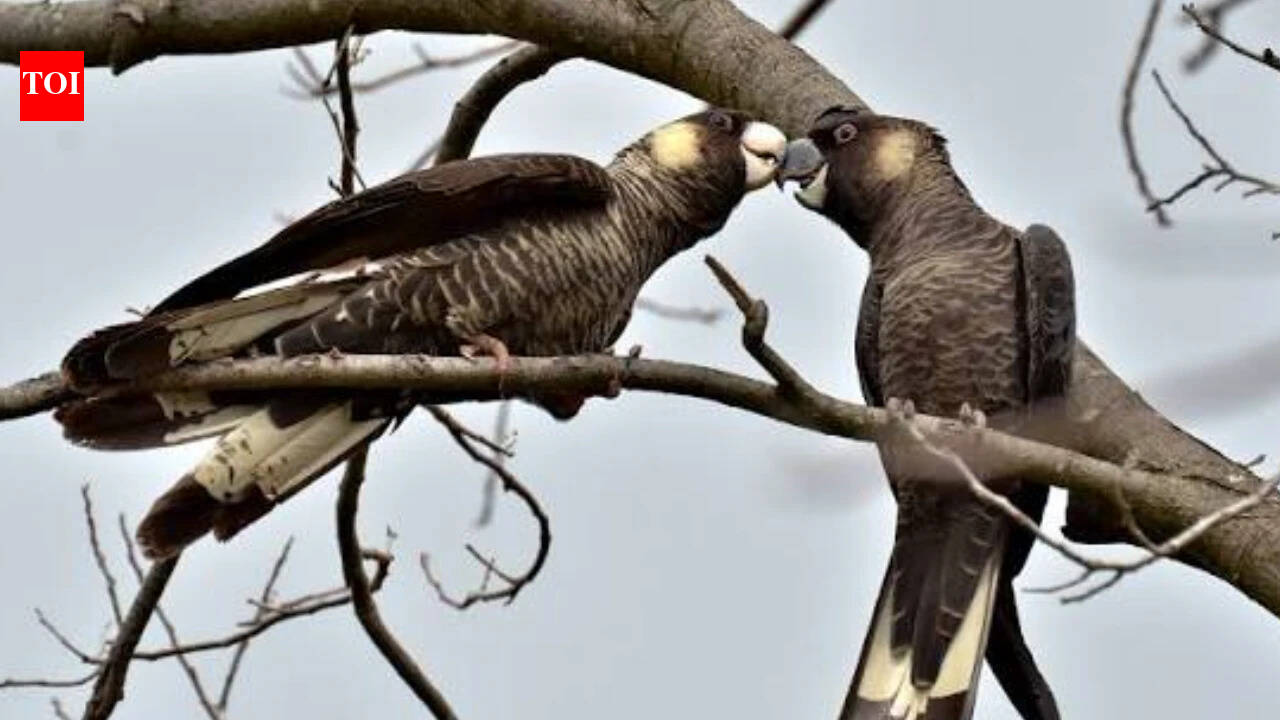
Habitat loss is one of the most devastating consequences of rapid urbanisation and human expansion. As forests are cleared to make room for farms, roads and buildings, animals are left with fewer places to find food, water and shelter. And while we often imagine conservation as protecting vast stretches of untouched wilderness, sometimes, even a small patch of greenery can make a world of difference.Researchers tracking endangered Carnaby’s cockatoos in Western Australia have discovered just how important these overlooked pockets of nature can be. Their study found that tiny fragments of surviving native bushland act as stepping stones, helping the birds move between larger patches of habitat in landscapes that have been heavily cleared for agriculture. It is a reminder that when it comes to protecting wildlife, every little bit of nature counts.
What did the researchers find?
A team from Murdoch University’s Harry Butler Institute, led by Dr Jill Shephard and Dr Zoë Kissane, wanted to understand how habitat loss and fragmentation affected the movement of Carnaby’s cockatoos during their breeding season.The researchers fitted GPS satellite tracking devices to 18 wild cockatoos across five inland breeding sites in Western Australia’s Wheatbelt region. They then monitored the birds’ movements throughout the breeding season to understand how far they travelled to find food and how the surrounding landscape influenced their journeys.The findings revealed a rather worrying difference. Birds living in heavily fragmented landscapes had to travel roughly three times farther each day to find food than those in areas where native vegetation remained relatively connected.At Coomallo, where much of the surrounding bushland had been cleared, the cockatoos travelled an average of more than 37 kilometres every day in search of food. At Tenterden, where the vegetation was more connected, they travelled just over 10 kilometres.Think about what that means for a bird that already has to spend a considerable part of its day finding enough food to survive. Longer journeys require more time and energy, leaving less room for other essential activities, including breeding and raising chicks. Researchers warn that this additional pressure could eventually affect the birds’ breeding success and the ability of their populations to survive.However, the most interesting discovery was not simply how far the cockatoos were travelling. It was where they were stopping along the way.Even small, degraded patches of native vegetation, which might otherwise look insignificant in an agricultural landscape, were being used by the birds. These fragments acted as stepping stones, allowing cockatoos to move between larger areas of suitable habitat rather than having to cross vast stretches of cleared land.This is particularly important because conservation efforts have traditionally prioritised large, healthy patches of forest and woodland. While protecting these areas remains essential, the research suggests that smaller remnants deserve attention too.The researchers also raised concerns about existing land-clearing guidelines. Under Australia’s federal Black Cockatoo Referral Guidelines, clearing less than one hectare of foraging habitat or less than 10 hectares of low-quality habitat is unlikely to require referral to the government regulator. However, the study found that Carnaby’s cockatoos regularly used patches considerably smaller than these thresholds. This suggests that the current guidelines may underestimate the importance of smaller areas of native vegetation.
A little about Carnaby’s cockatoos
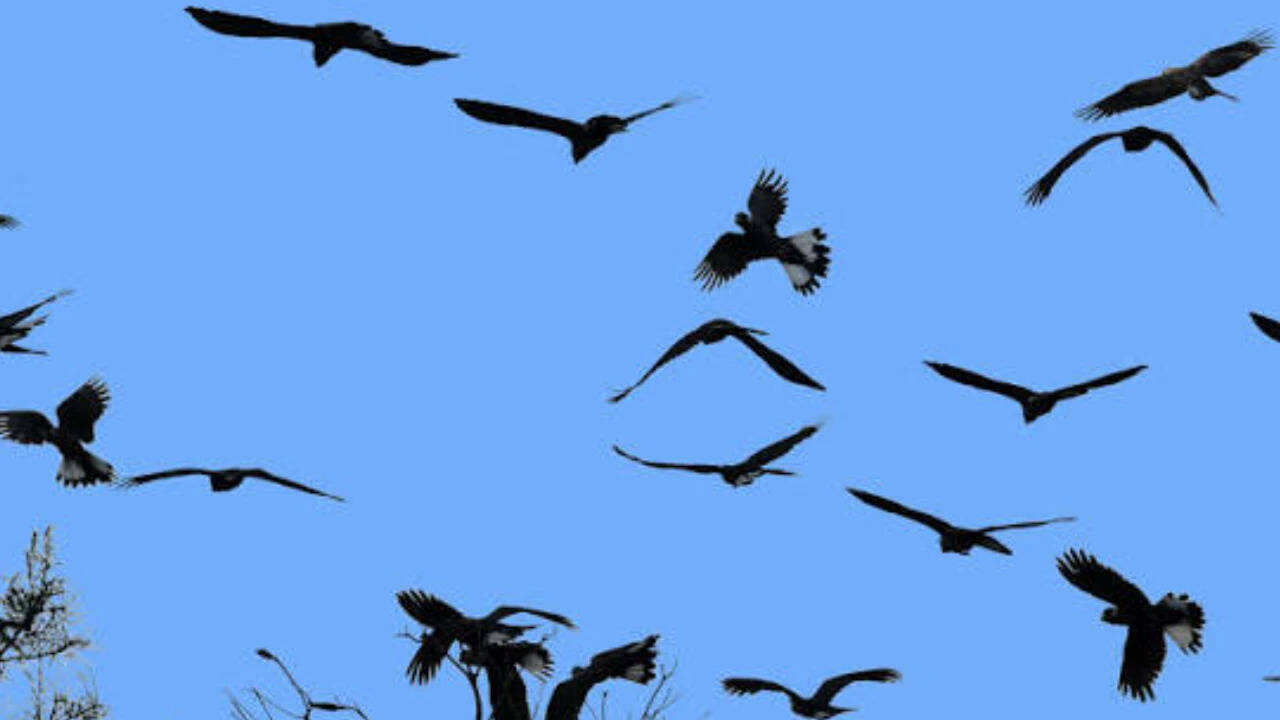
Image Credit: WikiMedia Commons
Native to south-western Western Australia, Carnaby’s cockatoos (Zanda latirostris), also known as short-billed black cockatoos, are large, striking birds recognised by their black plumage, white tail bands and distinctive calls. They can grow up to 58 centimetres long and are highly social, often travelling and feeding in pairs or flocks.These birds have a rather particular relationship with their surroundings. They feed on the seeds of native plants such as Banksia, Marri, Jarrah and Hakea, along with nectar, flowers and insect larvae. They also depend on old eucalyptus trees for nesting. In fact, these trees need to be more than 100 years old to develop hollows large enough to accommodate their nests.Carnaby’s cockatoos generally breed between July and December, often returning to the same breeding areas year after year. They also tend to mate for life, making the availability of suitable nesting sites and nearby food sources particularly important.Unfortunately, habitat destruction has put these beautiful birds under considerable pressure. Agricultural expansion and urban development have removed large areas of their natural feeding and breeding grounds. According to the University of Western Australia, the species has lost more than half its population over the past 45 years.The problem is not just that there are fewer trees. The remaining trees and patches of vegetation are increasingly isolated from one another, making it harder for the birds to find food and reach suitable nesting areas.
Why every little patch of green matters
The findings come at a time when conservationists are looking for ways to reconnect fragmented landscapes. In June 2026, the University of Western Australia announced the Corridors for Carnaby’s project, an initiative that aims to restore 1,000 hectares of habitat by planting more than 200,000 trees along a 10-kilometre stretch of land south of Mandurah. The project also plans to install artificial nesting sites and water stations to support the birds.While large-scale restoration projects are important, the latest research highlights something that is easy to overlook: protecting what already exists is just as important as planting something new.A small patch of woodland might not look like much when surrounded by acres of farmland. It might not even resemble a forest worth saving. But for a hungry cockatoo travelling across an increasingly unfamiliar landscape, it could be the place where it finds its next meal, takes a break or safely continues its journey.Habitat loss is not always about a forest disappearing overnight. Sometimes, it happens gradually, one tree and one patch of vegetation at a time, until the spaces between surviving habitats become too large to cross.We often measure the value of nature by how much land it occupies. Perhaps it is time we also consider how much life it supports. After all, for an animal trying to survive in a world that is steadily shrinking around it, even the smallest patch of green can be a lifeline.


