
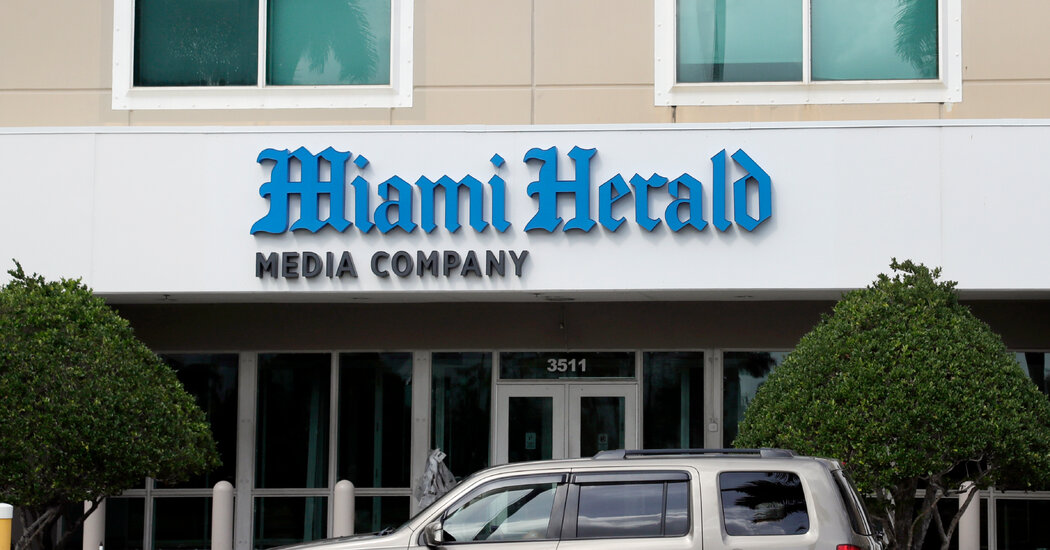
McClatchy, the newspaper chain behind publications including The Sacramento Bee, The Miami Herald and The Idaho Statesman, has started to use a new artificial intelligence tool that can summarize traditional articles and spit out different versions for different audiences.
Its reporters aren’t happy about it.
Journalists in many of the company’s newsrooms are now withholding their bylines from articles created by the new tool, meaning that those articles will run with a generic credit rather than a reporter’s name, as is customary. They are also labeled A.I.-assisted.
“We don’t want to put our bylines on stories we did not actually write even if they’re based on our work,” said Ariane Lange, an investigative reporter at The Sacramento Bee and the vice chair of The Sacramento Bee News Guild. “That in itself feels like a lie.”
The reporters’ byline strike is one of the sharpest conflicts yet between journalists and their companies over the use of A.I. Related debates are playing out in newsrooms across the country, as publishers experiment with new A.I. tools to streamline work that used to take hours, and some even use it to write full articles.
Many journalists are adamant about having guardrails in place for the use of A.I. in the reporting and production of news.
McClatchy’s new tool, which it developed internally and calls the Content Scaling Agent, is being used to some extent in all of McClatchy’s newsrooms, according to a person briefed on the rollout. McClatchy, which was sold to the hedge fund Chatham Asset Management in 2020 after it declared bankruptcy, operates 30 newspapers in 14 states.
A representative for McClatchy did not respond to requests for comment. But executives have promoted the tool internally as a way to increase the number of articles published and ultimately gain new subscribers.
“We need more stories, and we need more inventory,” Eric Nelson, the vice president of local news, told staff members in a meeting on March 17, according to a transcript reviewed by The New York Times. “This is a tool where we can take our strong content and find new audiences, angles and entry points.”
Mr. Nelson said using reporters’ bylines on the A.I.-generated articles was a way to show “authority” on Google so the search engine would rank the articles higher in the results. He also said the company was experimenting with feeding in reporters’ notes to create articles.
“Journalists who embrace and experiment with this tool are going to win,” Mr. Nelson said in the meeting. “Journalists who are defiant will fall behind.”
An A.I.-generated article in The Miami Herald on Wednesday about a court ruling in favor of a cancer patient is one example. It was credited with a byline that read: “Produced using A.I., based on original work by Michelle Marchante.” A footnote stated that the article had been produced “with the assistance of a proprietary tool powered by artificial intelligence and using our own originally reported, written and published content. It was reviewed and edited by our journalists.”
The Wrap earlier reported on the internal tensions at McClatchy.
McClatchy’s public A.I. policy states that the company uses A.I. tools to summarize articles to “help readers quickly understand the main points of a single story or catch up on multiple stories about a larger topic,” and that editors review the output before publication.
Reporters at several McClatchy newspapers said they had become alarmed over the lack of clear answers around the tool’s use as well as the use of their names on A.I.-generated versions. They said their union contracts also required the company to give notice before introducing major technological changes.
Reporters at the different newspapers have informed management of their byline strike in separate letters, at various times in recent weeks. The newsrooms involved include The Sacramento Bee, The Miami Herald, The Modesto Bee, The Bradenton Herald, The Tacoma News Tribune, The Bellingham Herald, The Olympian, Tri-City Herald and The Idaho Statesman.
More than 65 unionized employees at The Miami Herald and The Bradenton Herald said in a letter to management on Thursday that their contract prohibits the company from using their bylines without the reporters’ consent. They said McClatchy had not been transparent about its use of generative A.I. with its reporters or with readers.
“Filling our newspapers and websites with A.I.-generated content harms the relationships journalists build in our communities for a truly sustainable newsroom,” they wrote.
In a letter sent to newsroom leadership by members of The Sacramento Bee News Guild on March 27, journalists noted that though the Content Scaling Agent was intended to increase the numbers of articles published, there was no planned increase in the number of editors.
“When reporters are asked to edit summaries by the A.I., we are being asked to take time away from serious journalism,” the letter said.
The Washington State News Guild, which represents employees at papers like The Olympian and The Tacoma News Tribune, told management last Friday that the Content Scaling Agent amounted to an “ethical breach.”
“Despite executives’ claims that the ‘CSA’ will save us, and that subscribers will continue paying for a product riddled with A.I.-generated repeats, we see it as nothing but a race to the bottom,” that letter said.

