
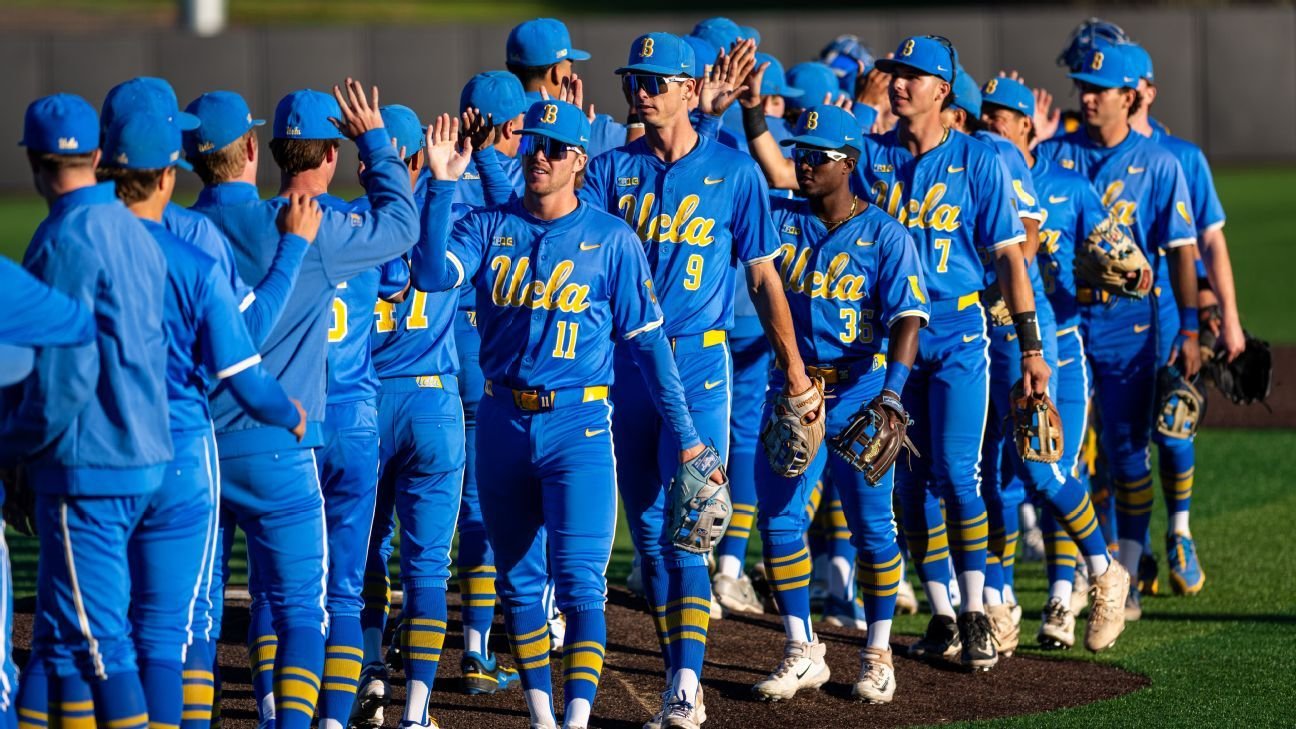
As the 2026 NCAA regionals begin, regular-season stats give you a good idea who performed well this season, while my traditional draft coverage lets you know who will go early in this summer’s draft. But which schools can have the most pro talent across all draft classes? Can a new team take the crown in our second season of these rankings?
I have a bit of an obsession — but also detailed spreadsheets sourced from advanced data and scout opinions, so I can answer this by examining how many players (regardless of class) project as future draft prospects. The catch is that the players considered have to be currently healthy or potentially in line to return before Omaha; sorry to Oregon State and injured ace Dax Whitney.
Because projections for pro success rely heavily on tools and age, those things are emphasized through the process once you get past surface statistics.
And remember, these margins are really tight — just one second-rounder added to any of the teams below would likely move it up a spot or two — and I used every pro-caliber player on the roster to formulate the ranking, even though we list just the top-five-rounds prospects.
Without further delay, here are the most loaded rosters in college baseball:
1. UCLA Bruins
Top-two-rounds prospects (3): SS Roch Cholowsky (2026), RHP Logan Reddemann (2026), RHP Angel Cervantes (2028)
Rounds 3 to 5 (7): RHP Easton Hawk (2027), CF Will Gasparino (2026), 3B Roman Martin (2026), 1B Mulivai Levu (2026), RHP Wylan Moss (2027), RHP Cal Randall (2026), RHP Zach Strickland (2027)
Cholowsky is the leading candidate to go No. 1 overall in the 2026 draft and is narrowly the top prospect in all of amateur baseball — ranking somewhere inside of the top 20 prospects in pro baseball once he signs — so he’s doing some real heavy lifting here.
Reddemann could return during the postseason but has been out with arm fatigue; he should still go in the first round regardless of the outcome, with top-15 upside if fully healthy. Cervantes went unsigned as a second-rounder out of high school last year. There are a couple of players in the second group who could sneak into the back half of the second round (i.e. better than the average player you’ll see listed in this tier) but fit mostly in the third to fifth rounds.

2. Georgia Tech Yellow Jackets
Top-two-rounds prospects (3): C Vahn Lackey (2026), CF Drew Burress (2026), 2B Jarren Advincula (2026)
Rounds 3 to 5 (4): SS Carson Kerce (2026), RF Alex Hernandez (2026), LHP Cooper Underwood (2028), 3B Ryan Zuckerman (2026)
Lackey is the current favorite to go No. 3 overall in the 2026 draft and likely fits in the 30s on a pro top 100 after signing, so he, like Cholowsky above, is doing some heavy lifting for his team.
Burress is no slouch either, likely to be taken somewhere between eighth and 15th overall in the upcoming draft, and there seems to be enough interest in Advincula to project he’ll go somewhere in the second round.
Kerce fits more in the third round than the fourth while Hernandez is more in the fourth and Zuckerman just beyond him. Underwood had high six-to-seven-figure interest out of high school in last year’s draft. The Yellow Jackets also have a ton of depth of draftable players beyond this, largely on the mound. Cholowsky’s edge over Lackey gives UCLA the slight edge overall, but Georgia Tech is a very close second.
3. Florida Gators
Top-two-rounds prospects (3): SS Brendan Lawson (2027), RHP Liam Peterson (2026), RHP Aidan King (2027)
Rounds 3 to 5 (5): CF Kyle Jones (2026), RHP Jackson Barberi (2027), RHP Joshua Whritenour (2027), RHP Luke McNeillie (2026), RHP Russell Sandefer (2026)
He’s nowhere near as famous to casual fans as Cholowsky or Lackey because he isn’t in the 2026 class, but Lawson would go in the top five picks in this year’s draft if he was eligible and will battle Dax Whitney for the top spot in the 2027 draft.
Lawson hit .308 this year with more walks than strikeouts, 16 homers and 14 stolen bases as a 6-foot-3, left-handed hitting sophomore shortstop. He fuels the ranking here for the Gators, but there’s a ton more talent behind him.
Peterson will go in the top 20 picks. King has actually outpitched him this year but ranks a bit lower as his size and raw stuff aren’t on the same level. McNeillie is a sleeper college-reliever-to-pro-starter candidate, and Barberi and Whritenour are underclass arms who have hit the triple digits, like Peterson.
4. Mississippi State Bulldogs
Top-two-rounds prospects (5): LHP Tomas Valincius (2027), RHP Ryan McPherson (2027), 3B Ace Reese (2026), RHP Duke Stone (2027), RF Jacob Parker (2028)
Rounds 3 to 5 (6): RHP Parker Rhodes (2028), LHP Jack Bauer (2028), LHP Maddox Miller (2028), LHP Charlie Foster (2027), LHP Dane Burns (2026), RHP Ben Davis (2026)
There’s an argument that Mississippi State has the best collection of underclassmen pro prospects on the same pitching staff of all time.
Like the team below, they have three arms in the top-two-rounds prospects who will be coming back to campus, but the Bulldogs also have four more in the next tier and two more not listed who would be mentioned above if they weren’t out for the season because of injury in LHP William Kirk and RHP Tanner Beliveau.
If his strike throwing can improve a notch, Bauer would jump into the first group, but there’s still a lot of long-term reliever worry from scouts. Don’t let that overshadow Davis (who has been up to 100 mph), Burns (who has a plus slider and has been up to 96 mph) and Reese and Parker, who are both potential early picks in the lineup.

5. Wake Forest Demon Deacons
Top-two-rounds prospects (3): RHP Chris Levonas (2027), RHP Evan Jones (2028), RHP Marcelo Harsch (2028)
Rounds 3 to 5 (6): 1B Kade Lewis (2026), 3B Dalton Wentz (2026), C Andrew Costello (2028), LHP Rhys Bowie (2027), RHP Duncan Marsten (2026), RHP Troy Dressler (2027)
I can guarantee Wake Forest will be high in next year’s version of this list because it has three potential high-first-round picks on the mound who are all underclassmen in Levonas, Jones and Harsch. In fact, only one-third of the players listed are 2026 draft eligible and they should all land in Rounds 3 to 5, so there will be a lot of talent in Winston-Salem next year.
There’s a bit of a drop-off after these first five teams not because there aren’t others featuring first-round talents, but because there aren’t as many potential top 10 picks on those rosters, which generally means players who immediately become top 100 prospects in pro ball. Those types of prospects are much more valuable than even a later first-round pick.
6. Texas Longhorns
Top-two-rounds prospects (4): CF Aiden Robbins (2026), LHP Dylan Volantis (2027), C Carson Tinney (2026), SS Adrian Rodriguez (2027)
Rounds 3 to 5 (7): RHP Ruger Riojas (2026), RHP Michael Winter (2028), CF Anthony Pack Jr. (2028), RHP Thomas Burns (2026), RHP Brett Crossland (2028), RHP Brody Walls (2028), RHP Sam Cozart (2028)
Robbins and Volantis are both first-round talents while Tinney and Rodriguez are probably second-rounders with some small chance to last until the third — but also a shot to sneak into the compensation round.
Because of his age (23 in July), Riojas will likely fetch a below-slot bonus in the second or last until the third, so he was a borderline case. Winter was a late-rising name in last year’s draft with seven-figure interest out of high school; he may be a first-round pick with a bit better command over the next two years. Pack joins him as part of a strong freshman class that gives Texas the depth to get the nod over the next school.

7. Tennessee Volunteers
Top-two-rounds prospects (5): C Trent Grindlinger (2027), RHP Tegan Kuhns (2026), LF/LHP Blaine Brown (2027), RHP Landon Mack (2027), LHP Cam Appenzeller (2028)
Rounds 3 to 5 (3): C/1B Levi Clark (2027), 3B Henry Ford (2026), RHP Brayden Krenzel (2027)
Tennessee has a lot of early-round talent, as well. Kuhns is the only one for this year’s draft, so the Volunteers likely move up in next year’s iteration. Grindlinger, whose younger brother, Jared, is set to be a first-rounder out of high school this year, likely goes in next year’s first round, along with Brown and Mack. If Clark can prove he’ll stick long term behind the plate next year while sharing time with Grindlinger, he may jump into the top 50 picks.
8. Texas A&M Aggies
Top-two-rounds prospects (4): 2B Chris Hacopian (2026), 3B Nico Partida (2028), CF Caden Sorrell (2026), 1B Gavin Grahovac (2026)
Rounds 3 to 5 (5): RHP Aiden Sims (2027), C Bear Harrison (2026), LHP Shane Sdao (2026), RHP Clayton Freshcorn (2026), RF Jorian Wilson (2028)
Hacopian will likely go in the first round this year, Sorrell will go somewhere between the compensation round and second round, and Grahovac likely goes in the second round but could sneak into the comp round to the right team.
Sims is on the second/third-round borderline but could easily move up a tier with a strong 2027 season. Harrison is a model favorite who should go in the third or fourth round, and I assume that’s where Sdao also lands, with Freshcorn just behind them as another potential college-reliever-to-pro-starter candidate. Wilson has massive, 30-homer-level raw power but worrisome swing-and-miss.
9. LSU
Top-two-rounds prospects (3): CF Derek Curiel (2026), RHP Casan Evans (2027), RF Jake Brown (2026)
Rounds 3 to 5 (4): RHP Deven Sheerin (2026), C Omar Serna Jr. (2028), RHP William Schmidt (2027), RHP Marcos Paz (2028)
LSU is the only team in these rankings that didn’t make this year’s NCAA tournament. There are only two likely first-rounders here, but the Tigers have three additional possible first-rounders in the last three names listed — if things can click for them in the coming years.
There will be a bit of a divide between fans and analysts/scouts next year as Evans has some qualities of Trey Yesavage — a higher release, shorter extension, mid-90s velo, track record of success, a cutter/slider that breaks arm side but is effective — a player who had a sharp divide between teams on his future projection. I think Brown goes in the second round and Sheerin goes in the third round as possibly the first college reliever to pro starter to come off the board.
10. Arkansas
Top-two-rounds prospects (2): C Ryder Helfrick (2026), LHP Hunter Dietz (2026)
Rounds 3 to 5 (3): RHP Gabe Gaeckle (2026), LHP Cole Gibler (2027), SS Camden Kozeal (2026)
Arkansas grabs the final spot with a prospect group headlined by Helfrick, who now has a real shot to go inside of the top 10 picks this summer. Dietz likely lands in the back half of the first round, and though he isn’t listed here, RHP Carson Wiggins might go as high as the second round now that he is back to throwing (but it doesn’t sound like he’ll appear in the postseason).
Part of the reason the Razorbacks grabbed the last spot is the depth of draftable talent that just misses the top-five-rounds cut, but any one of them could sneak in for the right team on draft day: RHP Steele Eaves, RHP Jackson Kircher, 2B Nolan Souza, RF Kuhio Aloy, CF Maila Niu, LHP Ethan McElvain, etc.
Honorable mention
There are a couple of technicalities that kept teams off the list. If Whitney was throwing, Oregon State would be on here, but since he is out for this year, I think that’s against the spirit of the exercise as a preview for what you’ll see in the postseason. The Beavers as currently constituted are still inside the top 30 teams for the purposes of this list, with potential compensation/second-rounder LHP Ethan Kleinschmit (2026) as their new ace.
I also left off UC Santa Barbara even though it technically could make it because of RHP Jackson Flora (2026), a likely top five overall pick, but there may not be another top-five-rounds prospect on the team (though plenty just beyond that), so that ranking felt like I would just be saying to watch their ace, not the talent spread across the whole team.
On the just-missed list, we have Arizona State with two potential top-15 picks in OF Landon Hairston (2027) and LHP Cole Carlon (2026) with a good bit of pro level talent after them, but not a ton of players who seem likely to go in the top five rounds. Among deeper teams that just didn’t have quite enough early-first-round talent, but possibly still multiple first-rounders, keep an eye on Vanderbilt, Virginia and TCU.

