Meghan Markle has seemingly taken a big U-turn with her decision to join Prince Harry for a UK visit, but how she will be welcomed by Britons remains quite uncertain.
Since stepping back from royal duties and publicly attacking the royal family and UK lifestyle, the Duchess of Sussex is reportedly accompanying her husband and their two children, Archie and Lilibet, for a much-awaited return.
The family is set to take part in Invictus Games promotional events in mid-July. However, the confirmation is still pending.
Now, a royal expert, Ingrid Seward, believes that there are possibly two main reasons behind Meghan’s decision to make a UK comeback despite her years of ‘moaning.’
First, it is to end Prince Harry’s divorce rumours by supporting her partner. Secondly, to get the royal approval of her lifestyle brand, As Ever, in times of financial crisis.
The royal author claimed, “They need to come, or more accurately, Meghan needs to come. She really needs a bit of royal stardust sprinkled on her and her business if she wants it to succeed.
“She’s probably hoping a visit to the UK would give her that, so she has to make it work somehow.”
However, the Duchess is in crisis about thinking how Britons receive her, as they ‘rejected’ her before.
“It could be a very good move for her business, but it leaves her with a bit of a crisis because coming to a country where she is so disliked won’t be easy,” Ingrid said.
In truth it’s a bit more complicated, as a Häcken spokesperson told Reuters that the fee was more than the $1.5 million Orlando Pride paid to Tigres for the signing of Mexico playmaker Lizbeth Ovalle last August, yet FIFA documentation shows that London City Lionesses actually set a world record when they acquired the signature of France midfielder Grace Geyoro from Paris Saint-Germain for around $1.9 million in September.
Whatever the actual fee — which multiple Swedish sources have assigned as 15 million Swedish kronor (about $1.54 million) — Madrid have paid big money for a teenager who doesn’t have much experience, let alone at the top level. But her goal record is impressive.
Madrid are in desperate need of some firepower up front, as they look to compete with rivals Barcelona both in Liga F and the UEFA Women’s Champions League (UWCL) and stole a march on Chelsea and others to do a deal for a player who has scored 52 goals in 74 games since breaking through in 2023.
So can Schröder help Madrid in their quest to reach the top?
Position
Primarily a central striker, Schröder often finds and attacks space early, and has versatility to play anywhere across the front line.
She likes to use her pace to slip in behind the opposition lines, while her movement in and around the box allows her to ghost in behind defenders and position herself perfectly for crosses, cutbacks and rebounds.
Strengths
The 19-year-old already has a phenomenal goal-scoring record and she is a fine finisher. Her stamina and excellent positioning enables her to consistently get into goal-scoring positions.
In 2025, she scored 30 times and assisted another 11 goals in the Swedish Damallsvenskan; she finished the season as the top scorer and was voted the best player in the league as well. On top of this, she scored eight goals in the inaugural UEFA Europa Cup, including a hat trick in the final against Hammarby.
In 2026, she already has seven goals to her name, and recently netted against Rosengard and Hammarby in back-to-back games.
Schröder is an explosive forward and a high-volume shot taker, with a proclivity to test the goalkeeper from any range. She has almost every finish in her repertoire, making her a threat from multiple situations, while one of her standout qualities is her ability to set up and shoot almost instantly.
She doesn’t overcomplicate things in the box, and is able to let a shot fly with minimal touches during a sequence, which doesn’t allow the goalkeeper time to react and often catches them off guard. She is able to generate tremendous power with minimal backlift, adding an element of surprise to her shots.
Things to work on
Schröder is still developing her physique and is quite diminutive in stature, as she stands only 5-foot-4 tall, which instantly puts her at a disadvantage in ground and especially aerial duels.
She can struggle with protecting possession under pressure and holding the ball high up the field. Indeed, her back-to-goal play in its current state needs a lot of work and limits her as a central striker target.
Her high volume of shots also has an underlying element of eagerness, which can translate into frustrating shot selection at times. Schröder will pounce on every opportunity to have a crack at goal, often picking up sub-optimal options, though this trait is likely to be ironed out by playing at a higher level more consistently.
Meanwhile, her 11 assists in 2025 belies her actual chance-creation ability. She isn’t a brilliant ball carrier who can beat an opponent on a whim, which limits her ability to influence play from certain situations, and is too reliant on the transition to work opportunities for her teammates; opportunities that will seldom come playing for better sides.
Who else was interested?
Chelsea held early interest in Schröder, especially after Khadija “Bunny” Shaw snubbed them to sign a new contract to stay at Manchester City. But they were not alone.
Her impressive goal record saw top European clubs — which sources told ESPN included Barcelona, OL Lyonnes, Bayern Munich and City — make offers to sign her, while some also arrived from clubs in the NWSL.
Chelsea, who played most of the 2025-26 campaign without a main striker due to injuries, offered a fee of more than $1 million and appeared to be leading the race to sign the 19-year-old before the deal collapsed, with Madrid able to offer her more certain game time following Caroline Weir‘s departure.
The Blues are still in the market to sign a pacey center forward, capable of carrying an attack in one of the most competitive leagues in the world, and Schröder seemed a good fit. But they will have to look elsewhere now. — Emily Keogh
How will she fit at Madrid?
Real Madrid failed to put pressure on Barcelona for yet another season, finishing second in the Liga F and losing 12-2 on aggregate against them in the quarterfinals of the UWCL. Despite appointing Pau Quesada as manager last summer, nothing much changed, but they do seem to be ambitious this summer and have already brought in Andreia Jacinto and Elisa Senss, while saying farewell to the last remnants of their first-ever squad, with Misa, Tere Abelleira and Rocio all leaving.
But with the departure of Weir to OL Lyonnes, the team are lacking goals. Weir has scored 10+ goals in the league in three of her four years at the club (she missed one season with ACL injury) and outscored the central striker option in two of those seasons. With Alba Redondo often switching between roles and Signe Bruun‘s unavailability due to a head injury, Madrid need options at No. 9.
Lineth Beerensteyn‘s arrival on a free transfer from Wolfsburg is a step in that direction, however the 29-year-old can be hit and miss in front of goal and wasn’t able to reach the highs of 2024-25 season.
Schröder, with her style of play and age profile, is a perfect fit for Las Blancas. She will spearhead the attack, can feed off the creative abilities of Caicedo and Keukelaar, and will share the goal scoring burden with Beerensteyn.
The weight of her “record” fee will definitely attract some unwanted pressure, but her quality should allow her to make the leap between the leagues and with some other Swedish players (Filippa Angeldahl, Hanna Bennison,Bella Andersson) at Madrid, settling in should be easy.
European residents and summer travelers alike are searching for ways to stay safe and cool as the continent swelters amid a historic heat wave, its second in just two months.
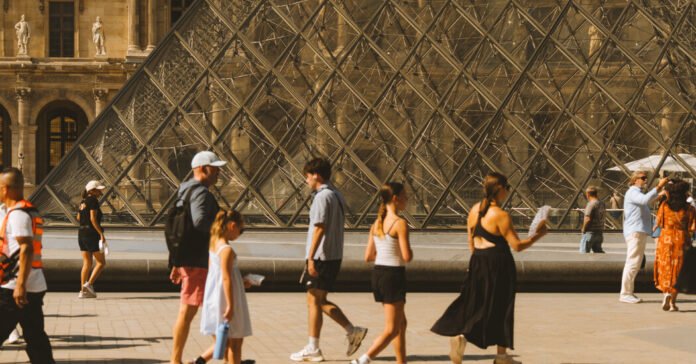
Urgent heat warnings have been issued in more than a dozen countries. The heat has disrupted rail lines in Britain, forced popular sites like the Louvre and the Eiffel Tower to close early, and caused power grid failures in France, leaving more than 68,000 homes without electricity, as of Wednesday.
France recorded its hottest days ever on Tuesday and Wednesday, according to the country’s weather agency, Météo-France. The agency compared the heat wave’s severity to that of August 2003, when a 16-day hot spell caused 70,000 deaths across Europe.
Residents throughout the continent are suffering in this week’s extreme heat, further exacerbated by a lack of air conditioning in some European countries. At least 40 people, many of whom were teenagers, drowned in France in the past week, leading officials to warn against swimming in unsupervised areas.
Forecasters say that temperatures across Western Europe are expected to gradually return to more seasonal levels beginning on Friday, as Eastern Europe prepares for a scorching weekend. But the peak summer travel season in Europe typically isn’t until July and August, when temperatures generally rise even higher than in June.
Tourists, accustomed to widespread air conditioning in places like the United States, Japan and the U.A.E., may be even less prepared to cope with the temperatures than locals. Here’s what to know when planning a trip.
Try to find a room with air-conditioning
Katie Wignall, a guide with Look Up London Tours, said that most hotels will provide air-conditioning. But if you’re staying in a short term rental, it’s good practice to double-check, since most homes lack cooling units.
Once you’re set with a place to stay, Ms. Wignall recommends getting around town on the Underground’s Circle, District and Elizabeth lines, or the London Overground, all of which are likely to have air-conditioning. While some buses are air-conditioned, others are “hotter than the sun,” Ms. Wignall said. She recommends sticking to the Tube.
In Rome, three-star hotels and above generally have air-conditioning, said Fabio Coppola, the owner of YellowSquare, a hostel chain in Rome, Milan, Florence and Athens. Mr. Coppola said it’s best to check with Airbnb owners, since locals often don’t use the amenity.
Stay close to parks and pools
As the day heats up, you might try going for a stroll in shaded parks or cooling off in public swimming areas.
In France, the government website for Île-de-France, the region including Paris, allows residents and visitors to search a network of climate shelters or cooling areas within a 10-minute walk. Similar information is provided by governments in Barcelona, Berlin and Vienna. Paris’s tourism office also has a list of public pools.
Sophie Gacheny, an independent tour guide based in Paris, recommends that visitors avoid the crowded public pools and the River Seine and instead take a lunch break next to the Canal Saint Martin, which was opened because of the heat wave. There, you can enjoy the cooled air wafting off the water — and even take a swim, though officials advise sticking to designated areas.
In London, families can cool off in the courtyard fountains of Somerset House or at Granary Square in Kings Cross. The shady, tree-lined streets of the Bloomsbury neighborhood are worth a detour, Ms. Wignall said. The city’s 19th century “Magnificent Seven” cemeteries are an often-overlooked free space to walk in wooded areas and see some famous names.
For shade from Rome’s blistering sun, avoid the city center and stroll through the gardens of Villa Borghese or the Giardino Degli Aranci. Or, hop on a 30-minute train and swim for free in the Mediterranean Sea at the port city of Ostia, or Santa Marinella for a “more charming and less touristy alternative,” Mr. Coppola said. If you’re visiting Milan, the Bagni Misteriosi offers a beautiful, historic public swimming pool.
Head underground
Temperatures are naturally cooler beneath the streets. In Berlin, dive back in time by touring an underground World War II bunker or escape tunnels dug in the 1960s between East and West Berlin.
In Prague, explore the city’s medieval history by touring its underground prisons, ancient cisterns and vaulted alleyways from the 13th century, which were built before flooding forced the city to be raised about 5 to 25 feet.
Near the Eiffel Tower and under Parisian ground, the Musée des Égouts de Paris, also known as Paris’s sewer museum, provides an interesting perspective on the city’s history. The Paris Catacombs are also an option, though they can get crowded.
Look for museums, churches and cathedrals
To escape the sun, tour guides recommend heading inside museums, churches and cathedrals, which tend to be cooler because of thick walls, high ceilings and, sometimes, air conditioning.
In Paris, the popular Notre-Dame Cathedral opens at 8 a.m., which Ms. Gacheny said is the best time to go. To escape the afternoon heat, focus on museums like the Musée d’Art Moderne de Paris, or the Musée Carnavalet, where you can hear about the history of Paris for six hours in an air-conditioned aristocratic mansion. In extreme heat, make sure to check the museums’ websites beforehand, since they sometimes close early because of high temperatures.
In London, the upper floors of the Victoria and Albert Museum are Ms. Wignall’s personal favorites. Historic churches are also a great place to cool off, she said, pointing to St. Bartholomew the Great and St. Paul’s Cathedral, both of which are generally less crowded than the British Museum or Westminster Abbey.
Start walking tours early, and bike in the afternoon
In France, with the heat soaring during the day and overnight temperatures hitting records, Ms. Gacheny said it’s generally good advice to start early.
If you want to discover Parisian neighborhoods, walk around from 7 a.m. to 11 a.m. Take an afternoon siesta at your accommodation, or grab a bite at hotel bars and cafes, which are the best places to find air-conditioning, Ms. Gacheny said. Then head back out around 6 p.m. for a breezy bike ride around the city.
Up in Beacon, N.Y., art handlers were arranging dozens of little embroideries under the watchful eyes of the curator Matilde Guidelli-Guidi; 50 miles to the north, in Millerton, a painter named Karen Marston was painting an iceberg on the side of a barn: It was time for Upstate Art Weekend again. The five-day festival, which extends across 10 counties in the Catskills and Hudson Valley, is a chance for artists and art lovers beyond the metropolis to remind one another how large and vibrant their community really is — but it’s also the perfect excuse for city dwellers to hop on a train, or into a car, and work some fresh air and greenery into their lives.
This year’s big change, as the fair celebrates its seventh edition, is an online smart itinerary builder. Type in your preferences, from distance and direction to genre of art, and it will tell you where to go. But you can also just work the old-fashioned way, starting with a single landmark destination — like the newly renovated KinoSaito, an art center in Verplanck, or an exhibit of Richard Sandler’s street photography at the Capa Space in Yorktown Heights, or an architectural fantasia like Boscobel or the Lyndhurst Mansion — and work backward. These are some of the newer attractions that caught my eye.
The Boetti Corridor
In 1967, Alighiero Boetti (1940-1994) showed a group of opaque, strangely lush objects at Galleria Christian Stein in Turin, Italy. There was a small wooden platform on the floor, lit from underneath so that its bottom edge glowed, and a collection of beige PVC pipes arranged in a formal column. This work was some of what inspired the critic Germano Celant’s term Arte Povera, which would come to evoke minimal treatments of luxurious materials and willfully absurdist takes on important questions.
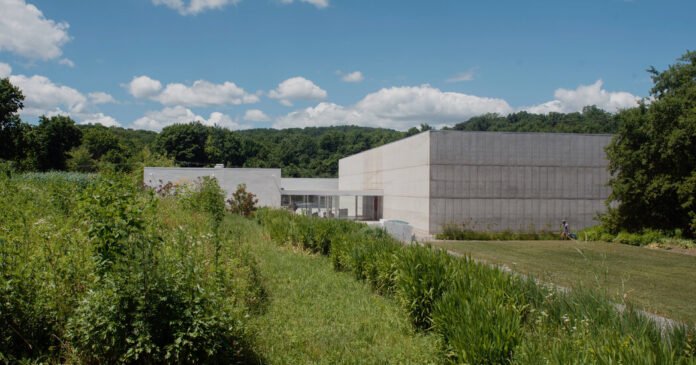
For Boetti, the important questions revolved around identity, authorship and the operations of chance. “Tutto Boetti: 1966-1993” at Magazzino Italian Art, the gorgeous little temple of Arte Povera in Cold Spring, starts with a formidable selection of those early works before leaping into algorithmic drawings and the quirky, beautiful embroideries the artist had fabricated by Afghan women in Kabul and Peshawar. There’s a map of the world, an enormous pattern of black and white checks and two endlessly delightful examples of what Boetti called his “Tutto,” or “everything,” series — brightly colored depictions of miscellaneous objects that send up the rationalist urge to catalog the world even as they recall nursery school décor. In the courtyard outside the gallery, when the wind is right, you can see steam rising from the head of a bronze self-portrait with a built-in heating element.
Up the road at Dia Beacon, the museum at 3 Beekman Street, “Alighiero Boetti” opens this weekend with a wall of embroidered text art, an elaborate arrangement of postage stamps and drawings that Boetti mailed to a gallery in Tokyo in 1980 and one especially memorable map in which the fabricators, left to their own devices, colored the sea bright orange. There’s something almost too perfect about this pair of similar but different shows for an artist who changed his name to “Alighiero e Boetti,” or “Alighiero and Boetti.” What makes it even more striking is that the museums didn’t coordinate — they planned their complementary exhibitions by accident. (There is, however, a docent- and curator-led tour of both shows starting at Magazzino at noon on Saturday. R.S.V.P. essential.)
The Kingston Cluster
A surprising number of Upstate Art Weekend’s most alluring events and exhibitions are clustered in and around Kingston, a two-hour ride from Manhattan by car or Trailways bus. In a single day, in Kingston alone, you could visit the second edition of Stay Frosty Kingston, the combination “tailgate, trunk show and art fair” founded last year in a Harlem parking lot by BravinLee Programs; take in a sprawling deep-dive into the possibilities of collage at 68 Prince Street Gallery, and the equally sprawling new Upstate Photography Biennial at CPW (formerly the Center for Photgraphy at Woodstock); drop in on indoor and outdoor sculpture shows at Front Room Gallery, a large exhibition curated by the festival’s founder, Helen Toomer, at UAW HQ (“Earthen Plot”) and another little art fair in the storefronts of a semi-abandoned mall — all before cleansing your palate with some high-design Fiesta ashtrays in the original six colors (1936-38) at the new International Museum of Dinnerware Design.
But make sure you’re properly caffeinated, because there are also several unmissable shows just across the river at Bard College in Annandale. In “Cagecircle: Composition for an Exhibition” at Stevenson Library, the John Cage Trust uses chance procedures to put together a group of miscellaneous objects, including a box of the maestro’s own piano “preparations” and a pair of embroidered silk suspenders. (Don’t miss a live re-enactment of his “Lecture on Nothing” at 1 p.m. on Saturday.)
At the Hessel Museum of Art, alsoat Bard, exhibitions of explosively colorful paintings by Uman, a prolific artist born in Somalia, and work by the Diné mathematician and textile artist Marilou Schultz hang alongside asurvey for Betty Parsons (1900-82). Though she was best known as a gallerist who showed heavy hitters like Pollock, Rothko and Newman, Parsons was a dedicated painter herself, producing a distinctive body of abstractions in which forms like animal cells float across strangely fraught planes of unusual color.
Group Shows and Pop-Ups
What’s especially wonderful about a festival as far-flung as this one is just how many different communities it brings to light — and opens up to visitors. That’s most visible in the group shows and pop-up exhibitions.
Opening this weekend at The Campus, a former school complex in Claverack that is jointly operated by six New York galleries, is an annual large-scale summer show, this one featuring presentations of work by Tschabalala Self, Keith Haring, Pat Oleszko, Sarah Lucas and other famous names.
Glögg Glögg,a “pop-up art faire” in Woodstock, offers dozens of local artists selling affordable work, while Enlighten Peekskill, organized by Hudson Valley MOCA, showcases its formerly struggling Hudson Valley city with a mile-long path of illuminated sculpture.
“Seven Women Chase Icebergs” at the Re Institute in Millerton features climate-focused work by seven female artists who all worked together in Pouch Cove, Newfoundland, including Marston and her ominous blue berg.
Just about 12 miles south, in Wassaic, the artist Danielle Klebes’s Wassaic Motorcycle and Paint Clubtransforms an actual garage into a self-conscious painted environment.
On Saturday, the Carolee Schneemann Foundation will screen several of the artist’s experimental films and videos at the Widow Jane Mine, a historic cement mine in Rosendale, where some films were set.
“Freewheeling,” a group show of “unconstrained and spontaneous work” organized by the distinctly downtown artists Adrianne Rubenstein, Annette Wehrhahn and Meg Lipke, unrolls at Lipke’s studio in Ghent, with craft beer and wood-fired pizza from Old Klaverack Brewery to sweeten the deal.
Upstate Art Weekend
The fair runs from June 25-29. For a list of the organizations across the Hudson Valley and Catskills, exhibitions, programs and cultural spaces throughout the region, see upstateartweekend.org.
Manakins can move so quickly that they often appear only as blurs of blue or red as they flit along the rainforest floors of South and Central America. The males, known for their elaborate courtship rituals, snap their wings, spin around their rivals and even do backflips to woo potential partners.
Where do they get the energy? Previous studies have shown manakins possess fast-moving muscles and hearts that can manage short bursts of intense activity. Now, genetic research suggests that these evolutionary adaptations were made possible by an important dietary change: Before they could dance, manakins had to be able to detect and digest sugary fruits.
“This is such a wonderful aspect of the study,” said Maude Baldwin, an evolutionary biologist at the Max Planck Institute for Biological Intelligence in Germany and an author of the study, which appeared on June 10 in Current Biology. “We were able to dig into the evolutionary history of their relationship with fruit.”
The first bird genome was sequenced more than 20 years ago, gathered from a wild species of chicken known as red junglefowl. The breakthrough gave researchers their first glimpse of avian genes and what they reveal about how birds experience the world. Notably, red junglefowl lacked a taste-receptor gene that had allowed birds earlier in evolutionary history to detect sweet flavors. (The gene is still present in mammals.)
Subsequent genetic research in other species confirmed that birds lost the taste receptor for sweetness back in the days of dinosaurs and were “ancestrally sweet-blind,” Dr. Baldwin said. But some fruit and nectar eaters found their way to sweetness anyway: They gained the ability to taste plant sugars using the receptor that mammals use for savory, umami flavors.
The new study sequenced the genomes of five manakin species, and it confirmed that manakins can taste and easily digest sugar from the fruits they eat. This adaptation gave them access to the energy they need for their spectacular shows.
“This led me to appreciate that feeding is not merely about obtaining nutrients, but may also be a driving force behind the generation of biodiversity,” said Yasuka Toda, a food scientist at Meiji University in Japan and an author of the study.
To draw this link between diet and behavior, the researchers compared the genomes of species that split off from the common ancestor of manakins at different moments in time. This enabled the scientists to reconstruct the order in which the manakin’s physiological and behavioral traits evolved.
As it turned out, even before manakins gained the ability to taste sugar using the umami receptor, they acquired a change to the gene that, in humans, helps to digest lactose. Scientists think that, in birds, this gene might help mitigate harms from natural toxins or fruit compounds that are difficult to digest. Only later did manakins gain the genes behind their energetic dance routines and colorful ornamentation — made possible, researchers believe, by the birds’ calorie-dense diet.
“We’ve been in this age of genomics for a while, but it’s still hard to get really high-quality genomic data,” said Sushma Reddy, an evolutionary biologist and ornithologist at the University of Minnesota, who was not involved in the new study. “So this is a really great study, because we can actually make those connections to actual traits.”
The study’s authors hope that their interdisciplinary approach will inspire other scientists to uncover new information about manakins and other birds.
“There are so many sort of hidden surprises and hidden insights that you can get from studying the genomes of diverse organisms,” Dr. Baldwin said. “Evolution has come up with a million different ways to solve problems and different mechanisms, and we’re only aware of a small number of them.”
On a recent afternoon in Paris, a woman was having her eye color changed from brown to green.
She was lying supine on the operating table, her left eye clamped open with an ophthalmic speculum while a doctor used a scalpel to slowly inject the pistachio green, mineral-based pigment into her cornea.
Observing the surgery was Dr. Francis Ferrari, the French ophthalmologist at the New Eyes Paris clinic who invented the cosmetic process, called Femtosecond Laser-Assisted Annular Keratopigmentation, or FLAAK, just over a decade ago.
He rolled his stool closer to the monitor, which projected an extreme close-up image of the eye. “Not too much in the left eye,” he told his colleague Dr. Jean-François Faure, who murmured in agreement, his own eyes focusing through the surgical microscope as he worked.
Just hours earlier, Ferrari consulted with the patient, holding up a plastic model of an eyeball. “The color of the eye is determined by the iris, and we won’t be changing the color of the iris,” he said. “We will be hiding the color of the iris by coloring the space in front of the cornea, similar to a contact lens, and with a laser, we will create a circular incision through which we will inject the color. Do you understand?”
“Oui, docteur,” said Ayşegül Kolvert, 35, who had traveled to Paris the previous day from Grenoble in southeastern France with her twin brother, Karl, who came to support her. She’d always dreamed of having green eyes. And, she said, “I was tired of wearing contact lenses.”
Kolvert is one of more than 2,500 people who have come to New Eyes Paris,located on a quiet street in the well-heeled Sixth Arrondissement,seeking the surgery. Many of Ferrari’s patients learned about keratopigmentation through social media, and often message the doctor directly on Instagram to book initial appointments over Zoom calls. Most want to transition from dark to light shades, choosing among a range of pigments that include olive green, pistachio, “Riviera blue,” “honey gold” and “ocean.”
The procedure is performed every Wednesday in a clinic that was formerly a stained-glass factory, which is rather fitting for an establishment where two doctors, who in some sense regard themselves as artists, stain the proverbial windows of the soul. Within a few hours, the patients leave with the eyes of their dreams. Recovery lasts a single day.
Ferrari and Kolvert studied the simulation on a laptop to see how the pistachio green would look in her eyes. “Are you sure it will look green enough?” Kolvert asked. Ferrari assured her it would.
There are three levels of color density: weak, medium and strong. “Weak is very natural, but not very visible,” Ferrari said, “so many of our patients who want a medium density, knowing that it will fade, will get strong, which looks unnatural at first.”
Because a cornea never completely heals, a patient who is not pleased with the results of the keratopigmentation can remove about 80 percent of the color — though it’s not advisable.
Within the wider ophthalmology community, the procedure is highly controversial since manipulating the cornea comes with a host of potential complications. Cosmetic keratopigmentation is not approved by the Food and Drug Administration, and the American Academy of Ophthalmology has issued two warnings against getting the procedure, citing dangers including corneal scarring, infections and serious vision problems including the risk of blindness.
“I think there’s a lot of fear among ophthalmologists, especially because there’s not really any long-term data on the procedure itself and the pigments that are used,” said Dr. Amita Vadada, an ophthalmologist and a clinical spokesperson for the A.A.O. “The eye is a very sensitive organ, immunologically,” she said. Vadada is especially concerned with foreign pigments being injected into the corneal layers, which can cause inflammation. “Unlike other parts of the body, even low-grade inflammation of the eye can lead to permanent scarring, light sensitivity and pain,” she said, adding that with keratopigmentation, “you’re potentially altering the function of the eye.”
Ferrari insists that FLAAK is no more dangerous than LASIK surgery, and carries even fewer risks than wearing contact lenses, which are prone to infection and corneal ulcers. He claims the process is safer than both laser depigmentation and iris implant surgery. The latter surgery is an alternative color-changing technique often known by its brand name, BrightOcular. It is another controversial procedure in which colored silicone is inserted into the eye. It is now at the center of several lawsuits.
Above all, Ferrari views his procedure, FLAAK, as a way for patients to become who they’ve always wanted to be.
“There’s real suffering,” he said. “Of course, it would be better to accept one’s natural eyes, but there are some patients who aren’t able to.”
The Eyes and the Hands
At 67, Ferrari is tall and soft-spoken with, perhaps fittingly,watery, greenish-blue eyes that rarely seem to blink, especially while engaged in conversation. He wasraised in Luxembourg by a father who worked as an interpreter, from French to Italian, for the European Parliament, and a mother who was a homemaker.Trained in ophthalmology at Eberhard Karls University of Tübingen in Germany, he is the first person in his family to pursue medicine and may well be the last,as all four of his sons have chosen careers in business or theater. Ferrari prides himself on being able to conduct his consultations in English, German and Italian, in addition to French.
Ferrari has worked with his colleague Dr. Jean-François Faure, 70 — who also has greenish-blue eyes — since 2019, when Ferrari decided to open his keratopigmentation practice in Paris. Ferrari was looking for a pre-existing clinic that was both aesthetically beautiful and practical, with all the necessary equipment already available. And so he approached Faure, who was already running a clinic that offered regular ophthalmological services like eye exams, cataract surgery and some laser surgery. Ferrari works only on Wednesdays. He is otherwise back at home in Strasbourg with his wife (who has brown eyes).
Ferrari does the consultations and oversees the FLAAK procedure in the operating room. But he hasn’t performed the surgery in two years, though he declined tosay why. Faure, a seasoned surgeon who happens to be ambidextrous, does the procedure.
The two make quite the pair. Ferrari serves as the eyes; Faure, the hands.
The idea for keratopigmentation came to Ferrari 15 years ago, when he was reading an online discussionamong French ophthalmologists about the best way to color eyes. Keratopigmentation was originally developed as a way to treat conditions like aniridia, in which an eye is lacking all or part of an iris andtherefore becomes extra sensitive to light.
“I thought to myself that it would be good to find a technique that permits you to change the color of your eyes in a safe way, and then I thought,” Ferrari said, widening his own eyes as if reliving the memory, “the cornea.” That was in December 2011.
He began to experiment on rabbits. “If you write this in your piece, I’ll get all the animal lovers after me,” Ferrari said. He reached for his phone to pull up a series of images of a white rabbit with red eyes,anyway. The red eyes were successfully changed to blue using the FLAAK method. Ferrari would later remove the eyeballs to dissect and study them under a microscope. He tried the technique on other rabbits, too. “And I gave them my sons’ names,” he said sheepishly. Ferrari first tried the procedure on a human in December 2013 — the world’s first.
He was motivated to work quickly, worried someone would beat him to it. And he wasn’t wrong to think so: Another ophthalmologist, Dr. Jorge Alió, who is based in Alicante, Spain, was simultaneously thinking about it, too.
“I’d been researching keratopigmentation for therapeutic purposes,” Alió said. He had been looking for ways to address ocular trauma. “I had no solution other than a prosthesis or a contact lens, which often cannot be used in this space because they are destabilized.” Alió’s clinic received a grant from the Spanish government to develop pigments.
“We developed this whole new technique,” he said. “It was very experimental.” And, as it turned out, very inspiring; it gave him the idea that the surgery could be used for cosmetic purposes.
After learning of each other, Ferrari and Alió met in person at a conference in London. The meeting was very cordial, and though Alió likes to point out that he has written more academic papers and pioneered the technique for therapeutic as well ascosmetic use, the two doctors, perhaps unusually, have agreed to be named as “co-inventors.”
How to Make Their Brown Eyes Blue (or Green)
The operation is not for the squeamish. After the eyeballs are numbed, the femtosecond laser is beamed into each eye, cutting a circular tunnel within the cornea. After using an ordinary surgical hook to widen the incision, Faure carefully slides the full arch of the “Ferrari scalpel” into each cornea — which have a jellylike consistency— and, with a series of decisive strokes, nudges the pigment onto them. The dye slowly swirls in, like an ink droplet in water.
The strange thing, to the observer, is how the eye ceases to resemble one the more you stare at it. It could be an abstract painting, or a planet viewed through a telescope. The final result is like an eclipse: You can see the loop of Riviera blue or pistachio, and, beneath it, the specter of the old iris.
Though the doctors are working to improve their current technique to add freckles, radial furrows and color variation to make eyes appear more natural, subtlety or realism aren’t always the ambition. Often the “fakeness” of it is the attraction.
The eye doctor’s job is to appease. “There’s a lot of conversation involved, lots of dialogue with the patient,” Faure said.
“People always want more,” Ferrari said. “You know, there’s a saying: More is the enemy of good.”
The surgery at Ferrari’s clinic costs 7,000 euros ($8,100). Clients must pay a €1,500 deposit, which is refundable, said Ferrari, “if, during the consultation, I noticed something in their eye that means the procedurecannot be done.”
Each client has a 20-minute consultation the morning before the procedure — often the first and only in-person consultation. With a speculum microscope, Ferrari uses Optical Coherence Tomography to study the prism on the back surface of the cornea, and makes an image of the retina to ensure the patient’s eyes are healthy enough to undergo the treatment. Then Ferrari and the patient finalize the eye color, toggling among different simulations on a laptop.
One of Ferrari’s formerpatients, Viviane Pouget, 69, had never considered changing her brown eye color until she’d watched a television segment about the procedure on a Friday six years ago. She called his clinic, which was then based in Strasbourg, the following Monday.
“I thought to myself, Why not?” The next week, she saw Ferrari. “Of course, like anyone would be, I was nervous,” Pouget said. “What would happen? What was I signing up for?”
She was stunned by the transformation to Riviera blue. “They were brighter than I could have hoped,” she said. “I looked at myself in the mirror and said to myself: I love myself, I appreciate myself.”
Pouget said she noticed her life change instantly. “After leaving the clinic, I took the train back to Paris and someone helped me with my suitcase. In my entire life, no one ever carried my suitcase before,” she said. “I think when people see blue eyes, they think of the sea. When we see dark eyes, we see more authority.”
The Competition
There is now a growing web of doctors performing keratopigmentation around the world, including Dr. Alexander Movshovich, in New York and Miami, and Dr. Brian Boxer Wachler in Los Angeles, both of whom were trained by Ferrari. In Paris alone, there are six competing clinics offering the procedure, which is why New Eyes Paris offers FLAAK only on Wednesdays. With all the competition, filling the clinic each week would be difficult.
Ferrari believes copycats are an inevitability and acknowledges that there’s something flattering about them. “There’s money to be made,” he said. “It’s new. It makes a change from the ordinary routine.” But there’s little Ferrari can do to mitigate the uncredited use of his process. In medicine, while you can occasionally patent the technology, it is nearly impossible to patent a procedure. Even the scalpel, which he designed and patented, has been copied elsewhere, he said.
He has been offering an in-person, daylong course at the clinic to train ophthalmologists as a way to further monetize keratopigmentation. Recently, a doctor traveled from India to learn from Ferrari.
And he has managed to get some recognition. On the desk he shares with Faure sits an octagonal glass trophy, which was presented to him by Alió, recognizing Ferrari as “Best Speaker” at the second annual Kolor Congress in Dubai last year, a conference for ophthalmologists already practicing keratopigmentation and others looking to do so. This year’s two-day Kolor Congress, which took place in Mayat the Radisson Blu hotelin Nice, drew a 300-strong, international crowd of ophthalmologists. There, they witnessed live demonstrations using the latest techniques and pored over swatches for new pigment shades.
“They Are Green?”
On that particular Wednesday afternoon, there were four patients.Kolvert was the first. She had been excited in the lead-up, but as with many entering the operating room and seeing the two doctors masked up to the eyes, her hands began to tremble. A junior optometrist assisting with the operation handed her a couple of stress balls to squeeze.
Some patients get cold feet and cancel at the 11th hour. It doesn’t necessarily surprise Ferrari.
Throughout the operation, Faure talks to the patient, describing what he is doing. He periodically asks them to “look down” at their feet, or to keep their focus on the ceiling as he targets the full periphery of the cornea.
After 45 minutes, Faure put down his scalpel. “C’est fini,” he said. The surgical drape was gently lifted from Kolvert’s face, and the speculum unlatched.
“All OK, doctor?” she asked, gingerly sitting up. An artificial teardrop slid down her cheek. “They are green?”
“They’re green, they’re green, they’re green!” Ferrari merrily exclaimed, approaching the patient to admire his colleague’s handiwork, and the fruits of his invention.
“I just really want them to be green,” said Kolvert.
“No more,” Ferrari cautioned Faure.
There was a brief silence as Kolvert studied her eyes in the New Eyes Paris-branded hand mirror.
“C’est magnifique,” she said. Then she paused, glanced at the doctors and then back at herself, and tentatively said, “But doctor, they aren’t green enough.”
“I can promise you, they’re green,” Ferrari told her.
As she beheld the sight of her new eyes for the first time, Kolvert was bursting with joy and disbelief. After checking to make sure that they were as green as they could go, she thanked the doctors and giddily walked out of the operating room, past the antechamber where the next patient was being readied for surgery, to where her brotherwas waiting.
“That’s you,” said her twin, rising from his chair. He hugged her, then took a couple of steps back to have a proper look. “Those are your eyes.”
On the Fourth of July, the National Mall is usually the most popular spot for families, friends, tourists and colleagues to gather to see the fireworks, but it’s far from the only option in the D.C. area. Throughout the city and surrounding suburbs, communities and neighborhoods mark the holiday with their own fireworks, live music, family events and festivals. So if you’re looking to avoid downtown crowds, stay closer to home or try something new, these events offer plenty of ways to celebrate.
ICE agents conduct an arrest as part of Trump’s wide-ranging immigration crackdown in Chicago, Illinois, January 26.— Reuters/File
The rate of people dying in Immigration and Customs Enforcement (ICE) custody has reached its highest level in over a decade amid US President Donald Trump’s crackdown on immigrants, rights groups said Thursday.
At least 52 deaths have been reported in ICE holding facilities since Trump’s second term began in January 2025, according to a joint report by Human Rights Watch and Physicians for Human Rights.
Trump has made combating illegal immigration a top priority of his second term, with authorities rounding up thousands of people and expanding detention centers.
From January 2025 to January 2026, the annual mortality rate in ICE custody was up 140% compared to a year earlier — an increase disproportionate to the higher detainee population, the report said.
The death rate is nearly four times that seen under Trump’s predecessor Joe Biden, and over two times higher than during the Republican’s first term from 2017 to 2021.
“We have seen the death rate in ICE custody skyrocket,” Reagan Williams, a HRW researcher who co-authored the report, told AFP.
“Instead of taking action to address this crisis and protect the lives and health of those in custody, we’ve seen the administration pour its resources into subjecting more and more people to prolonged detention.”
One case highlighted in the report was a 44-year-old man from Ukraine who suffered a stroke in detention and was not given suitable medical care despite having clear signs of an emergency, including seizure-like movements.
Another instance was of 39-year-old Mexican man, who reportedly died from cardiac arrest that likely arose from septic shock after his requests for medical help on an infected abscess were mishandled.
‘Failing on all counts’
ICE has faced criticism for its hardline tactics, and this year underwent a leadership shuffle after agents in Minneapolis shot dead two US citizens.
A spokesperson for the US Department of Homeland Security, which oversees ICE, denied the reported spike in deaths.
“Consistent with data over the last decade, death rates in custody under the Trump administration are 0.009% of the detained population,” the spokesperson said.
“As bed space has rapidly expanded, we have maintained higher a standard of care than most prisons that hold US citizens — including providing access to proper medical care. For many illegal aliens this is the best healthcare they have received their entire lives.”
But Thursday’s report found that, as immigration detention centers have grown, medical care has been lagging, partly due to crowding and people spending longer in custody.
Katherine Peeler, an assistant professor of pediatrics at Harvard Medical School and co-author of the report, said the US government is “failing on all counts” to protect ICE detainees.
“In the cases where we do have access to ICE and outside hospital records, we are seeing a breathtaking abdication of duty of care,” Peeler, an advisor at Physicians for Human Rights, said in a statement.
The report also highlighted a high number of people dying by suicide in ICE custody, with seven such deaths from January 2025 to January 2026, compared to one in 2024.
Human Rights Watch analyzed trends in ICE custody death rates from October 2015 to June 2026, and compared it with existing research on deaths going back to 2004, the year after ICE was established.
The New York-based group also interviewed family members, attorneys and former cellmates of the deceased.
Physicians for Human Rights assessed the clinical circumstances preceding 39 deaths recorded from January 2025 to January 2026 and the adequacy of care.
Olivia Wilde reveals truth behind ‘screaming match’ with Florence Pugh on ‘Don’t Worry Darling’ set
Olivia Wilde finally addressed long-running rumours of a rift between her and her Don’t Worry Darling costar Florence Pugh.
The 42-year-old actress and filmmaker denied the speculation that she had a “screaming match” with Florence Pugh on the set of her 2022 film, which she also directed.
Calling the reports completely false, Olivia told the Cut, “I’ve never had a screaming match on my set. I was never not available on set. I wanted to be like, ‘None of this is true.’”
This came after Vulture reported in 2022 that Olivia and Florence had a “blowout argument” during production.
The report claimed that Olivia’s absence on the set and her relationship with Harry Styles, who was also starring in the film, made Florence uncomfortable.
Olivia now claims that she wanted to publicly deny those claims at the time but was advised to maintain silence.
”I was told, ‘Don’t say a f****** word. Just go out there and smile,’” she shared. “I resent that but it taught me it’s not the way I want to handle things.”
The rumors of the clash also solidified as Florence made very minimal appearances during the press tour of the film.
Olivia also addressed her relationship with Harry, noting it was “loving and wonderful and joyful.”
However, she admitted that the public reaction to both the romance and the film changed her perspective.
It “robbed me of my naïveté for sure,” Olivia added. “I deeply hate the feeling of being misunderstood, too.”