
In perhaps the strongest sign yet of a major transformation in the art market, Pace Gallery plans to announce on Thursday that it is reducing its roster by 50 artists and its staff by 50 people, indicating that even a prominent established gallery needs to downsize in this challenging economic climate.
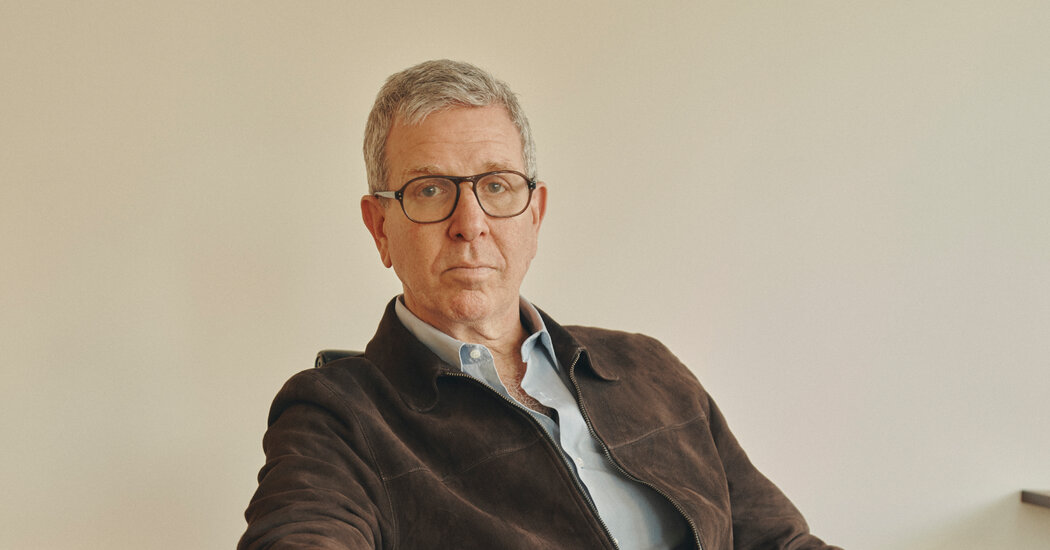
“The whole art gallery art system became too big, too commercial, too impersonal and too corporate,” Marc Glimcher, the chief executive, said in an interview this week. “We all know it’s true. But you actually have to do something to adapt to it. You have to make some substantial changes.”
While high-end sales remain strong among a sliver of wealthy collectors — as evidenced by the recent auctions of rare trophies — small and midsize galleries have, since the Covid pandemic, been consolidating, contracting or closing amid declining foot traffic and steep operating costs.
Pace, which last year celebrated its 65th anniversary, represents some major estates of 20th-century artists like Alexander Calder, Mark Rothko and Agnes Martin; current art stars like David Hockney and Julian Schnabel; and emerging talents including Adam Pendleton and Torkwase Dyson. Pace has also continued to represent and stand by the late Chuck Close, despite allegations of sexual harassment that the artist denied.
Pace has long been one of the few dominant galleries worldwide, along with Gagosian, Zwirner and Hauser & Wirth. These heavy hitters have so far seemed insulated from the vagaries of the market, given their many prominent artists, multiple locations and high prices. But the expenses of brick-and-mortar spaces and multiple art fairs, coupled with shifting interest rates, high inflation and global uncertainty have made for a perfect storm for Pace, which has seven locations around the world.
“We really are finding our soul,” Glimcher said. “And that means having the number of artists that you can perform extraordinary things for. It means just the really core relationships.”
The gallery said the total number of artists will decline about 30 percent, to 85 from about 135, and the staff will also be reduced by about 20 percent, to 200 from about 250. Most of the artists who were cut are not boldfaced names. One of them, the conceptual artist Glenn Kaino — who in 2021 had a solo show at Mass MoCA — seemed to take the news gracefully.
“It’s been clear to me for a while that their model was optimized for a vision of the art world that never materialized,” Kaino said in an email. “The art I create is concerned with the world and our place in it, and I want the partners I work with to share that intention. I’m a romantic about good, meaningful art creating value, and not the other way around. I wish them all the best and am grateful for our experiment.”
Pace has always been a family business, with Pace’s founder, Arne Glimcher, handing over the reins to Marc in 2010. Though outwardly supportive of his son, Arne was always known to be anti-expansion, a position that seemed to be confirmed by the elder Glimcher’s 2022 opening of a small, old-fashioned gallery of his own in TriBeCa, called 125 Newbury.
In an interview, the elder Glimcher spoke about Pace’s current retrenchment with an unvarnished sense of relief. “It’s kind of like we’re getting our gallery back,” he said. “I think this whole mega gallery thing is ridiculous and also unsupportable. I always thought that.
“It’s the difference between a corporation that uses art to expand,” he added, “and an art gallery that is only about art.”
Adam Pendleton, an artist who joined the gallery in 2012 and survived the cuts, said Pace’s decision “doesn’t surprise me nor does it worry me.”
“The gallery has such an incredible history,” he added. “They’re becoming particularly clear on what they want to focus on — what they need to focus on — and I don’t think that’s ever a bad thing.”
The artist Kiki Smith, who has been with Pace for more than 30 years and was also spared, said she was “neutral” about the situation. “Everyone has to make their own decisions,” she said. “You just roll with the punches and see what happens. It must come out of being thoughtful. They’re doing what they feel like they need to do.”
Alexander S. C. Rower, a grandson of the sculptor Alexander Calder, who runs the Calder Foundation and is a friend of Glimcher, said the cutbacks would not affect Pace’s representation of the estate. “All of the mega galleries have lost their way,” Rower said. “I appreciate that Mark is backing down from the arms race.”
Pace’s reduction does not mean it will cease taking on new artists or estates, Glimcher said, though it will do so judiciously. Just last month the gallery announced that it had taken on the estate of the sculptor Constantin Brancusi, a giant of Modernism, the same day that a Brancusi bronze head came up for auction at Christie’s and sold for $107.6 million.
Nor does it mean that Pace will unload its snazzy eight-story flagship headquarters on West 25th Street in Chelsea, which was renovated in 2019 for more than $100 million (a cost shared by Pace and the developer) and requires monthly rent of about $9 million on a 20-year lease. (Pace also in 2022 had to pay more than $6 million in damages after being sued over commissions by the real estate firm that advised the gallery during negotiations with the building’s owner.)
What it does mean is that Pace will be going “back to basics,” Glimcher said.
“We’re very aligned with what makes art special in the first place,” he continued. “I don’t think we are so aligned with the market commercial phenomenon of the last 20 years.”
Glimcher said he knows this will sound to some like so much spin on what is clearly a last resort, given that Pace tried other survival strategies.
In 2022, the gallery stepped back from a series of experiential art centers called Superblue, which became plagued by cost overruns. That same year, Pace closed its space in Palo Alto, Calif. and two years later opened a smaller gallery in Tokyo. Last year, Pace opened a shared space in Berlin, closed its Hong Kong gallery and joined forces with Di Donna Galleries and the auction executive David Schrader to sell artwork on the secondary market — a collaboration that Glimcher said would continue. It also explored a joint venture with Sotheby’s that didn’t pan out.
And in 2021 Glimcher made much of reorganizing Pace’s leadership in the wake of allegations of a toxic workplace, though he said this week that those issues did not contribute to the need for downsizing.
But Glimcher defended his actions along the way as responding to the moment and taking appropriate risks. And even when it comes to big swings like Pace’s real estate commitment in Chelsea, he has no regrets. “The building was right at the time and has served the gallery well,” he said. “If I was making that decision today, by no means would this be my decision. But that is not how business works. You don’t get to go back and restart. You have to continuously adapt.”
Despite the economic challenges, Pace has continued to present first-rate exhibitions, Arne Glimcher said, pointing for example to its current lineup of Schnabel, Hockney, Paul Thek and the Australian artist Emily Kam Kngwarray.
Marc Glimcher, for his part, emphasized that Pace will continue to think big and aim high. “Trying to re-sculpt it now doesn’t mean we’re not incredibly ambitious,” he said. “We are totally ambitious — we’re all over the world. But we want to do it in a way where we don’t lose the magic. We just cannot afford to lose the magic because all this is, is magic. There is nothing else there.”

