
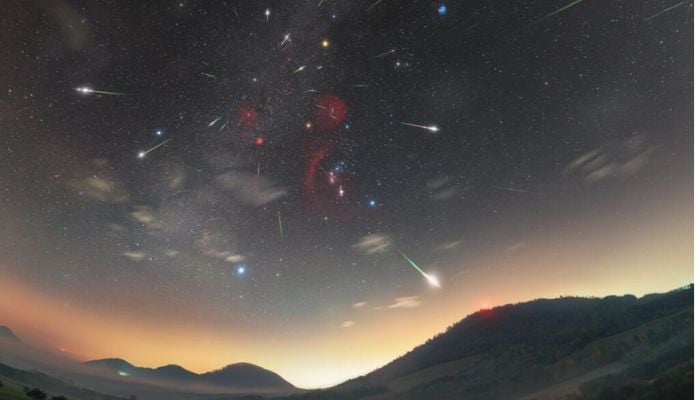
The Orionid meteor shower peaks Wednesday night into Thursday morning, offering stargazers a chance to see bright, fast-moving streaks produced by debris from Halley’s Comet.
The shower has been active since Oct. 2 and continues through Nov. 7, but activity peaks Oct. 21-22 as Earth passes through the densest section of the comet’s debris trail. Halley’s Comet, last seen in 1986, is currently racing back toward the Sun ahead of its next visit in 2061.
Under perfect dark skies, NASA says 10 to 20 shooting stars could brighten the sky each hour. However, the waxing gibbous moon, 77 per cent full and just four days from full, will likely hide fainter meteors.
The best chance to spot the Orionids comes in the hours before dawn on Oct. 22, after the moon has set and the radiant approaches its highest point. The meteors appear to originate near the red star Betelgeuse in the constellation Orion, rising above the eastern horizon an hour before midnight for U.S. viewers.
Experts suggest that observers should not look at the radiant itself because the trail will be shorter due to foreshortening. Observers need to look 45 to 90 degrees away from the radiant in order to see the trails of meteors. Telescopes and binoculars are not recommended, as meteors may move across vast areas of the sky.
Viewers should go far away from urban light pollution, wait 20 to 30 minutes for their eyes to adapt to darkness, and stay away from bright objects like cell phone screens. Observers should wear warm clothes and blankets since they have to wait for a while. Butler University’s astronomer
Indiana residents should face towards the south-southeast after midnight.


