
Most museums have a cardinal rule: No touching.
Yet every day at the V&A East Storehouse in London, members of the public take artifacts into their hands, including vintage garments, modern design objects and ancient musical instruments.
The Storehouse, which opened a year ago, was conceived as a warehouse for the Victoria and Albert Museum, Britain’s major institution for applied and decorative arts. The V&A, as it’s known, has limited display space at its main West London site and needed a store for over 400,000 items that weren’t on show, including artworks, antique furniture and glittering suits of armor.
The museum could have built a simple storage facility, said Kate Parsons, the V&A’s director of conservation, collections care and access. Instead, Parsons added, it opted to create something that would allow visitors “radical access” to its collections.
At the Storehouse, visitors can roam the aisles looking at items displayed on shelves, or use the Order an Object service to book some one-on-one time with an artifact. Conservators have assessed every item so that the museum staff knows if it’s safe for the public to to handle; if it’s too delicate, handlers either lay it out so that visitors can get up close, or take them to objects that can’t be moved.
The idea has proved wildly popular. Over 660,000 people visited the Storehouse in its first year — far more than the museum’s predicted 250,000, Parsons said. And more than 15,000 of them used the Order an Object service.
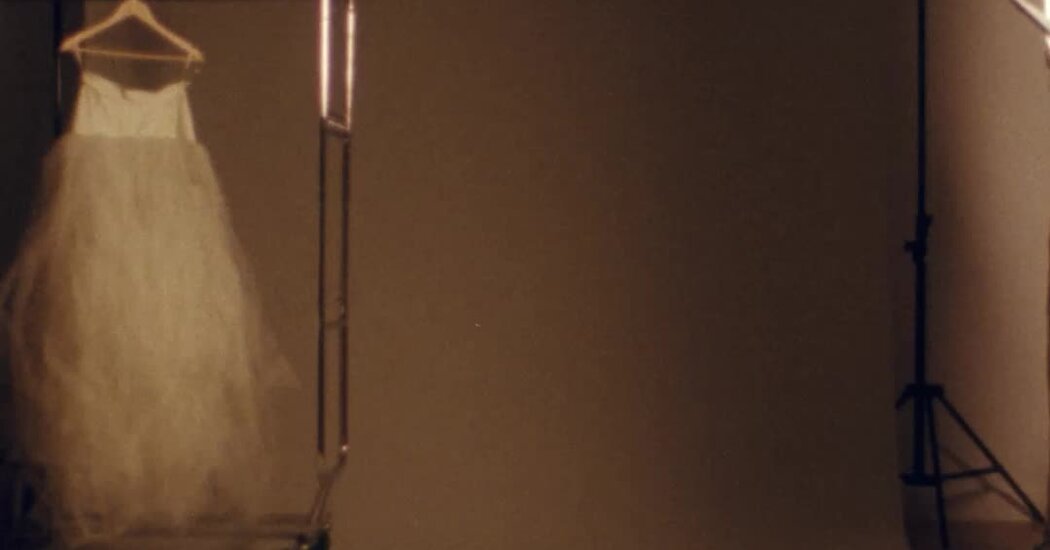
When visitors arrive for their Order an Object appointment, Storehouse employees ask them to wash their hands and put on rubber gloves before taking them into a study room where the objects are set out on tables or hung from racks. A Storehouse staff member then tells the visitor if they can touch the items, and how to do that safely.
Parsons said that employees from international museums, including the Museum of Modern Art in New York and the Getty in Los Angeles, had visited to see how the process works. Their first question, Parsons said, was always, “Don’t people touch things they shouldn’t?” So far, she added, everybody has been well behaved and no one has damaged an item.
Many users of Order an Object are academics, Parsons said, but the largest proportion are designers and other creators looking for inspiration from the past. There are also a substantial number of David Bowie fans, Parson said, seeking items from the musician’s archive, which the V&A acquired in 2023.
Then, she said, there were the many curious museum-goers who just want to delve into a private passion.
One recent Friday, eight visitors explained what they’d ordered and why. Their explanations have been edited for length and clarity.
Byzantine Stained-Glass Fragments
12th century
Requested by George Bartlett, 33, art history lecturer
These are very, very rare examples of Byzantine stained glass from that empire’s capital, Constantinople, what’s today Istanbul. We only know of two examples of stained glass used in churches there, and I didn’t know they had any fragments in Britain until a friend told me and I thought, “I need to get my hands on these!”
The Museums Special Section
They would have been part of whopping great windows that were smashed or broken, probably either during the Fourth Crusade in the 13th century or under the Ottomans in the 15th century. Then, the glass would have been excavated in the 20th century.
I’ve always found theologically informed art interesting, because I grew up in a Christian family. But we were Anglicans and there were no images in our church, really. Byzantine churches were packed full of imagery — not just windows; mosaics, too.
In a photograph, you’d never get a sense of how great these fragments are, but I can move the bits around and play with how the glass reacts to the light.
Straw Hat With an Ostrich Feather
1913-14
Requested by Amanda Sheridan, 63, author
I’m writing a book about a serial killer. This is my first novel — historic fiction. And I came today as I’d ordered a funeral dress from the 1890s, a wedding dress, a corset and two hats, because I knew that seeing them would add to my characterization. It would help me visualize my protagonists. The whole way a woman moves is dictated by her clothes.
But this hat, the team here told me that we can’t touch the feather because it’s got arsenic on it. They used arsenic to preserve feathers! So it’s, like, “Wow, my murderer’s got another way of killing people!”
David Bowie’s Guitar
1983
Requested by Ian Donald, 50, official at Canada’s border agency
I’ve been a lifelong David Bowie fan. It’s kind of embarrassing, but it probably started when I’d have been 7 or 8 and saw the video for “Let’s Dance.” Then I just followed him. Whatever he did, whether I liked it or not, it was always interesting.
I came here last December and all the appointments were booked solid. So as soon as I saw they’d opened up again, I booked this. I was at work, and spent an entire lunch break going through the catalog, texting my brother in Winnipeg, “Should I get this one, or this one?”
This is one of his guitars from when he was in Tin Machine. It’d be cool if there was a fingerprint on it, a hair, anything.
Watercolors by Beatrix Potter
1903 and 1927
Requested by Jane Playford, 63, retired teacher
I used to teach maths. Then five years ago, over lockdown, I retired and thought, “I want to write some children’s books.” A friend said, “Well, you’ve got to illustrate them,” so I’m training to be an illustrator.
So seeing Beatrix Potter’s original drawings, it’s a particular interest. She gets so much emotion in them.
This one, is it Peter Rabbit without his little blue coat — too upset to go home? Oh, I love the colors! And this forest scene, I picked that for Sarah, my daughter. I thought she’d love it.
When you open these cardboard frames up and look at the edges of the paper and see they’re stained and old, you can really picture Beatrix Potter’s hand. In an art gallery, you don’t touch — you stand at a distance, and you have to be quiet. So it’s such a privilege to be this close and be trusted.
Dress by Paul Poiret
1924
Requested by Ingrid Mida, 64, historian
I’m a dress historian and author, and thinking of writing my next book about 1920s art and fashion. So I ordered five dresses — different designers, materials and styles.
The 1920s is so interesting because people have this idea, from “The Great Gatsby” and all these iconic films, that everyone walked around in beaded, narrow dresses. But there were more practical options.
This is a rust orange day dress by Paul Poiret, who was very famous, the designer who kind of introduced the more angular modern silhouette. For a designer dress, it’s been properly worn. And there’s some staining, but it’s so subtle you have to look for a long time to see it. Maybe the owner spilled a martini on it. I love those more poignant traces of a life.
I’ve brought a tape measure, a magnifier, a color chart. I write down everything and I try to draw and figure out: What life has this had? There’s not just the maker. There’s the wearer, the person who gave it to the museum, the people who care for it now. Every object has a biography far more interesting than just, you know, “a dress.”
Hurdy-Gurdy
1742
Requested by Alex Harden, 44, railway worker, and Pater Kanssen, 65, cycling instructor
HARDEN About five years ago, I stumbled across a video of two people sitting on a street playing hurdy-gurdies and I just got totally sucked in. I got hold of one and, even though it’s a really long hard journey to become a player, I’ve kept going.
You can book five objects here and I found three gurdies, so ordered them all, then found two things called “hurdy-gurdy” cloth with no image. I thought it was going to be a tapestry with a picture of a hurdy-gurdy on, but it’s just some cloth named ‘Hurdy Gurdy.’ They look a bit like picnic blankets.
KANSSEN The hurdy gurdy’s heyday was probably in France in the 1700s, we reckon. Peasants played them for dancing. Then, the accordion took over.
It’s difficult to say how much an old hurdy-gurdy would cost. You might find one in a barn somewhere in France, but it’d be in bits and you’d need someone to restore it.
Dress by Vivienne Westwood
1994
Requested by Mandy Hamilton, 51, caregiver
I’m 51 tomorrow, and this is my birthday treat. Seeing and interacting with Vivienne Westwood’s designs has been a bucket list thing forever.
A really long time ago, I did a fashion degree and she was hands-down my favorite designer. I ordered three corsets, a jacket and this evening dress, and I’m loving having moments at one with these beautiful clothes.
I own one piece by her, a pink waterfall skirt — it’s called that because the side hem cascades down like a waterfall — and it’s absolutely beautiful. But everything else of hers, I’ve alway seen behind glass, or on a model or a mannequin. I’ve never seen inside her work, the construction, and I’m just in awe.
I’m touching through gloves, but I’m getting little tingles. I feel like I can see the thought process she and her design team went through to create all these little details.
Pattern Book
1767
Requested by Lynne Wheater, 56, school librarian
The reason I’m looking at objects today is they all have a connected to worsted, which is a heavy fabric that was once made in Norwich, the city I’m from. I’ve struck gold with this book — and it wasn’t by any sense of judgment.
I can’t believe it’s from 1767. It’s so fragile; it’s not got any stitching in the spine. I have to be so careful.
When I ordered it, I knew it was a pattern book, but I didn’t really know what I was getting. From the cover, it looks like nothing — plain with some scribbling. But you open it up and it’s filled with these beautiful samples of fabric that look so modern. Like, look at this one: It’s bright pink and the pattern’s like Tetris blocks falling down.
I love that you can give things like this a new life by coming here. They’re not just kept in a box. They’re still inspiring people and connecting people to the past.

