
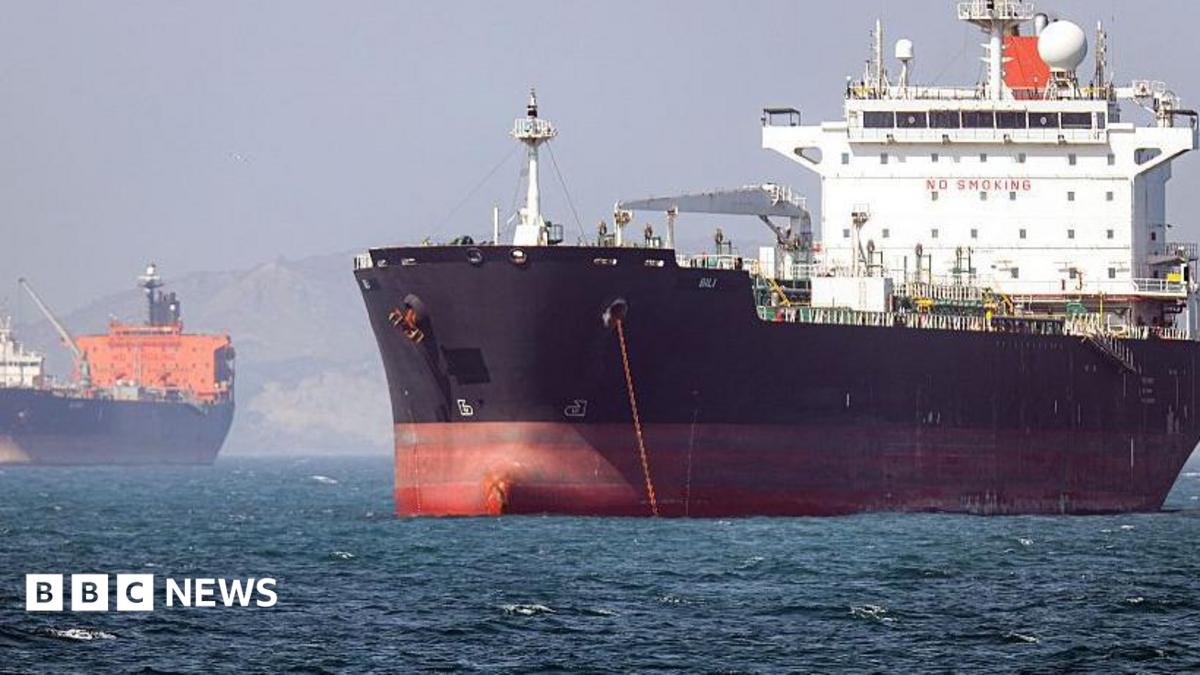
Oil prices fell to a three-week low on Tuesday as senior US officials raised hopes of a deal with Iran to reopen the key Strait of Hormuz waterway.
US Secretary of State Marco Rubio and Treasury Secretary Scott Bessent both announced talks had progressed to allow shipments to potentially resume as soon as this week.
The cost of a barrel of Brent crude, the global benchmark for oil prices, fell by almost 5% to under $80 (£60) on the news of supply disruptions potentially being eased.
But the failure of previous negotiations in recent months to de-escalate the conflict between the US and Iran has led to a volatile oil market, with drivers ultimately being hit by higher fuel prices at the pumps.
On Tuesday, along with the drop in Brent crude, US West Texas Intermediate prices were down more than 5%, to $76 a barrel. Both contracts dropped to their lowest levels since 13 July.
Rubio said there had been progress made in discussions on getting more ships through the strait with Iran and Oman.
“There’s been progress made in those talks, but not finality yet. We’re hoping that will happen very shortly,” he told reporters at the State Department.
Bessent said a deal to reopen the Strait of Hormuz could be agreed as soon as Tuesday or Wednesday.
There was a “chance we may have a deal today or tomorrow to open the strait and move towards a more normalized position in this conflict,” he told CNBC.
“It would be freedom of movement,” he added, when asked whether Iran would be allowed to charge for ships passing through.
While senior figures in the US government have announced talks have been progressing, no details of what a potential deal may look like have been released.
Iran has said it is not negotiating with the US – and has no plans to do so – and is instead talking to Oman.
A spokesman for Iran’s foreign ministry said that talks with Oman, a mediator in negotiations, on a new mechanism for vessels going through the Strait, had been positive.
Qatar, which is a key mediator between Washington and Tehran, said it was continuing efforts with other mediators to try to achieve a diplomatic resolution to the war, but admitted no direct talks were currently planned.
The Strait of Hormuz has been a central point in negotiations between the US and Iran. Before the conflict began in late February, the waterway handled about one-fifth of global daily oil and liquefied natural gas supplies.
Iran has halted most traffic through the Strait since the conflict began, while the US has also imposed a naval blockade of Iranian ports in the region.
Another blockade is in place on Saudi Arabia’s ports in the Red Sea, imposed by Yemen’s Iran-backed Houthis since 20 July.
The route had become a crucial alternative since Iran blocked the strait, but it has become increasingly dangerous, with a spate of attacks on vessels reported in the past week.
On Tuesday, a projectile sunk an Indian vessel near Yemeni waters, the country’s shipping minister said, with all 14 on board rescued by the coast guard.
Analysts believe the threat to ships carrying oil in the Middle East is at its worst since the Iran war started.

