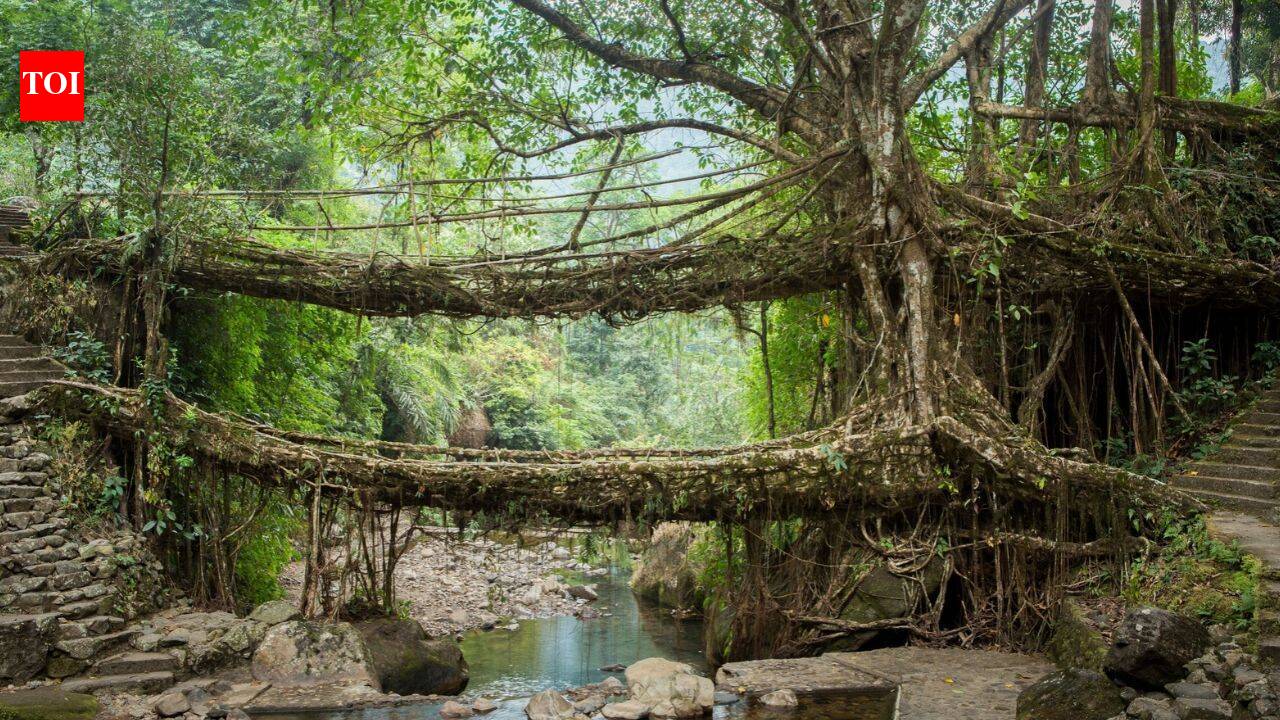
Whenever we imagine bridges, the picture that comes to mind is of a ton of concrete and steel surrounded by dust clouds during construction. But, imagine crossing a bridge that isn’t really finished, because it is still growing. There are no steel cables holding it together, no concrete pillars sunk into a riverbed and no construction crew rushing to meet a deadline. Instead, thick tree roots twist around one another, forming sturdy pathways over streams and ravines.
(Image Credit: Canva)
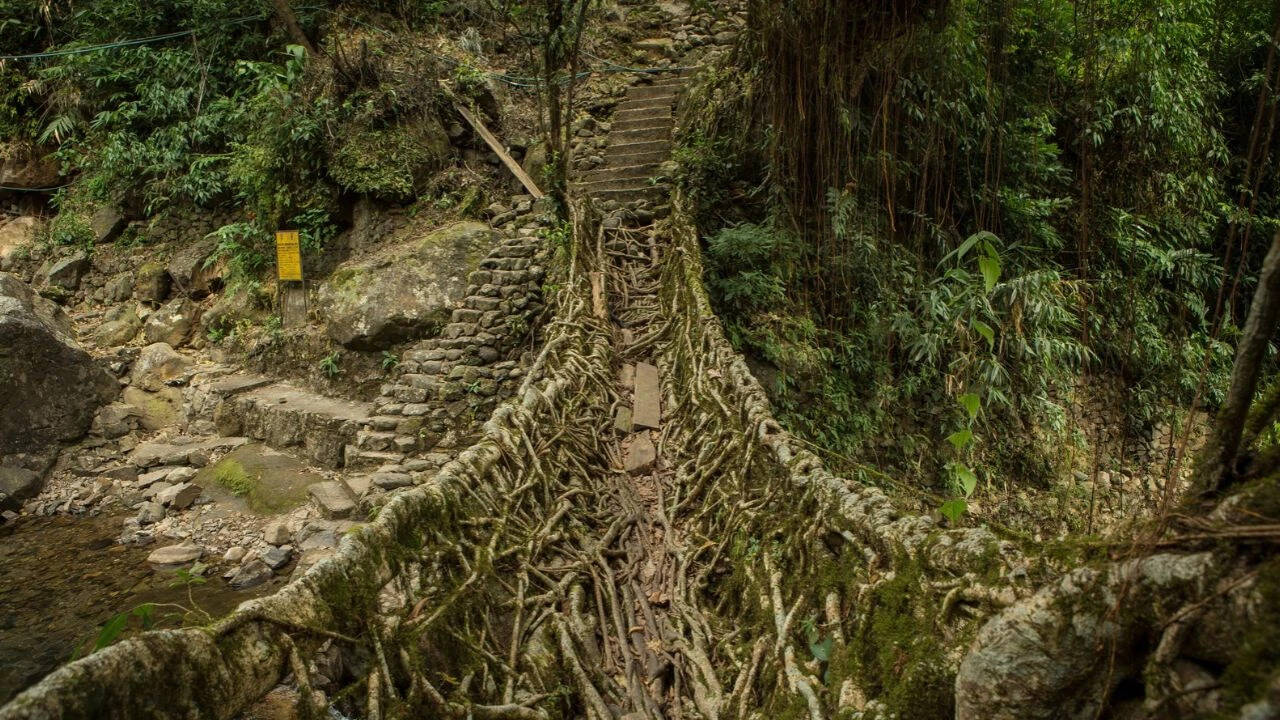
Welcome to Meghalaya, where some of the most remarkable bridges are grown rather than built.Locally known as jingkieng jri, these living root bridges are the result of generations-old knowledge of the Indigenous Khasi communities. They turn the region’s rubber fig trees into practical, living architecture. They are beautiful, certainly, but their real magic lies in how cleverly they respond to the landscape.
A bridge that takes its time
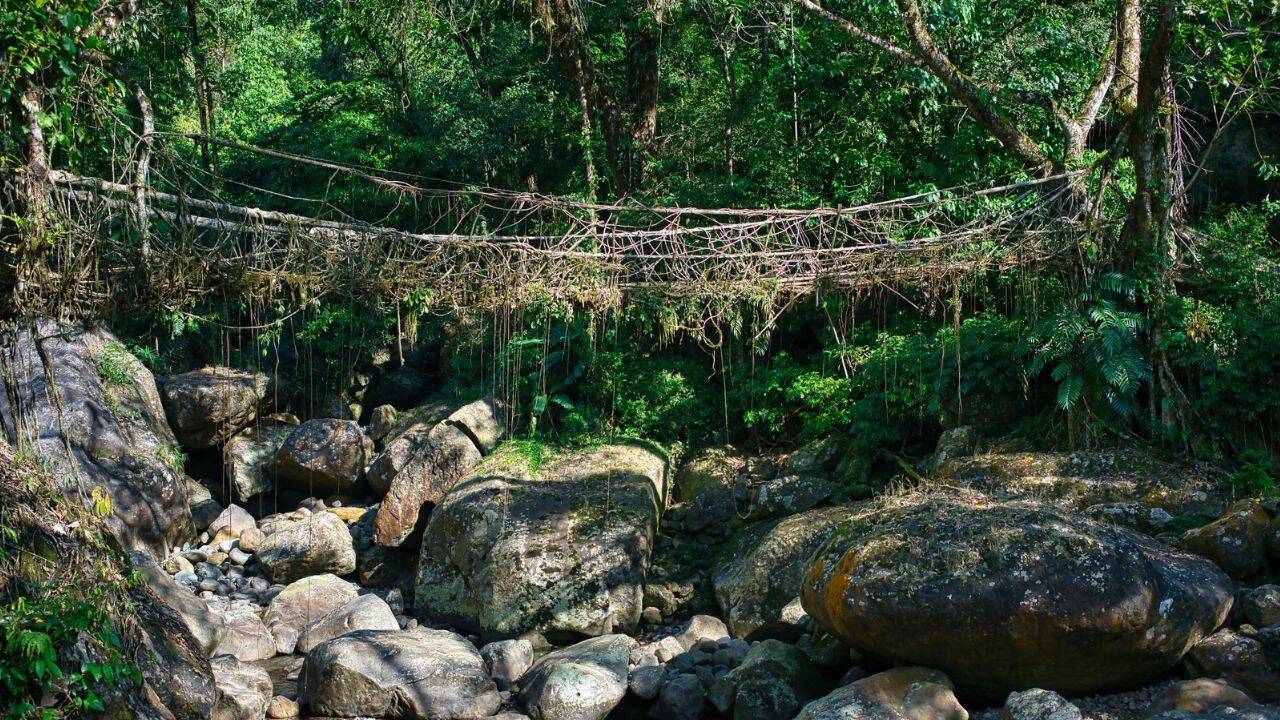
The secret lies in the aerial roots of the rubber fig tree, Ficus elastica. Unlike the roots we usually picture hidden underground, these grow out from the tree’s branches and can be guided towards the ground or across open spaces.The local communities, with appropriate knowledge, gently direct young roots through hollowed-out areca palm trunks or along bamboo frameworks. As the roots grow, they are joined together and gradually form a strong structure capable of carrying people across the river. During the process, stones may be added to create a more even walking surface, while extra roots become handrails, making it a complete structure.
(Image Credit: Canva)
This isn’t a weekend construction project. The Meghalaya Biodiversity Board says a root bridge can take around 15 to 25 years to develop into a firm crossing. The remarkable part? Unlike an ordinary bridge that begins ageing as soon as it is completed, a healthy living root bridge can continue growing stronger with time, provided it is cared for.
Why Meghalaya needed bridges like these
The answer lies in the landscape itself. Meghalaya receives intense monsoon rainfall, and its hills are cut by steep valleys, fast-flowing streams and rivers that can become difficult to cross. The usual wooden walkways can deteriorate in damp conditions, while conventional bridges may require materials, money and maintenance that are difficult for remote communities to access.These living root bridges offer a solution that keeps the environment at the forefront. They are shaped around the environment rather than imposed on it. Their flexible, interwoven roots can withstand wet conditions while the trees remain alive throughout the process. They also represent a community effort: these bridges depend on generations of local knowledge, regular maintenance and people continuing to care for structures they may never see fully mature.However, there is something quietly extraordinary about that arrangement. People guiding a young root today might be helping create a crossing that future generations will use and adore decades later.
The double-decker bridge that steals the show
If there’s one place to put on your Meghalaya itinerary, make it the famous Double Decker Living Root Bridge in Nongriat. Tucked into a forested valley near Sohra (Cherrapunji), this extraordinary structure has two root walkways stacked one above the other. It looks almost like something imagined for a fantasy film, except it serves a very real purpose.
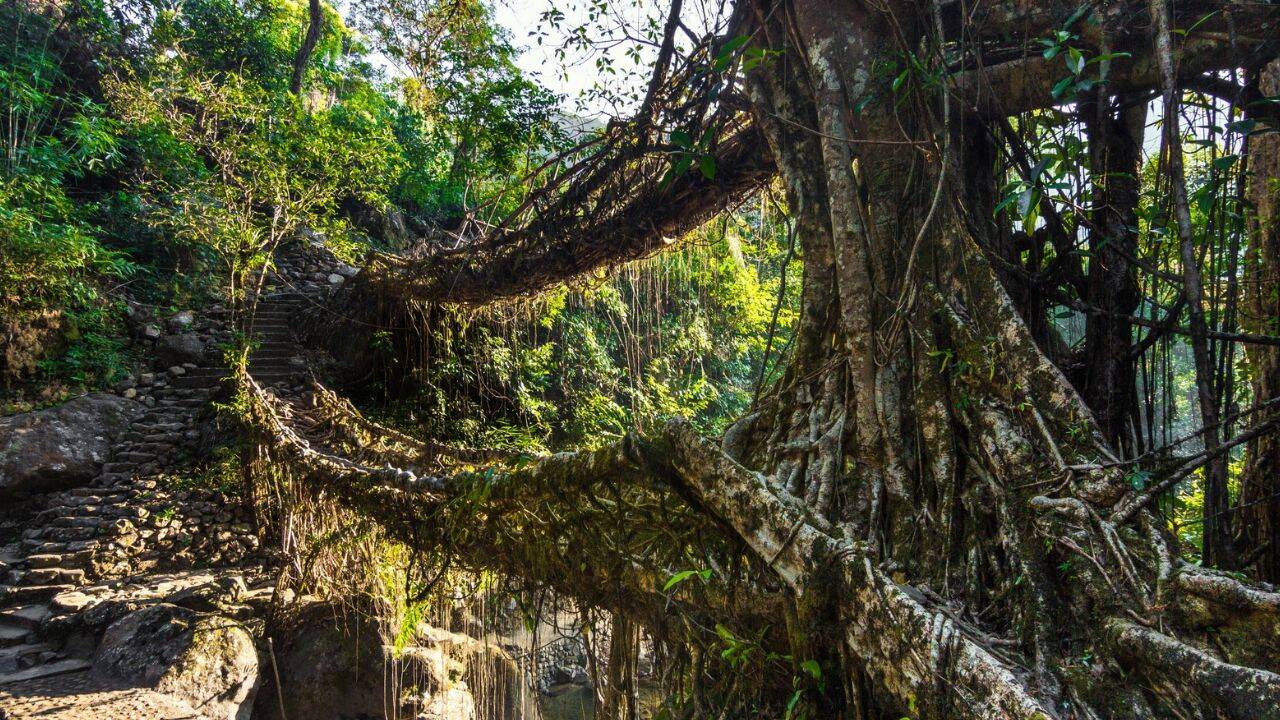
Living Root Bridge at Nongriat, Meghalaya (Image Credit: Canva)
How to reach: Reaching the double-decker is part of the adventure. The trek begins near Tyrna village and involves descending roughly 3,000–3,500 stone steps through thick greenery, across streams and over smaller suspension bridges. Your legs may have a few complaints, but the sight of those intertwined roots spanning the water makes a memorable reward. If you have the time and energy, continue towards Rainbow Falls, where the forest trail leads to a spectacular cascade.Other root-bridge adventures are more accessible, though. The living root bridge at Riwai, near Mawlynnong, is a more convenient option for travellers who want to see this unusual craft without committing to the long hike into Nongriat.
More than a photo stop
It is tempting to see these bridges as nature’s architectural showpieces and leave it at that. But their importance goes beyond tourism. In 2022, India submitted the Jingkieng Jri: Living Root Bridge Cultural Landscapes to UNESCO’s Tentative List for World Heritage consideration. The submission recognises not just the bridges themselves, but the Indigenous knowledge, community traditions and relationship with the forest that keep them alive. A tentative listing is a step towards possible World Heritage recognition, not the same as inscription on the World Heritage List.When you visit, take your time. Notice how the roots wrap around one another, how the walkway changes shape and how the forest seems to reclaim every spare inch of the landscape. Wear shoes with a good grip, carry water, and be prepared for slippery steps, especially after rain.In a world that often measures progress by how quickly something can be built, Meghalaya’s living root bridges offer a different lesson. Some things are worth growing slowly. And sometimes, the most impressive piece of engineering is one that never stops growing.