
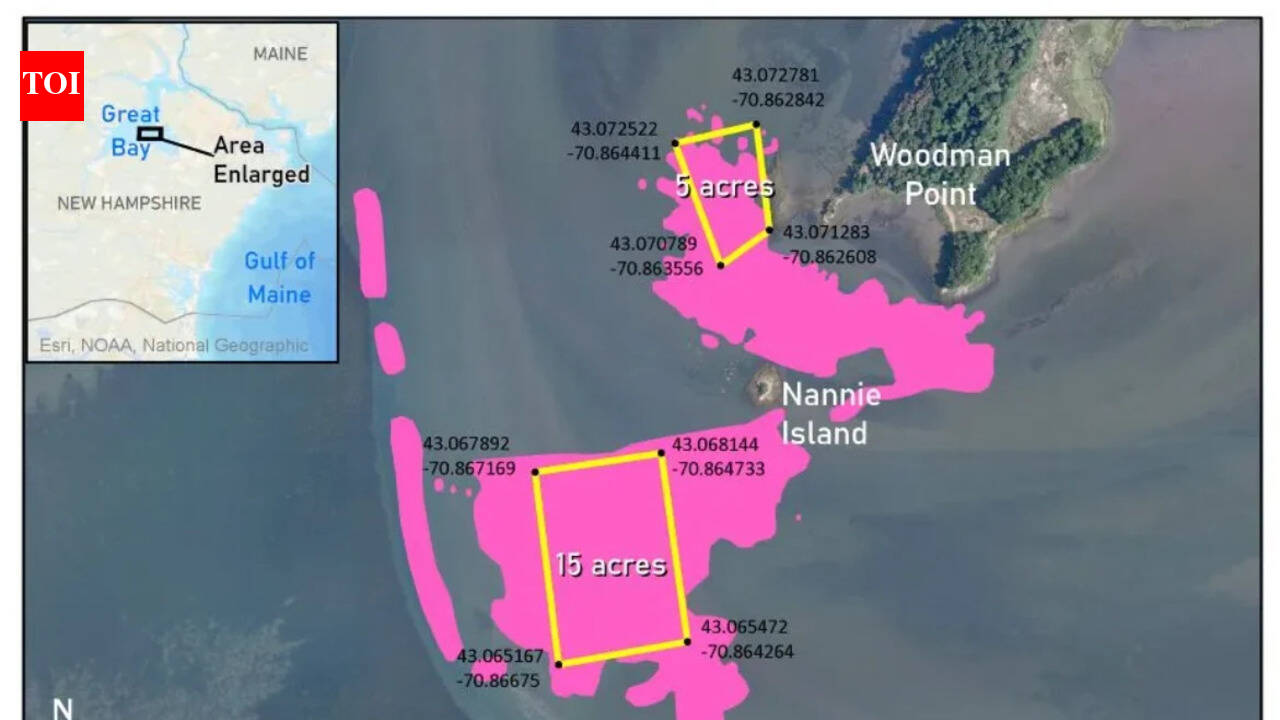
Oyster reefs play a crucial role in supporting underwater ecosystems, providing shelter to marine species while also maintaining the quality of the surrounding water. In New Hampshire’s Great Bay, efforts to restore these reefs have been announced in recognition of their importance. On October 29, 2026, the New Hampshire Fish and Game Department announced that 20 acres of Great Bay would be closed to shellfish harvesting from November 1, 2026, through October 31, 2031. Through this five-year effort, the goal is to continue restoration without disturbance by placing specific sections of the estuary off-limits to shellfish harvesting.This decision has come about in collaboration with The Nature Conservancy and the University of New Hampshire. The closure covers two separate restoration sites, one measuring 5 acres near Woodman Point and another spanning 15 acres near Nannie Island. The existing natural oyster reefs remain open to recreational oyster harvesters.
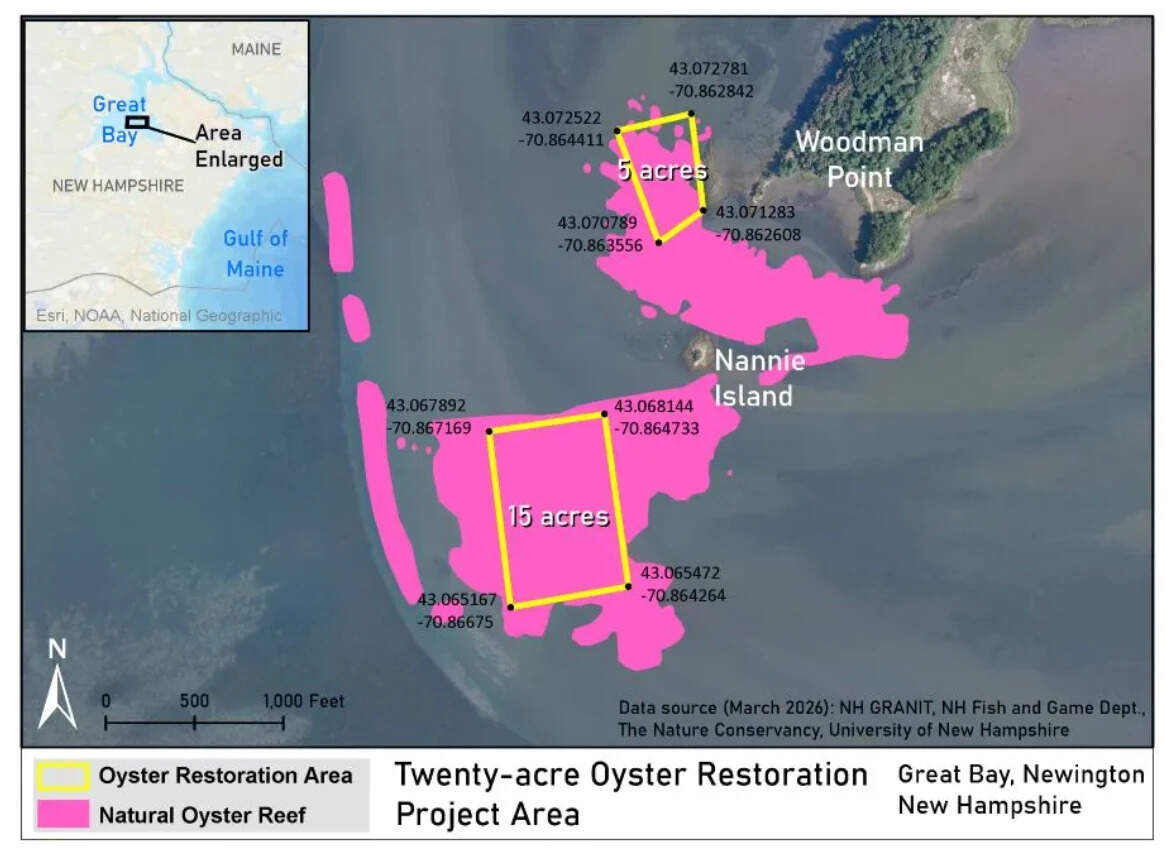
(Image credit: nhfishgame.com)
The five-year closure will remain in effect until October 31, 2031. Rather than closing the entire surrounding waterway, the department has restricted harvesting within specific areas where restoration is taking place.
Why Great Bay’s oyster reefs need protection
But a major question remains: why is this move necessary to protect oyster reefs? The effort underway is part of a much larger attempt to address the decline of oyster reefs in the Great Bay area. The eastern oyster, especially, has historically been regarded as an indispensable part of the region’s marine life. Information from The Nature Conservancy further supports this, as Great Bay may have supported as many as 1,000 acres of living oyster reefs back in 1970. However, more than 90% of these oysters were lost over time due to pollution, harvesting and disease.The loss of these reefs had consequences beyond the decline of a single shellfish population. Oysters are filter feeders; they draw water over their gills and remove microscopic algae and suspended particles as they feed, thus clearing the water. An adult oyster can filter upwards of 50 gallons of water a day. This process, beyond clearing the water, can also support the recovery of eelgrass beds, which provide important habitats for marine life.Oyster reefs themselves create habitats that other species depend on. As oysters grow, their shells accumulate and form complex underwater structures, creating spaces where fish, crabs and other marine organisms can find shelter. These reefs can also act as natural barriers along the coast, helping reduce wave force, stabilise shorelines and limit erosion. Their disappearance, therefore, affects several interconnected parts of the ecosystem, making their restoration important to the wider health of Great Bay.
How scientists are working to rebuild the reefs
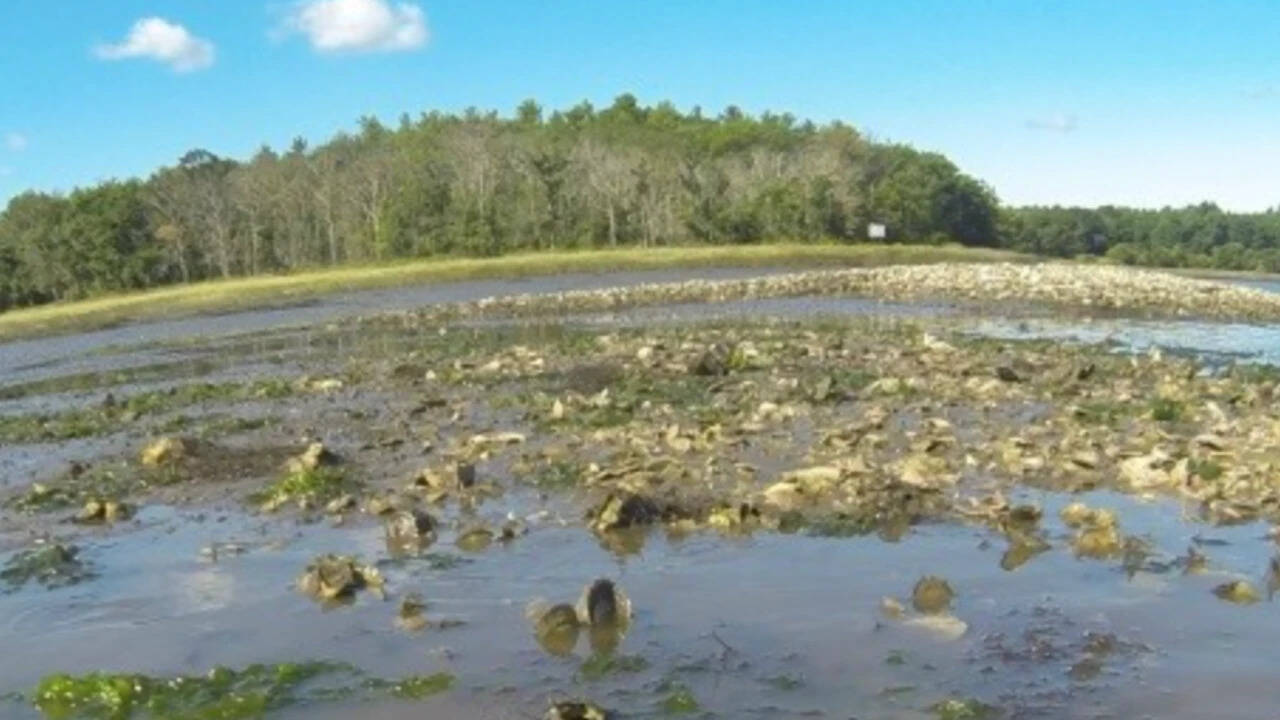
The restoration work around Nannie Island has involved more than simply placing oysters back into the water. It has brought together researchers, conservation organisations and local oyster farmers, who have been contributing to efforts to rebuild reef habitats over several years.These oysters do more than increase the number of shellfish in the water. Their shells provide a surface on which oyster larvae, known as spat, can settle and develop, helping new generations of oysters establish themselves. The Nature Conservancy’s restoration programme involves placing oyster larvae on shells, raising juvenile oysters and eventually introducing them to restored reef sites.
(Image credit: atlanticfishhabitat.org)
The Nature Conservancy’s restoration programme also relies on scientific assessments to determine where reef-building efforts should take place. Historical reef maps, water-quality information and community input are considered before selecting sites, while monitoring plays an important role in helping researchers assess oyster survival, growth and reef health.
Giving the ecosystem time to recover
The new closure is another step in this longer restoration process. By keeping harvesting activities out of the two designated areas for five years, New Hampshire is allowing the restoration sites to develop while researchers and conservation partners continue their work. The restriction does not mean that all oyster harvesting in Great Bay has stopped, nor does it mean that the natural reefs surrounding the restoration sites are being closed.When an ecosystem has witnessed a decline as major as that in Great Bay, the need for action becomes greater. The restoration efforts over the next five years can potentially strengthen the reef structures. Both the time and effort invested can help the underwater habitat become healthier. While the success of this effort cannot be determined just yet, it does highlight a major step towards conserving the oyster reefs and their population.


