
The Education Department is finalizing guidelines for an earnings test that would punish nearly half of all graduate programs in visual arts, music and performance based on the low income of recent alumni, according to the government’s calculations.
The proposed guidelines apply to all university programs, and institutions whose alumni fail to meet them twice in three years could lose their ability to enroll students using federal loans. Those students would most likely need to transfer to other programs or quit their education. According to experts, that would lead to a sharp decrease in enrollment and the likelihood of school closures.
For master’s degree programs, the agency would calculate the earnings of alumni four years after graduation to see whether they earn more than the median salary for working adults aged 25 to 34 who have a bachelor’s degree. Previous tests measured all programs against the salary of working adults with high school diplomas — a lower threshold for universities to pass.
“They are taking a DOGE approach to education,” said Tom Eccles, who runs the Center for Curatorial Studies at Bard College, adding that most universities were just learning about the guidelines. “They are deciding what the metric is, as though there were an objective way to measure the value of an arts education.”
Most students pursuing an arts degree know that becoming the next Picasso or Lady Gaga is a long shot, and that an arts degree is unlikely to have an immediate payoff. A preliminary analysis of the economic data released by the Education Department shows that many of the country’s top arts programs would not pass the revised earnings test.
Yale University’s master’s programs in visual arts and music would fail.
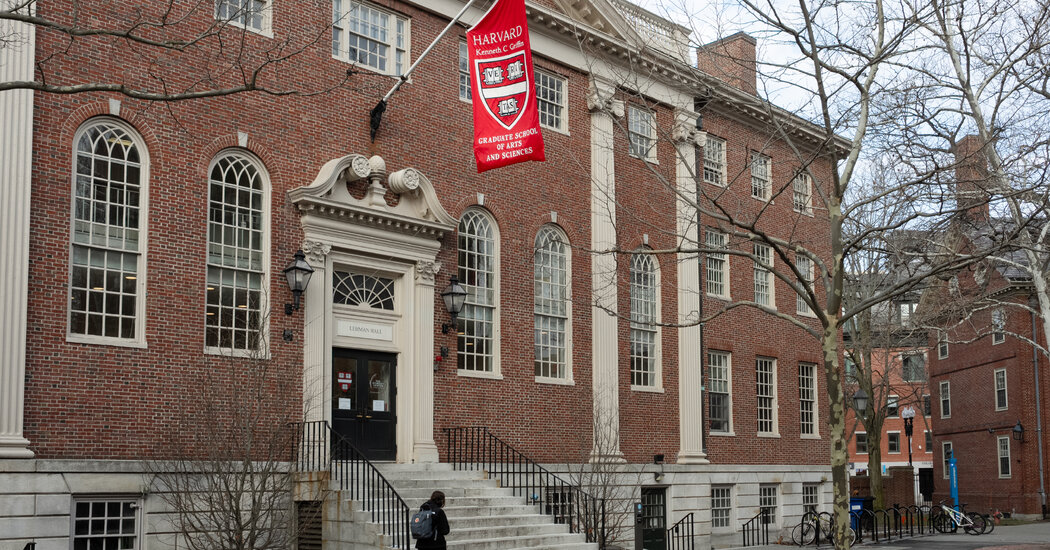
Harvard University’s master’s degree in museum studies would fail.
The Juilliard School’s undergraduate and graduate programs in music would fail.
“Juilliard believes that the proposed earnings test is not a reliable measure of institutional quality or graduates’ success in fields such as the performing arts,” the school said in a statement. “Accountability frameworks should reflect the diverse ways graduates build careers and contribute to society, rather than relying on a single measure that may not accurately capture the value of their education and their potential.”
The Education Department did not respond to questions about the earnings test, a provision inserted into last year’s sweeping domestic policy bill, which passed on party lines. The agency has a July deadline to finalize its guidelines, and some experts believe that the income expectations might be eased before they take effect in the fall of next year.
The rising cost of higher education — annual tuition for an undergraduate degree can reach $90,000 — has legislators interested in holding colleges accountable for programs that provide a low financial return on investment. The Senate committee overseeing education helped introduce the earnings test’s updated guidelines.
“Higher education’s mission, regardless of degree, should be to prepare students for successful careers after graduation,” Stephen Lewerenz, a spokesman for the committee, said. “If colleges are saddling students with debt and degrees that leave them worse off, they should not be subsidized by American taxpayers.”
Dozens of arts programs have closed in recent years, with officials citing low enrollment, high overhead costs and increased competition from research universities. Cultural meccas like Nashville and San Francisco no longer have private colleges specializing in visual arts.
Jordan Matsudaira, the chief economist at the Education Department under the Biden administration, said the agency’s accountability measures were designed to target for-profit schools.
“The law is responding to a real problem in higher education: that often prices are set in a way that is not realistic relative to a student’s ability to pay it back,” said Matsudaira, who now teaches public administration and policy at American University. “But, on the other hand, there are a lot of programs that are producing value that just don’t show up in people’s paychecks. We need to find a way to fund those programs.”
According to the Education Department’s calculations, 90 percent of religious studies graduate students and 100 percent of recipients of culinary certificates would fail the new earnings test.
Analysts say the failing programs would account for six percent of higher education degrees. The conservative-leaning American Enterprise Institute has determined that about 644,000 students would be affected.
Students who were enrolled last year in the arts master’s programs that would fail the new guidelines have close to $311 million in federal loans.
“The future of arts education depends on federal policy,” said Deborah Obalil, the president and executive director of the Association of Independent Colleges of Art and Design. “This metric and the way it has been designed will exacerbate issues of access to studying the arts.”
The Education Department received nearly 8,800 public comments on the new measures, with many critiquing them.
“A high school graduate entering welding will almost certainly out-earn a film school-trained director or a Juilliard-trained violinist in year two,” wrote David Klein, the chief operating officer of the New York Film Academy. “However, the director’s and violinist’s contributions to our economy and society are no less vital.”

