
NEWYou can now listen to Fox News articles!
This is part six of a series examining the challenges confronting the NATO alliance.
As President Donald Trump presses NATO allies to shoulder more of Europe’s defense burden, countries closest to Russia are moving fastest — while some of Western Europe’s biggest economies face growing pressure to catch up.
Retired Rear Adm. Mark Montgomery, senior director at the Foundation for Defense of Democracies and former deputy director for strategy, policy and plans at U.S. European Command, said the shift is already visible across the alliance.
“Europe is clearly stepping up, but they’re stepping up by geographic variation,” Montgomery told Fox News Digital.
“If you ask me who’s doing the most, the Eastern Europeans are clearly.”
RUSSIAN DRONES TEST NATO’S ARTICLE 5 DEFENSE GUARANTEE AHEAD OF FRIDAY SANCTIONS DEADLINE
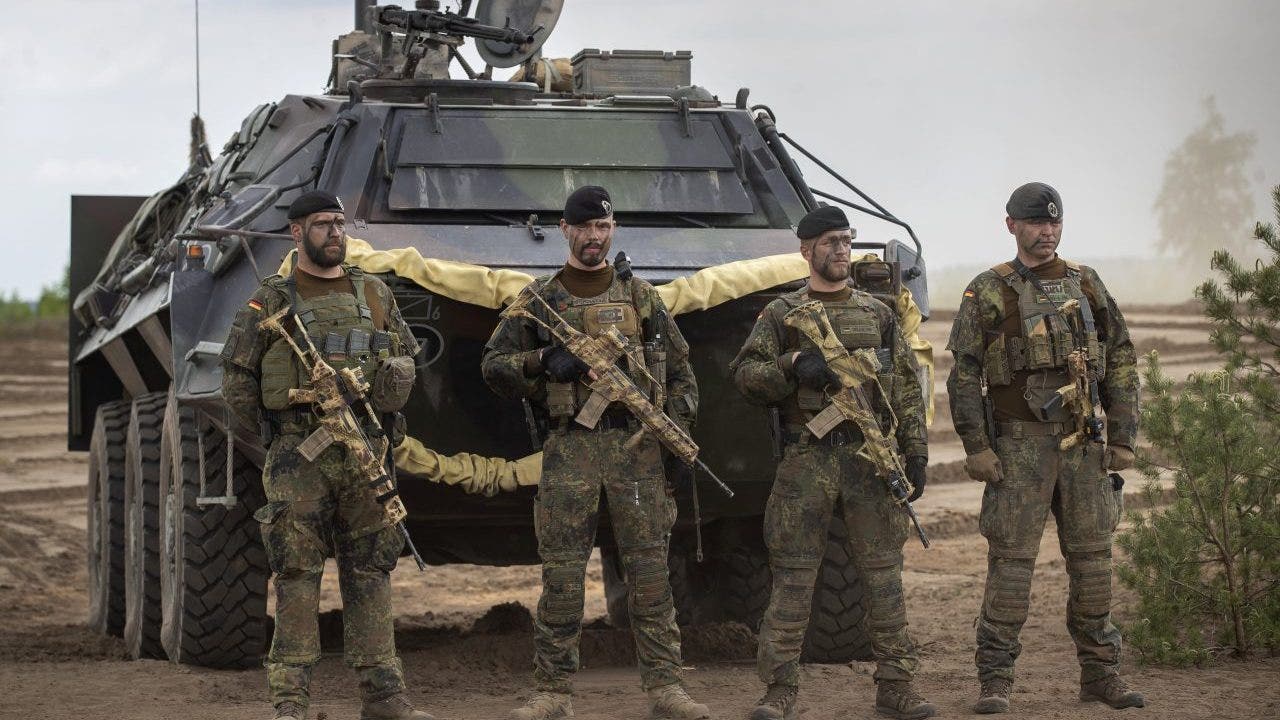
As President Donald Trump presses NATO allies to shoulder more of Europe’s defense burden, countries closest to Russia are moving fastest. (Burak Akbulut/Anadolu via Getty Images)
Montgomery pointed to the Baltic states, Poland, Romania and Bulgaria as countries moving aggressively to strengthen deterrence against Russia.
His assessment comes as NATO allies work toward a new defense spending benchmark agreed at the 2025 summit in The Hague, which calls on members to invest 5% of GDP in defense and security-related spending by 2035, including 3.5% for core defense requirements and 1.5% for defense-related infrastructure and security investments.
John Deni, a research professor at the U.S. Army War College, said the trend shouldn’t be surprising.
“Given the threat of Russia, allies in the East are acquiring capabilities more quickly, and they’re spending even more than allies in the West,” Deni told Fox News Digital. “This shouldn’t surprise us because they’re the ones closest to the threat.”
Deni noted that many eastern allies are rapidly purchasing equipment already available on the market rather than waiting years for domestic defense programs to mature.
UK, GERMAN DEFENSE OFFICIALS DEFEND MILITARY BUILDUP UNDER RUSSIAN THREATS
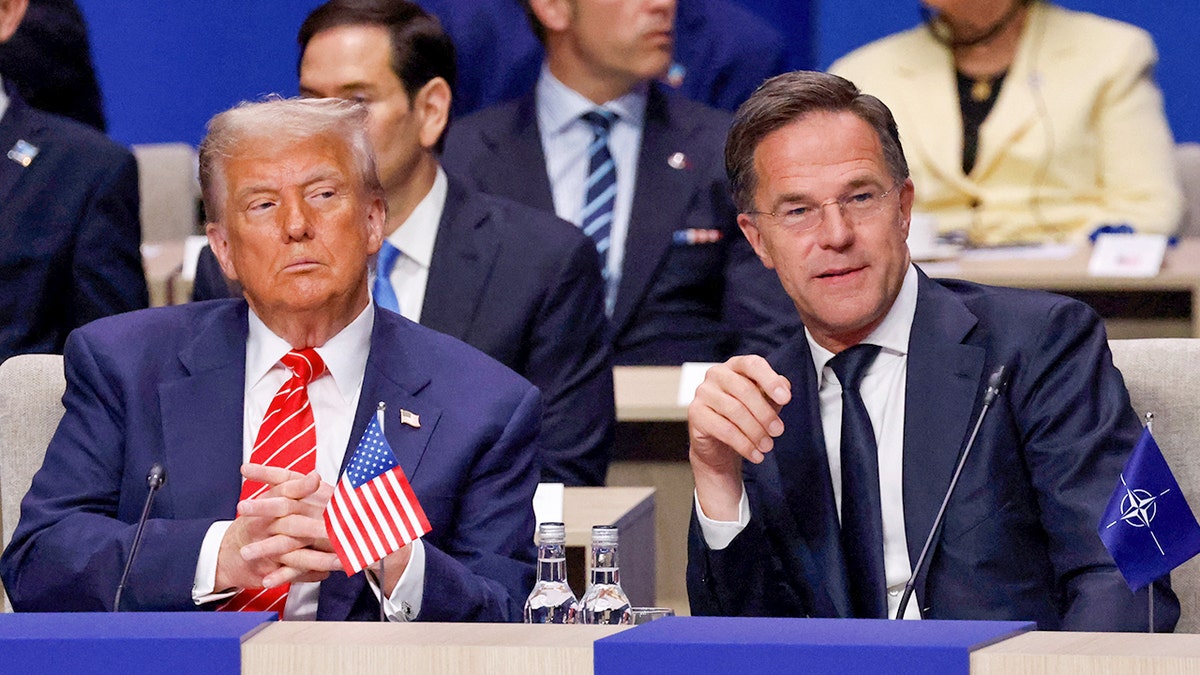
President Donald Trump and NATO Secretary-General Mark Rutte attend the start of a NATO leaders summit in The Hague, Netherlands, June 25, 2025. (Ludovic Marin/Pool via Reuters)
The transformation is visible across NATO’s eastern and northern flanks. Poland has become one of the alliance’s largest military spenders, Romania is increasing defense investments, and Finland and Sweden have added advanced military capabilities to NATO following their accession.
Secretary of State Marco Rubio praised Finland and Sweden Thursday at the Senate Foreign Relations Committee hearing, using them as examples of allies strengthening the alliance.
“Sweden and Finland have actually contributed because they brought their own defense industry, their own advanced technology,” Rubio said. “They have been great partners.”
Romanian Foreign Minister Oana-Silvia Ţoiu echoed that message in an interview with Fox News Digital following an emergency U.N. Security Council session convened after a Russian drone strike injured civilians in the Romanian city of Galați.
“We do agree with President Trump on the need to increase budgets,” Ţoiu said.
Ţoiu said Romania raised defense spending to 2% of GDP during Trump’s previous term and plans to allocate “an average of 3.4 percent” next year through military procurement and strategic infrastructure investments.
POLAND SEEKS ANSWERS AFTER PENTAGON SCRAPS PLANNED US ARMORED BRIGADE ROTATION

“Europe is clearly stepping up, but they’re stepping up by geographic variation,” Retired Rear Adm. Mark Montgomery told Fox News Digital. (Omar Sobhani/Reuters)
“We have launched initiatives that are directed at the eastern flank because it is increasingly more clear that that needs to be protected,” she said.
She argued that Romania’s role extends beyond national defense.
“We need better deterrence, better defense capabilities there in order to ensure our responsibility in protecting not just the Romanian border, which is the longest border to the war, but also it is in the same time a European border and the border of the Allied territory,” Ţoiu said.
For frontline states, the urgency is driven by geography as much as politics. Romania shares a border with Ukraine and repeatedly has dealt with Russian drones entering its airspace. Poland has become one of NATO’s top military spenders, while the Baltic states are racing toward defense expenditures approaching 5% of GDP.
Montgomery said the eastern flank’s urgency contrasts sharply with the pace in much of Western Europe.
Among the continent’s five largest economies, and despite a slight decrease in military spending in 2025, the U.K. remains the largest investor relative to GDP, with 2.4%, trailed by Germany (2.3%), Spain (2.1%), France (2%) and Italy (1.9%), according to the Stockholm International Peace Research Institute (SIPRI).
WHY NATO’S DEFENSE SPENDING IMBALANCE LASTED FOR DECADES
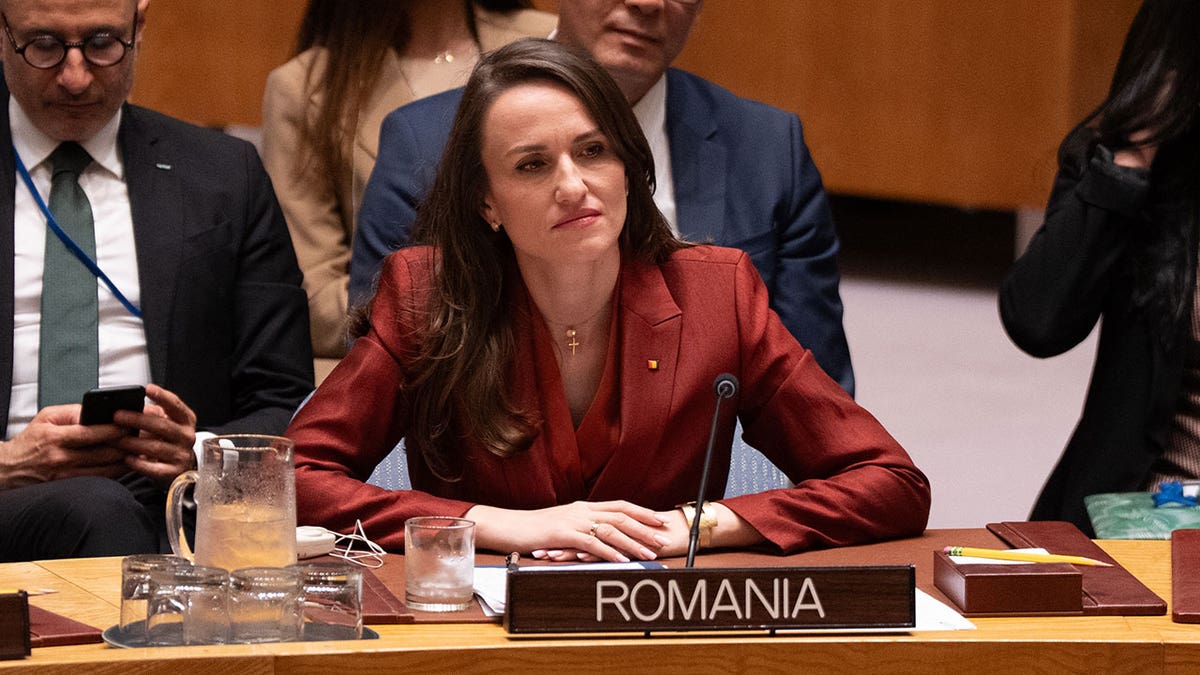
Oana-Silvia Toiu, Romania’s minister for foreign affairs, speaks during an emergency Security Council meeting at the United Nations headquarters in New York on June 1, 2026, after a Russian military drone entered Romanian airspace and exploded, injuring civilians. (Lev Radin/Sipa USA)
“The Germans are the one country, I think, with a large economy that is starting to make the right kind of investments.”
Germany, he argued, could become the backbone of Europe’s future defense industrial base.
“Germany developing a large, impressive defense industrial base is good for NATO, it’s good for Western security, and it’s even good for our primes,” Montgomery said.
German Chancellor Friedrich Merz has embraced higher defense spending and backed NATO’s new spending goals, positioning Berlin as a potential hub for Europe’s future defense industrial base as allies seek to reduce long-term dependence on the United States.
But despite rising defense budgets, experts warn Europe remains heavily dependent on American military capabilities.
Barak Seener, a senior fellow at the Henry Jackson Society, said Europe still relies on the United States for many of the systems required to fight a modern war.
NATO CHIEF WARNS EUROPE CAN’T DEFEND ITSELF WITHOUT US AS TENSIONS RISE OVER GREENLAND
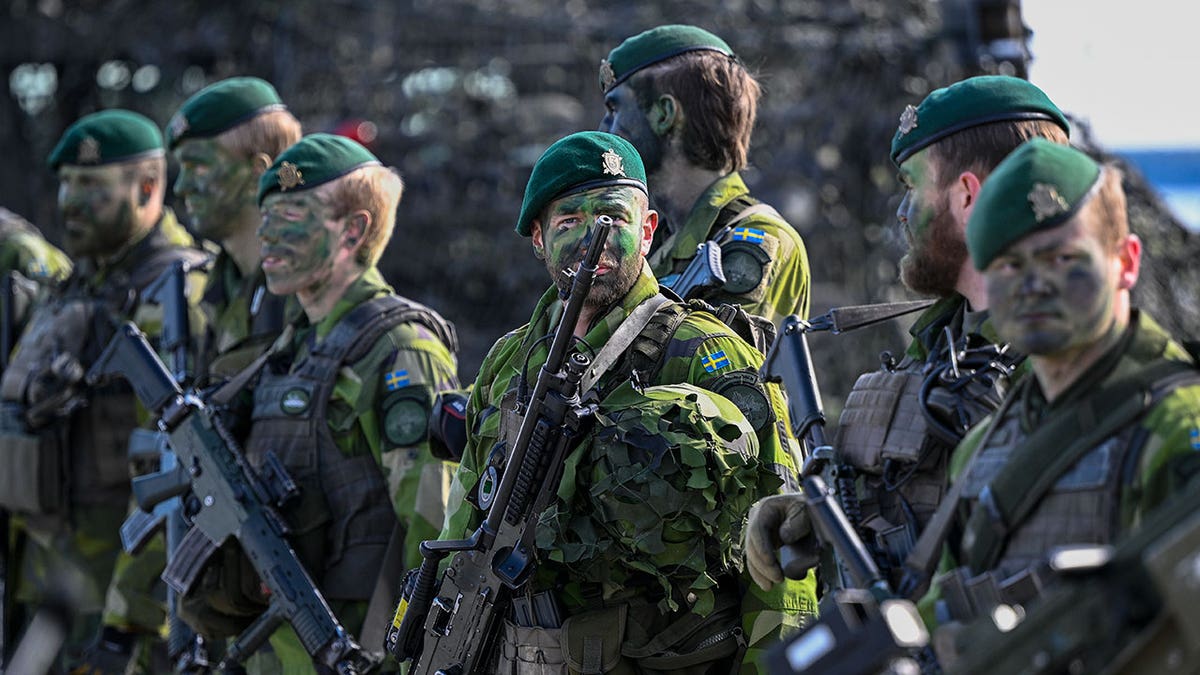
Despite rising defense budgets, experts warn Europe remains heavily dependent on American military capabilities. (Anders Wiklund/TT News Agency via AP, File)
“Europe is heavily dependent on NATO for its strategic airlift and sea lift, its air-to-air refueling, its cyber capabilities, its space assets, its intelligence, surveillance and reconnaissance,” Seener said.
Without those capabilities, he warned, European forces would struggle to maintain situational awareness during a major conflict.
Montgomery said Europe faces three major challenges: expanding military capacity, rebuilding its defense industrial base and developing high-end support capabilities that have long been provided by the United States.
PENTAGON CUTS BRIGADE COMBAT TEAMS IN EUROPE AS TRUMP PRESSURES NATO ON SPENDING
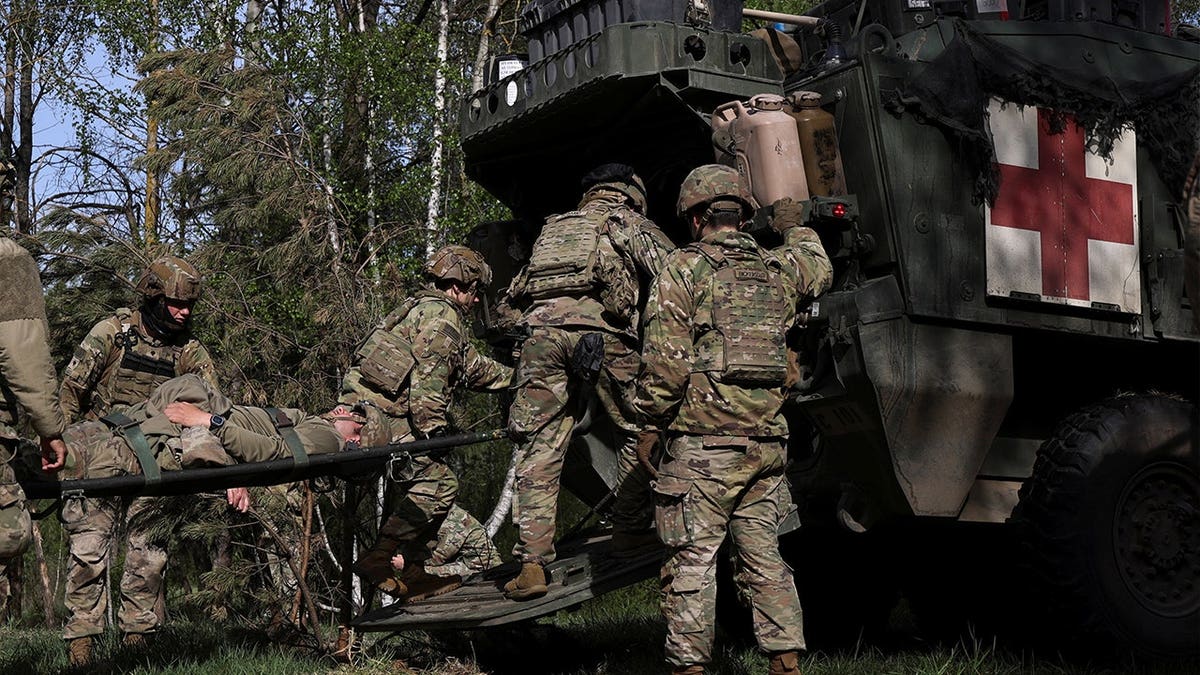
Retired Rear Adm. Mark Montgomery pointed to the Baltic states, Poland, Romania and Bulgaria as countries moving aggressively to strengthen deterrence against Russia. (Kuba Stezycki/Reuters)
“When you are freeloading for 30 years, you create enormous deficits in terms of people, equipment, technology and know-how,” he said.
“The primary forces to defend Europe should be European,” he said. “The United States should provide additional forces that allow maneuver and offensive operations.”
Montgomery also criticized reported Pentagon deliberations over delaying long-range strike deployments to Germany and reconsidering future Tomahawk missile sales, arguing the systems are critical for deterring Russia.
“The goal here is not to fight Russia in the Baltics or in Poland. The idea here is we want to deter Russia from even trying to attack.”
Looking ahead, Montgomery remains optimistic about NATO’s future.
Montgomery predicted Europe will continue increasing defense spending and expanding its defense industrial base, while the alliance benefits from steadier transatlantic relations.
“I think you’ll have a U.S. president that probably doesn’t provoke the Europeans as much. You’ll have Europe that’s investing more,” he said.
CLICK HERE TO DOWNLOAD THE FOX NEWS APP
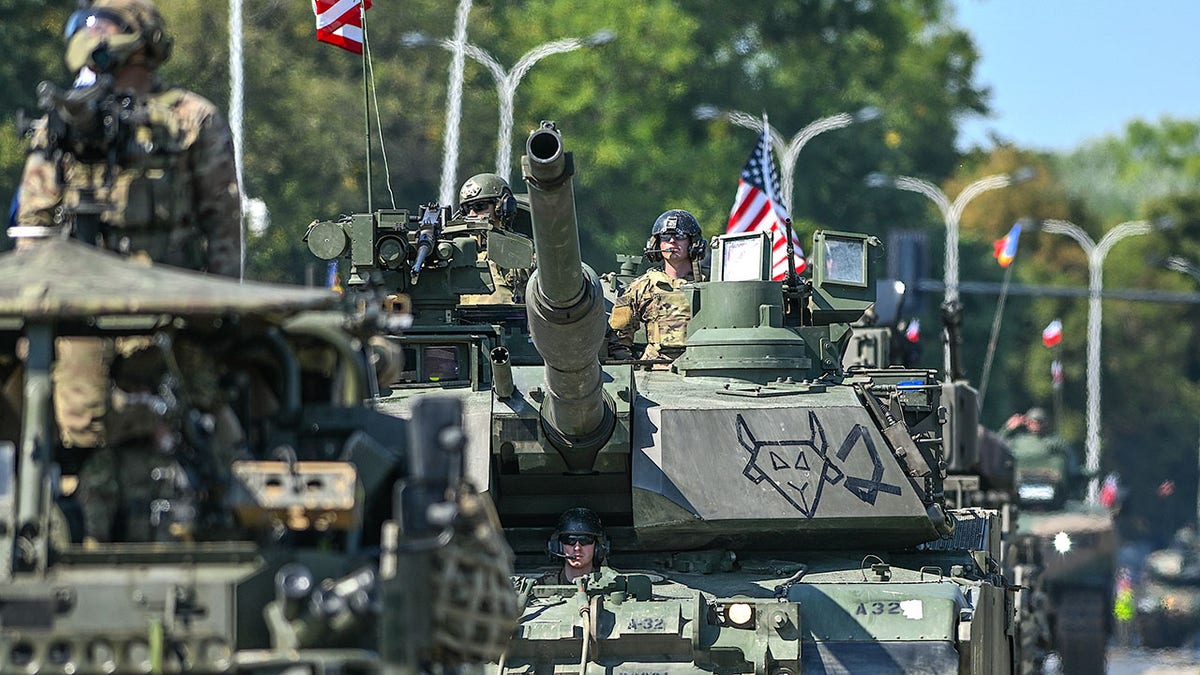
U.S. Army M1 Abrams tanks take part in the Armed Forces Day parade in Warsaw, Poland, Aug. 15, 2025. (Artur Widak/NurPhoto)
He also predicted NATO Secretary-General Mark Rutte would be remembered for helping hold the alliance together through a period of significant change.
“I think five years from now, NATO will be stronger,” he said. “And I hope we have Ukraine in there.”

