
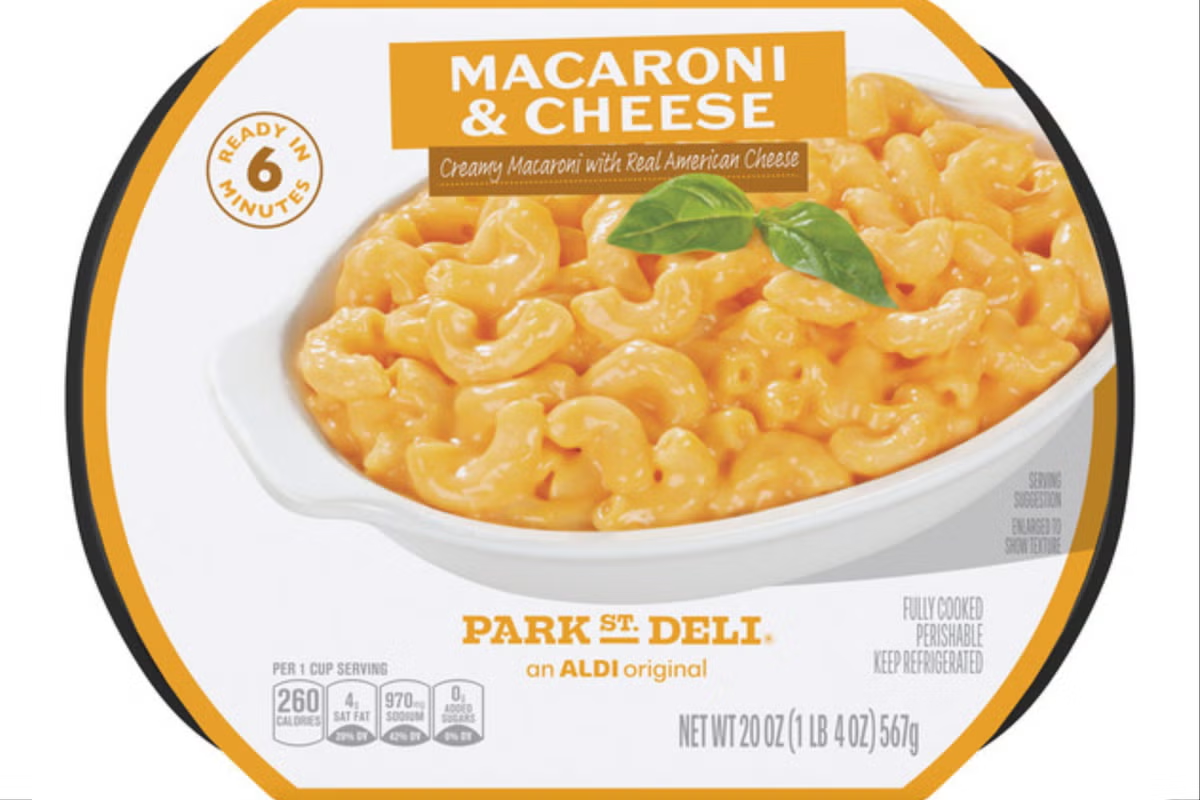
Thousands of macaroni and cheese packages have been recalled nationwide due to a potential allergy risk.
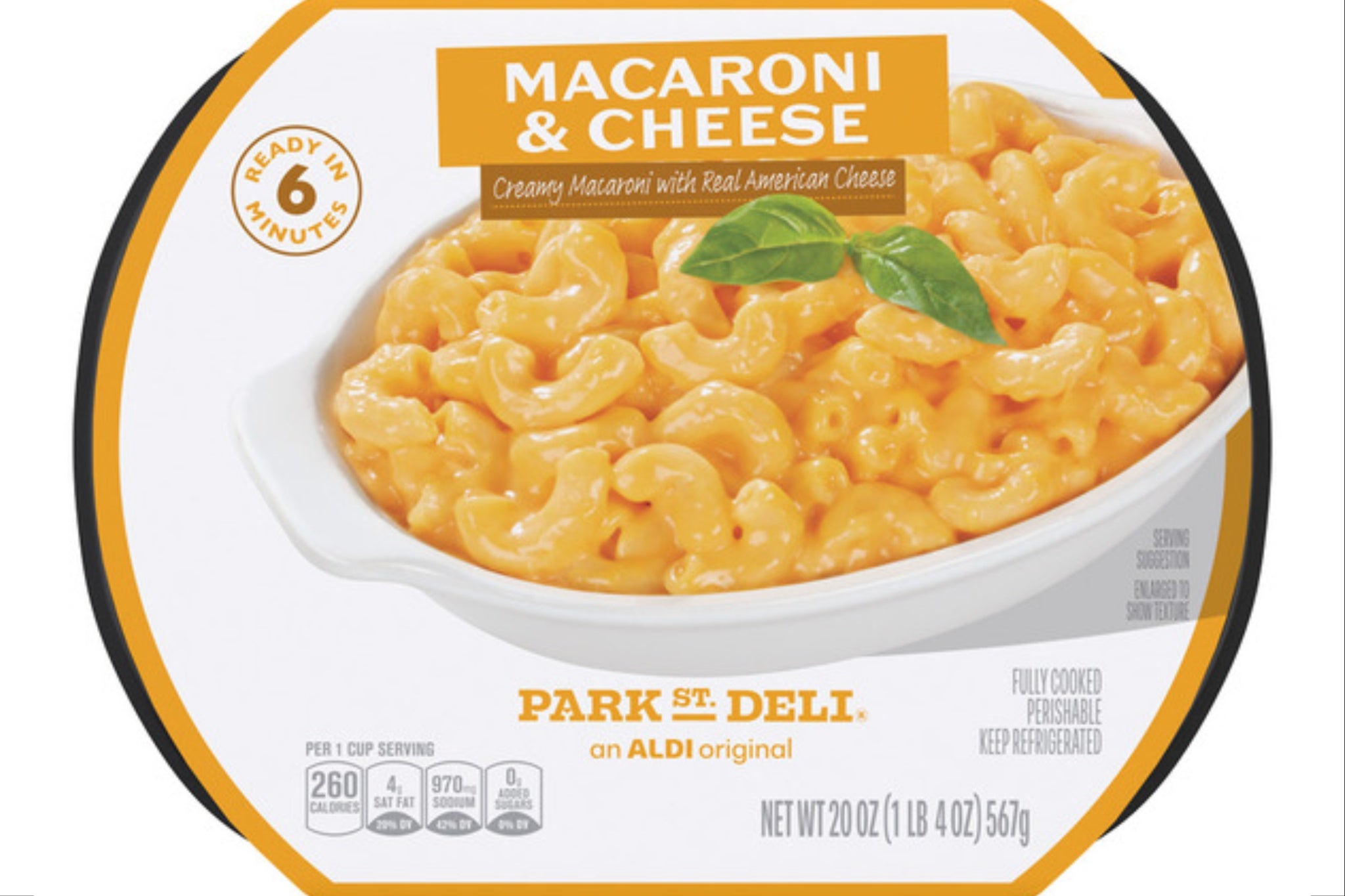
In March, BEF Foods, Inc., recalled 58,405 cases of its Park St. Deli Macaroni & Cheese because they may contain soy lecithin, a plant-based food additive derived from soybeans. The allergen was not declared on the packaging, posing a risk to consumers.
On June 10, the U.S. Food and Drug Administration elevated the recall to a Class II, which means that eating the items can pose a serious health risk.
Made with American cheese, the pre-cooked pasta is found in the refrigerated aisle exclusively at Aldi stores, according to the chain’s website. Each case has nine 20-ounce containers, with 525,645 individual packages affected by the recall.
Affected products can be identified by code information, found here.
The FDA’s report does not say whether any illnesses have been reported due to the undeclared allergen.
Soybeans are identified as one of the nine major food allergens in the U.S., along with eggs, wheat, milk, tree nuts, fish, Crustacean shellfish, peanuts and sesame. Allergic reactions to these nine foods vary but can range from hives and lip swelling to severe, life-threatening symptoms, often called anaphylaxis, that may involve fatal respiratory problems and shock.
The macaroni and cheese recall is just one of many issues to hit consumers in recent months. Last month, Kettle Cuisine recalled its Whole Foods Market Kitchen Minestrone Soup because it posed a health risk for people who are allergic to shrimp.
“The recall was initiated after it was discovered in-store that a single cup of soup was found to contain the incorrect product and that the soup in the cup contained Shrimp,” a notice from the FDA said at the time.
The soup, packaged in 24-oz clear plastic containers, was sold in stores in 17 states and online through the Whole Foods and Amazon websites.
Last month, Tennessee-based food service and coffee manufacturer The Coffee Connexion Co., recalled more than 900 cases of its Alfredo sauce that contained a dry milk powder that may have been contaminated with salmonella.
On June 6, the recall was upgraded to the highest possible risk level, Class I, which means that eating or using the product can pose serious adverse health consequences.
The cases of sauce were distributed in every single U.S. state except for Alaska, Connecticut, Delaware, Hawaii, Idaho, Nevada, North Dakota, Vermont and West Virginia.
However, The Coffee Connexion Co. primarily distributes its products to commercial kitchens, including hospitals, universities, cafeterias and restaurants, meaning impacted customers likely did not buy the Alfredo sauce at a grocery store.

