
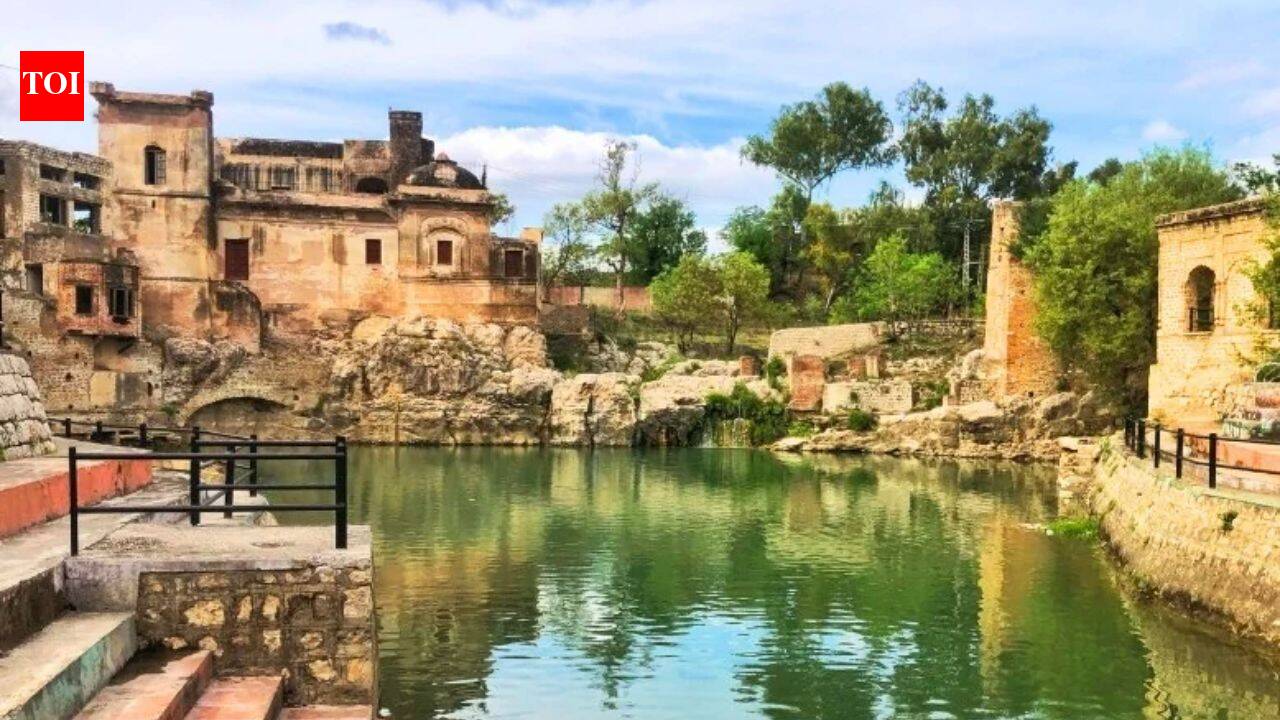
There is a beautiful lake in Pakistan’s Punjab province which is surrounded by the rocky hills of the Salt Range. But besides being beautiful, the lake has an incredible backstory related to Shiva which is related to Hindu mythology. Welcome to Katas Raj Pond, aka Lake of Lord Shiva’s Tear. It’s considered extremely sacred. This ancient waterbody is believed to have been formed from a tear shed by Lord Shiva as he mourned the death of his wife, Sati. Today, the lake remains the centrepiece of the historic Katas Raj Temples, a centuries-old Hindu pilgrimage site in Pakistan.It makes for an intriguing destination for travellers interested in mythology, architecture and South Asian heritage.LocationThe lake is set near Choa Saidan Shah in the Chakwal district. The temple complex has several ancient legends attached to it. For travellers exploring Pakistan’s historical attractions, Katas Raj is a must visit offering an experience that goes beyond conventional sightseeing.The story behind the lake of Lord Shiva’s tearsAs per Hindu mythology, when Goddess Sati sacrificed herself in fire, Lord Shiva was extremely angry, sad and in immense grief. He kept roaming the Earth mourning her death with her ashes on his body. His tears fell at two places and created sacred ponds.One of these is believed to be Pushkar in Rajasthan, India, while the other is associated with Katas Raj in Pakistan. The pond is also known by names associated with its sacred character, including Amrit Kund. Its name, Katas, is linked to the Sanskrit word Kataksha, often interpreted as eyes filled with tears.Connection with MahabharataAnother legend connects the lake with the Mahabharata. It is believed that the Pandava brothers spent part of their exile here. The pond is also associated with the episode in which Yudhishthira answered the questions of a Yaksha, demonstrating his wisdom and ultimately saving his brothers.The temples surrounding the lakeThe lake is surrounded by a group of ancient temples. According to Pakistan’s Department of Archaeology and Museums, the complex includes seven temples, a sacred pond, remains of a Buddhist stupa, historic havelis, samadhis and caves.These temples are believed to date largely from the early medieval period. The Satghara group, in particular, displays Kashmiri-style architecture, with features such as trefoil arches, fluted pillars, pointed roofs and decorative stonework. The official heritage inventory places the complex’s relative chronology between the 7th and early 11th centuries CE.How to reach Katas Raj Temples in PakistanKatas Raj is located near Choa Saidan Shah in Chakwal district, Punjab, Pakistan. The nearest well-known town is Kallar Kahar.From Islamabad: The temple complex is approximately 140–160 km away. Travellers can take the Islamabad–Lahore M2 motorway, exit at Kallar Kahar and continue towards Choa Saidan Shah. From Islamabad International Airport, international visitors can hire a car or arrange a private transfer to reach the temples.From Lahore: The distance is approximately 250–260 km. Take the M2 motorway towards Islamabad and exit at Kallar Kahar before continuing towards the temple complex.Best time to visit Katas Raj
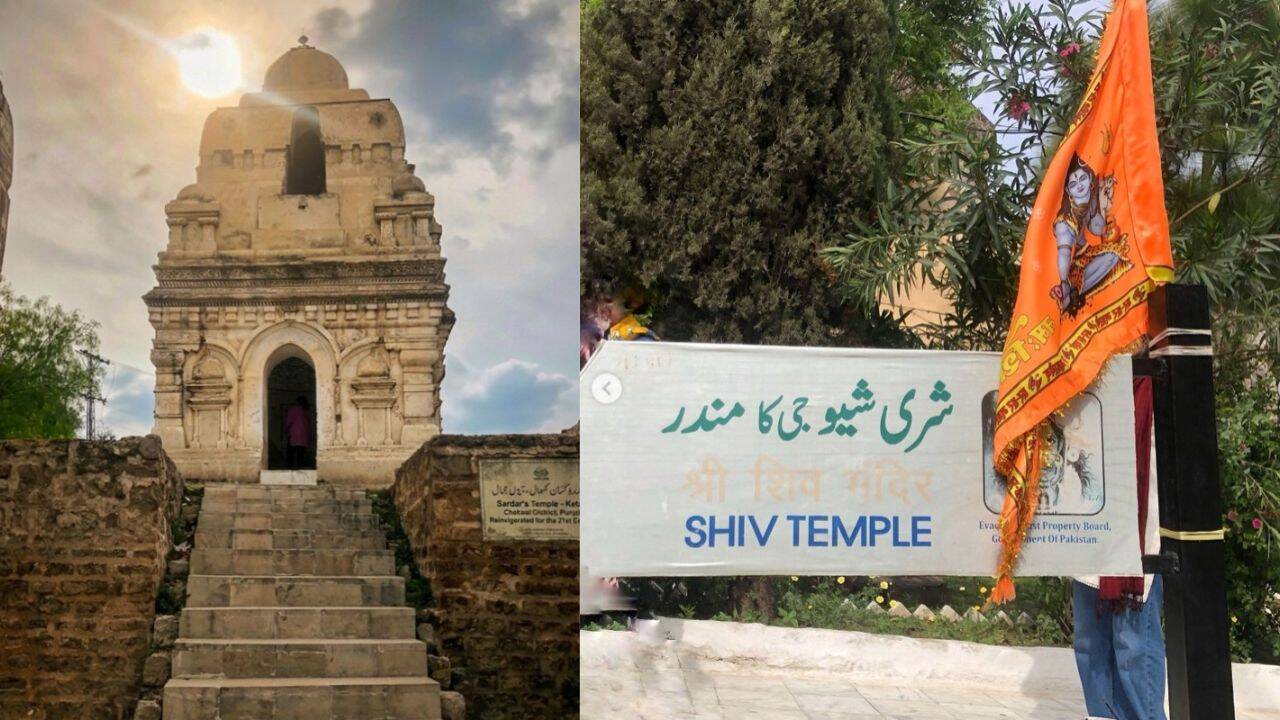
Lord Shiva cried when Sati died and his tear created a lake (@ig_tanya)
For travellers visiting the Salt Range, the cooler months between October and March are generally more comfortable for exploring the temple complex and its surrounding landscape. Spring is also significant from a religious perspective, as Hindu pilgrims have traditionally visited the site during this period.Can Indian tourists visit Katas Raj?The current political and security situation needs careful consideration. On April 24, 2025, India’s Ministry of External Affairs strongly advised Indian nationals to avoid travelling to Pakistan.For international visitors who are eligible to travel, Katas Raj offers an opportunity to explore a fascinating intersection of mythology, history and architecture. More than just a picturesque pond, it is a place where an ancient story of grief continues to shape the identity of a centuries-old pilgrimage destination.


