
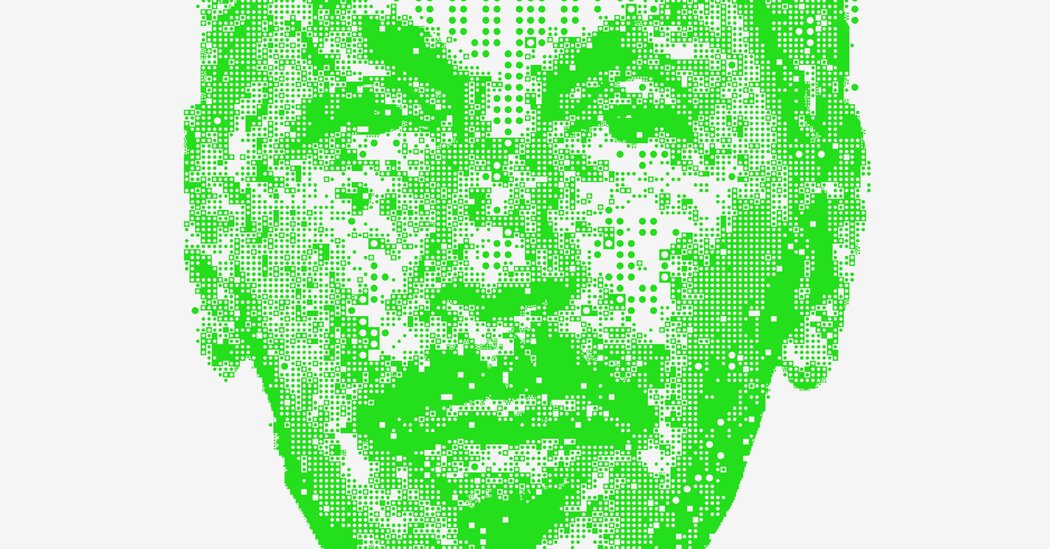
On Jan. 21, 2025 — the first full day of the second Trump administration — Larry Ellison woke up in his 33-bedroom, 34-bathroom oceanfront mansion in Florida, got into his Gulfstream jet and headed up to Washington. Ellison, who was 80 and worth in the neighborhood of $200 billion, had an appointment at the White House. He didn’t bother to take a driver’s license — he needed to call someone on the president’s staff to vouch for him at the gate — but there he was, at 2 p.m., standing beside Donald Trump in the Roosevelt Room as the president announced “the largest A.I. infrastructure project by far in history” and told the world that his friend Larry Ellison was just the man to get it done. “He’s sort of C.E.O. of everything,” Trump said. “He’s an amazing man and an amazing businessperson.”
Ellison began by thanking Trump. “We certainly couldn’t do this without you,” he said. “It would simply be impossible.” He then proceeded to sketch out the ambitious plan. Ellison’s database software and cloud computing company, Oracle, and its partners — most prominently OpenAI — were going to invest as much as $500 billion over the next four years into a group of sprawling data centers, 500,000 square feet each, that would produce 10 gigawatts of computing power, using enough energy to power as many as 10 million homes. It was called Project Stargate, after the 1994 sci-fi movie in which Kurt Russell steps through a wormhole and finds himself inside a pyramid on an alien planet. This Stargate would be a portal leading humanity from the postindustrial era to the artificial-intelligence age.
Ellison had come around to Trump long before many other tech leaders. After the 2020 election, he joined a strategy call of Trump confidants about how to overturn the results, and in 2024, he gave tens of millions of dollars to support Trump’s campaign. But OpenAI’s chief executive, Sam Altman, who was on hand at the White House too, was a Democratic donor and Trump critic. Ellison had helped arrange a call between the two men to tee up the event.
For Ellison, it was the capstone of a mad two-year scramble to transform Oracle into an A.I. juggernaut. The effort began in late 2022 when the launch of ChatGPT stunned the world and set in motion a race to master and control the most transformative new technology since the birth of the internet. Ellison, a founding father of Silicon Valley and the last of his generation still in the game, was desperate to avoid getting left behind. He’d moved quickly and aggressively — some might even say recklessly — to turn Oracle into a “hyperscaler,” one of the handful of companies providing the critical infrastructure that would power the A.I. boom.
These efforts had sometimes put Ellison at odds with the Biden administration, which took a more cautious approach to artificial intelligence, rolling out a host of regulations designed to give the government some control over its development. Biden’s team believed that the best way to maintain America’s lead in the A.I. race was to control the ability of U.S. companies to provide computing power to foreign nations like China and the autocratic regimes of the Persian Gulf.
Trump was promising a very different approach. A big chunk of Silicon Valley had supported him during the 2024 election, donating generously to his campaign, and he embraced Silicon Valley’s agenda, adopting a platform that criticized the Biden administration for hindering “A.I. innovation” and imposing “radical left-wing ideas” on its development. Now that he was in office, he was taking the guardrails off, and Ellison was poised to cash in and maybe even help change the course of humanity.
Ellison did cash in, at least at first. He signed the Stargate deal with Altman, putting him in business with the hottest young executive in the A.I. industry. He opened one of the world’s largest data centers in Malaysia, which has provided by one estimate more than one-fifth of China’s A.I. computing power, and developed plans to build another one in the United Arab Emirates. Oracle became a major investor in the U.S. division of the social media app TikTok. Ellison also moved into a whole new realm of influence. In 2024, he backed his son David’s $8 billion bid for Paramount, the owner of a major Hollywood studio as well as CBS News. And in 2025, he helped finance David’s $111 billion bid for Warner Bros. Discovery, the owner of a far bigger studio, dozens of cable channels and CNN. The Ellisons appeared to be building a very new sort of tech and media empire for the A.I. age, and Ellison’s wealth was soaring. Last September, he briefly became the richest person in the world.
But his big bet on A.I. was built on an astronomical amount of debt in every imaginable form — bonds, letters of credit, asset-backed securities — available in seemingly unlimited quantities, because the more you spent building A.I. infrastructure, the more you would earn, or so the logic went. Computer theorists called it the scaling hypothesis. It held that advancements in A.I. were directly tied to the generation of unprecedented amounts of computing power to process unprecedented volumes of data. Reaching the holy grail of artificial general intelligence, or A.G.I., when computers match or surpass human thinking at any task, was going to require bigger data centers and a lot more of them. It all came down to capital expenditures — capex, in the lingo of the Valley. Whoever controlled the most computing power would control the A.I. economy.
But lately, some investors and analysts have started questioning the scaling hypothesis or at least asking if all this spending is sustainable. The market has been gyrating wildly in recent weeks, as concerns have grown about whether the trillions of dollars being furiously pumped into this global ecosystem of data centers will ever return the promised profits.
A year and a half after his triumphant trip to the White House, Ellison may be poised to become something else: a cautionary tale. David has slowed his stop-at-nothing effort to push through his deal to acquire Warner Bros. Discovery in the face of a lawsuit from a group of state attorneys general. Ellison is personally worth about $55 billion less than he was on the morning he flew to Washington, and more than $200 billion less than he was at his peak in September. Oracle has pushed the limits of the credit market and is facing steeper interest rates from lenders, and its credit rating has been downgraded to a notch above “junk” status.
Ellison and his hyperscaler peers are confident that all of their borrowing and spending will set them up to dominate a transformed global economy. As a percentage of the nation’s G.D.P., the great A.I. infrastructure build-out is on track to exceed the construction of the American railroad system during the second half of the 19th century, the building of the Interstate highway system 100 years later and the Apollo space program.
The hyperscalers — Alphabet, Amazon, Meta, Microsoft, Oracle — are some of the richest companies in the world, and the stock market is heavily dependent on them for its growth. If Oracle were to falter, the repercussions could be wide-ranging. Americans are more invested in the stock market than ever before, and the A.I. boom has been driving a disproportionate amount of America’s economic growth. Last fall, Gita Gopinath, a former chief economist at the International Monetary Fund, writing in The Economist, estimated that an A.I. crash would wipe out $20 trillion in American wealth — far more than the dot-com crash in 2000 or even the 2008 financial crisis.
How did Larry Ellison go from being the star of the first formal news conference of the Trump administration to the richest person in the world to the most vulnerable player in this increasingly volatile game? It all started on an island in Hawaii.
‘Code Red’
Tech billionaires love Hawaii. Jeff Bezos has a $78 million estate on Maui; Marc Benioff owns hundreds of acres and an oceanfront estate on the Big Island; Mark Zuckerberg is building a fortified compound on Kauai. But only Ellison owns his own island. Lanai is 140 square miles, and pretty much all of it — the 47 miles of shoreline, the gas station, the movie theater, the Four Seasons resorts and about 150 newly built rental houses for employees, decorated in Japanese style — belongs to him. Local residents, and there are about 3,000 of them, refer to Ellison as “ownership,” and the island’s unusual economic structure does give it a strange, plantation-like feel.
Ellison retreated to Lanai during the pandemic and basically stayed put for the next few years, seemingly gliding into a more mellow phase of his career. He enjoyed hosting his many rich and powerful friends on his island paradise: Bezos, Benioff, Benjamin Netanyahu and Tony Blair all flew in for his birthday party in 2021. (Netanyahu’s security team insisted that he stay in a six-bedroom hilltop villa, requiring one of Ellison’s employees to move.) Ellison is building a house on the island for his good friend Elon Musk, a regular visitor.
Ellison was living on Lanai with Keren Zhu, a Chinese national who came to the United States as a teenager and who goes by Jolin. Very little is known about her, including whether she and Ellison are married. But people who lived on Lanai and worked for Ellison told us that he and Jolin had their first child when she was about 23 and he was about 70 — before Ellison was divorced from his fifth wife, Nikita Kahn, in 2020 — and that they have since had at least three more. Ellison appears to be attentive to Jolin’s desires. When she complained about missing authentic Chinese food, he had one of the island’s local spots, the Lanai City Bar and Grill, which he also owns, temporarily converted into a Sichuan restaurant.
Since founding Oracle in 1977, Ellison had become infamous for his ruthless need to win, once hiring private investigators to spy on Microsoft. In more recent years, he had been spending time on a quixotic “agtech” start-up that was promising to disrupt the global food chain. He stepped down as chief executive of Oracle in 2014, though he retained the title of chief technology officer and would still dive into projects that interested him. But those projects did not include the most transformative technology of the century.
That all changed on Nov. 30, 2022 — the day OpenAI released ChatGPT. In a matter of days, it had one million users. In a matter of weeks, it had 100 million. Analysts began bidding up how much generative A.I. would add to the global economy: $7 trillion over 10 years, $200 trillion by 2030 and so on.
No one could say with any precision how any individual company would profit — indeed, OpenAI itself was burning money at the time and had no clear path to profitability — but everyone knew they had to move fast if they wanted to get in on the action, whatever it ended up being. Google’s chief executive, Sundar Pichai, declared a “code red,” and the company’s co-founders — Larry Page, who was hanging out in Fiji, and Sergey Brin, who had left the company to read physics texts and learn all the Olympic sports — came out of retirement to help. Musk raced to create xAI, his “pro-humanity” A.I. start-up. Zuckerberg directed Meta, the owner of Facebook and Instagram, to launch its first chatbot.
Ellison needed to make an abrupt pivot, too. Oracle was, at bottom, a software company, but who was going to need its products once you could use A.I. to make your own custom software? Its business model was obviously under threat. But so was Ellison’s reputation. (Oracle declined to comment and did not make Ellison available for an interview.)
Ellison was considered a tech visionary who had revolutionized data management and storage. He wasn’t quite a Gates or a Jobs or a Musk, but he had been early to recognize how critical it would be for companies and government agencies to store, secure, sort and analyze the growing reams of information they were able to collect on customers, products and employees in the new computer age. And he had built a hugely important and extraordinarily profitable business to help them do it. But now that business, and really every business, needed to become a different business. If he wanted to remain Larry Ellison — C.E.O. of everything — it was time to get to work.
‘This Is Like Formula 1’
Ellison was no stranger to the sudden arrival of a disruptive new technology. He successfully navigated several previous revolutions with the potential to upend his business. In the second half of the 1990s, he abruptly pivoted Oracle to exploit the ascendance of the internet. “If the internet turns out not to be the future of computing, we’re toast,” he’d said. “But if it is, we’re golden.” By 2000, he was not only golden, but for the briefest of moments the richest man on earth.
Now it was time to abruptly pivot again. Ellison gave his first companywide address about A.I. in June 2023, beaming into a town hall meeting from Lanai. “It’s the most important technology ever,” he said, comparing it to the discovery of fire. Months later, in September, Ellison sketched out the company’s emerging A.I. strategy in his keynote address at an Oracle conference in Las Vegas. “Is it the most important new computer technology ever? Probably,” he said. “One thing’s for certain: We’re about to find out.”
At the center of Oracle’s strategy were data centers. The company had spent the last several years furiously trying to build out its cloud infrastructure, which relied on the same sort of data centers that would be running and training the new A.I. models, though the workload for A.I. data centers was far more intense. Oracle could retrofit some of its existing cloud facilities to run and train A.I. models. But if it was really going to go big on A.I., it would have to build entirely new and much larger ones.
This was going to be enormously complicated and capital-intensive, requiring not only expensive microchips but also racks of servers, backup power and extensive cooling systems, not to mention extraordinary amounts of energy and water. Oracle’s hyperscaler rivals were much bigger and better capitalized. If Oracle was going to keep up, it was going to need to borrow a lot of money. And to do that, it was going to need partners with big A.I. ambitions of their own to commit to buying its computing power.
Musk seemed like a perfect fit. He had started OpenAI with Altman in 2015, in what they pitched as a nonprofit effort to develop freely shareable A.I. technology for the good of all mankind. He left a few years later after a bitter power struggle. Musk had since fallen behind in the A.I. race and was now also desperate to keep up.
In the spring of 2024, about eight months after Ellison sketched out Oracle’s new A.I. strategy in Las Vegas, he and Musk and their respective teams started discussing a plan for Oracle to build and operate a massive A.I. data center for xAI. It would be in Abilene, Texas, and it would be constructed in the shape of an X. According to the tech site The Information, the plan was code-named Project Ludicrous, a reference to a different sci-fi movie — the Mel Brooks satire “Spaceballs,” whose villain, Dark Helmet, sets his spaceship to “Ludicrous Speed” to catch the good guys. To run this new data center, Ellison and Musk would need a lot of specialized microchips, which were produced almost exclusively by Nvidia and were in short supply. And so they took Nvidia’s chief executive, Jensen Huang, to dinner at Nobu in Palo Alto, Calif., and begged him to sell them more.
Ellison didn’t wait to finalize the agreement with Musk to start building the facility. That spring, Oracle signed a long-term contract with a data center developer, Crusoe, committing to pay it $1 billion a year over 15 years. But Musk and his team, expecting ludicrous speed, grew frustrated with the pace of Oracle’s progress and wanted more control over the project. He decided he was better off building his own data centers. The deal had fallen apart by that July.
Ellison had lost his big client, but he soon found a bigger one. Microsoft had an exclusive deal to provide computing power to OpenAI but was rethinking the agreement. Altman’s appetite for computing power was ever-growing, and Microsoft’s capital expenditures were surging as it raced to build data centers. It did not want to become a highly leveraged player overly dependent on a single client in an increasingly competitive market. And so it gave OpenAI a waiver to work with Oracle. (The Times has sued OpenAI and Microsoft, claiming copyright infringement of news articles. The two companies have denied the claims.)
Ellison didn’t share Microsoft’s hesitation about going all in on OpenAI. Oracle agreed to take on the financial burden of building out the data centers and volunteered to turbocharge the process, doing in 11 months what would ordinarily take four years. The joint venture they began hashing out would become Project Stargate. “This is like Formula 1,” Ellison told analysts in September 2024, speaking of the race to dominate the A.I. business. “Someone’s going to be better at this than anyone else, and multiple people are trying.”
Ellison intended to be that someone. The only thing slowing him down was the president.
‘That Wasn’t the Solution’
ChatGPT landed very differently in Washington than it did in Silicon Valley, setting off a scramble of its own inside the Biden administration to regulate the development of A.I. To oversee his A.I. policy, Biden turned to a veteran Democratic policy adviser, Bruce Reed, who believed that the administration needed to be proactive. A year after ChatGPT’s debut, in late 2023, Biden signed a comprehensive executive order on A.I., seeking to define the government’s role in the future of this new technology.
For the Biden administration, artificial intelligence was by no means just a domestic economic issue. Countries around the world were all racing to develop their own A.I. infrastructure and technology, and global power and influence would flow to whoever got there first. From this perspective, A.I. data centers were less businesses than geopolitical assets.
The administration was especially concerned about the A.I. ambitions of China and the Persian Gulf, given the powerful role artificial intelligence was likely to play in reshaping the information ecosystem. “Do we really want massive A.I. training architecture built outside the U.S. when we don’t know how they are going to affect reality?” said a former Biden State Department official who requested anonymity to discuss sensitive issues, describing the administration’s thinking at the time.
The United States had one major advantage in the A.I. race: China lagged behind in computer chip technology. As the administration saw it, the best way to exploit that advantage was to cut off China’s access to American-made chips, and it had taken steps to do that in the fall of 2022, just before the release of ChatGPT. But there was still a risk that China could obtain U.S. computing power remotely, through other countries. Saudi Arabia, the United Arab Emirates and Qatar, all of which share close ties with China, were in the process of shifting their lever of global influence from oil to investments via their enormous sovereign wealth funds. If computing power was the new oil — about to shape the global economy for decades to come — they were eager to obtain as much of it as they could, and they had the money to do it.
The administration’s concerns and Ellison’s ambitions were on a collision course. China and the Gulf were both critical to Ellison’s A.I. plans. Oracle already had a lot of contracts around the Gulf, and it also had a strong business relationship with one of China’s most important A.I. companies, ByteDance. Oracle was the U.S. cloud provider for the U.S. division of ByteDance’s TikTok, storing and securing the data of the app’s 100 million American users. But with ByteDance itself now pivoting into generative A.I., they had the opportunity to do more business together. In the summer of 2024, Oracle started working on a $6.5 billion deal to build a large data center complex in Malaysia, from which it could convey computing power to ByteDance and other foreign companies through opaque leasing deals.
It would be perfectly legal — but under the Biden administration maybe not for long. By that point, national security officials were growing increasingly concerned about China and the Gulf’s A.I. ambitions and were discussing ways to gain more control over them. The administration was especially worried about the role Oracle might play in fueling these ambitions. They knew that Ellison was trying to scale up the company’s A.I. infrastructure quickly and that it was badly in need of cash, which meant that it might be more tempted to make deals that the administration didn’t think were in America’s best interests.
The administration’s anxieties around TikTok presented another potential obstacle for Ellison. The platform had personal data — I.P. addresses as well as video preferences — for a huge number of Americans, a potential treasure trove for Chinese intelligence agents. ByteDance was technically a private company, but if the Chinese government requested its data for national security reasons, it would almost certainly have to comply. TikTok had assured the U.S. government that the data of its American users was secure, but it had also provided reason to doubt the claim. In late 2022, ByteDance acknowledged that its employees had accessed the I.P. addresses of two American tech reporters. (ByteDance said it fired the people involved and tightened its protocols so that it could never happen again.)
No less concerning for the administration was what China might do with TikTok’s powerful recommendation algorithm. ByteDance owned the algorithm, which China could use to mount influence campaigns in the United States. Oracle assured the government that it had security systems in place to prevent this. But given the company’s close business relationship with ByteDance, Biden administration officials were not so sure. “That wasn’t the solution,” one senior member of the administration who spoke on the condition of anonymity to discuss sensitive issues told us. (TikTok said at the time that the algorithm is free from Chinese political influence.)
In early 2024, the administration started working with Congress on a bipartisan bill — the Protecting Americans’ Data From Foreign Adversary Controlled Applications Act — that would force ByteDance to divest its U.S. TikTok operations. Biden signed the bill into law in April 2024, setting a deadline of Jan. 19, 2025, for a sale. If ByteDance failed to meet the deadline, the app would be shut down in the United States.
At the same time, the administration was preparing to shore up its efforts to restrict China’s access to American computing power and to exert more control over the Gulf’s. In late 2024, it circulated the draft of a plan to require hyperscalers to go through a licensing process to operate overseas and to keep 50 percent of their computing power in America.
All of the hyperscalers were looking to build overseas, but Oracle had the most to lose: Its global plans were the most ambitious, at least relative to its size. The company publicly and aggressively opposed the Biden plan. Its top policy executive in Washington, Ken Glueck, called it “one of the most destructive” moves ever taken against the tech industry, arguing that the best way to solidify America’s lead in the artificial intelligence race was for U.S. companies to build and control as much of the world’s A.I. infrastructure as possible.
Biden signed off on the new policy in the final days of his presidency. It was scheduled to go into effect in May 2025. If enacted, it could force Oracle to scale back its ambitions in Malaysia and the Gulf. Ellison’s plan to transform Oracle was in trouble. But a new president was on his way to Washington.
‘The Tsunami’
Relief came almost immediately. Hours after his inauguration in January 2025, Trump sat down at the Resolute Desk and began signing executive orders aimed at dismantling Biden’s A.I. policies. He also signed an order directing his attorney general to hold off on enforcing the congressionally mandated TikTok ban for 75 days. And then, of course, came the Project Stargate announcement with Ellison and Altman.
Trump turned to a very different group of people to shape his new administration’s approach to artificial intelligence. He named as his A.I. and cryptocurrency czar David Sacks, a Silicon Valley venture capitalist who had raised many millions for the Trump campaign and, according to a New York Times investigation, was personally invested in at least 449 companies with ties to artificial intelligence. Sacks, who has denied any conflict of interest, believed that when it came to A.I., the government’s job was to get out of the way.
The National Security Council’s technology and national security division had played a key role in shaping America’s A.I. policy in the Biden years. Trump initially appointed David Feith — who had serious concerns about China’s ability to remotely access computing power through Malaysia and other Southeast Asian nations — to run it. But in April, he fired Feith and a few other China hawks and then eliminated the entire directorate.
By that point, Biden’s plan to restrict American hyperscalers’ ability to operate overseas was scheduled to go into effect in a matter of weeks. Sacks and Trump’s commerce secretary, Howard Lutnick, wanted to do away with it; Sacks argued that it was overly bureaucratic and would only slow down American companies in the A.I. race.
Trump saw another benefit to withdrawing the Biden plan: The Gulf states were adamantly opposed to it. They needed U.S. computing power to build out their own A.I. infrastructures and had something to offer in return. Their sovereign wealth funds were sitting on trillions of dollars that they were ready to invest in all sorts of American companies, including some connected to the Trump family.
Two weeks before the Biden policy was scheduled to go into effect, Zach Witkoff — son of the Trump adviser Steven Witkoff and chief executive of the Trump family’s cryptocurrency firm World Liberty Financial — made an announcement at a conference in Dubai: The Emiratis would use $2 billion of the firm’s brand-new stablecoin for an investment in Binance, a crypto exchange. Less than two weeks later — 48 hours before the Biden restrictions would kick in — Trump rescinded the policy.
That same day, Trump landed in Saudi Arabia, the first stop on a three-day tour of the Gulf. He was joined in the United Arab Emirates by Altman to announce Stargate U.A.E., a multibillion-dollar initiative to build one of the world’s largest data centers outside Abu Dhabi. Oracle would be a partner, too.
With the Biden plan dead, Oracle was free to operate its data center complex in Malaysia as it saw fit. By the end of June, the facility was on track to become the second-biggest in the world. Oracle doesn’t release the names of its customers there, but by studying its output, an independent A.I. research firm, SemiAnalysis, determined that the facility was feeding most of its computing power to ByteDance. An analyst at the tech-focused think tank ChinaTalk, Aqib F. Zakaria, ran his own numbers and arrived at a startling conclusion: Oracle was providing a staggering 22.6 percent of China’s known A.I. computing power.
We can’t independently verify these conclusions, but both SemiAnalysis and ChinaTalk are well-respected A.I. analysts. If their assessments are correct, Ellison was fueling the A.I. ambitions of America’s biggest geopolitical rival — and the very companies that could pose the biggest threat to his partner, OpenAI. Oracle sees the situation very differently. It argues that global computing power is not scarce enough to justify restricting American companies from doing business with China. By its logic, China will find ways to power its A.I. programs with or without the help of U.S. companies — and may in fact be further incentivized to build out its own A.I. infrastructure without it.
On Sept. 9, Oracle reported its quarterly earnings, announcing a huge increase in “Remaining Performance Obligations” — signed contracts for orders that had not yet been recognized as sales. Reflecting on the success of Oracle’s A.I. pivot in a conference call with analysts, Ellison said that “not everyone fully grasps the extent of the tsunami that is approaching.”
The next day, The Wall Street Journal reported that Oracle had finalized its agreement with OpenAI on the original Project Stargate deal. It would build a group of data centers across the country and then lease the computing power to OpenAI to train its A.I. models. Under the agreement, The Journal reported, OpenAI would pay Oracle $300 billion over roughly five years, beginning in 2027.
In the wake of the earnings report and the OpenAI news, Oracle’s stock surged as much as 43 percent. Ellison had pulled off the A.I. pivot, or so it seemed. In a matter of hours, his personal wealth jumped by $88 billion, to nearly $400 billion. For at least part of the trading day, he edged out Musk as the richest person in the world.
‘Any Operational Relationship’
The A.I. boom wasn’t driving just Ellison’s personal wealth; it was driving the entire U.S. economy. Since October 2022, according to a Morgan Stanley analysis, A.I.-related stocks were responsible for as much as 75 percent of the returns of the S&P 500. During the first half of 2025, data centers accounted for 92 percent of America’s G.D.P. growth, according to a calculation by the Harvard Kennedy School economist Jason Furman.
Oracle was on a roll, and Ellison moved to reclaim more responsibility at the company as it pushed deeper into A.I. Last September, as Bloomberg Businessweek would later report, he took charge of all of the company’s spending; Oracle’s top finance executive would now report directly to him. There was another personnel shift too. Oracle’s chief executive and a trusted confidant of Ellison’s, Safra Catz — who had questioned the aggressive pace of its A.I. build-out — stepped down as chief executive.
Flush with cash, or at least paper profits from Oracle’s surging stock, Ellison decided to back his son David’s bid to buy Warner Bros. Discovery. Movies were something of a family business. Both David and his sister were film producers and financiers. Ellison had supported both of their Hollywood ambitions, but he and Megan had a falling-out several years ago after her independent film company, Annapurna Pictures, ran into financial trouble and he refused to help her.
When David started pursuing Warner Bros. Discovery, he had just closed on his deal to acquire Paramount and CBS, a deal that his father had also helped finance. But Warner Bros. Discovery was a much bigger company. David had his own ambitions, but there were obvious benefits for Ellison, too. Unlike many of his tech-billionaire peers, he had never controlled a public-facing media company, with all the power that came with it, let alone two. And the Warner Bros. Discovery deal would include CNN, which had long been an object of fixation for Trump. Ellison personally guaranteed $45.7 billion of David’s $111 billion offer.
To help cover the rest, they turned to foreign investors. Among them were the United Arab Emirates, Saudi Arabia and Qatar. If the Ellisons could pull off the deal, these three autocratic regimes would own 38.5 percent of one of America’s largest media and entertainment companies. And Ellison would be presiding over a hybrid media and technology empire whose influence would rival some of the biggest in the world.
By now, Ellison, Jolin and their growing family were spending more time at their $173 million estate in Manalapan, Fla., a short drive from Trump’s smaller Palm Beach estate, Mar-a-Lago. Thanks in part to his new neighbor, everything seemed to be falling into place for Ellison, even TikTok.
Trump granted ByteDance numerous deadline extensions to divest its U.S. operations, essentially violating the will of Congress, and eventually dispatched Vice President JD Vance, a former Silicon Valley venture capitalist himself, to craft a deal that would keep the app running in the United States. This January, the administration announced that Oracle, the Emirati investment fund and several other entities would form a joint venture that would acquire a majority stake in TikTok’s U.S. division. Oracle would continue to safeguard the personal data of U.S. users.
The 2024 law explicitly barred ByteDance from having “any operational relationship” with TikTok’s U.S. operations. Under the agreement, ByteDance would retain ownership of the platform’s powerful recommendation algorithm, licensing it to the joint venture. ByteDance would also be the single largest investor, with 19.9 percent of the joint venture — 0.1 percent shy of the permissible limit. A spokesman for the Trump administration said that the agreement comports with the law and that the data of U.S. users is secure.
Five Biden-era national security officials told us the deal did not come close to allaying their original concerns, leaving China with far too much control over the platform. “It has clearly violated the spirit of the law and potentially the letter of the law,” said one who worked on the TikTok issue. It was a view shared by China hawks on the right, too. “Don’t be surprised,” The Wall Street Journal editorial board warned, “if the new, but maybe not improved, TikTok becomes a vehicle for China to keep poisoning political debate in the U.S.”
‘Fallen Angel’
If 2025 was a triumphant year for Ellison, 2026 is shaping up to be very different, as Wall Street seems increasingly anxious about the mountain of debt Oracle has taken on. All of the hyperscalers are making huge investments in A.I. and piling on loads of debt to do it. But Oracle is in a category of its own.
Late last year, as the company borrowed billions of dollars to finance the continuing construction of data centers in Texas, Wisconsin and New Mexico, two credit analysts at Morgan Stanley sent a note to investors estimating that Oracle’s debt and data center lease obligations could triple over the next three years. “Morgan Stanley Thinks You Should Short Oracle,” read a headline in The Financial Times.
Even more striking was Oracle’s so-called debt-to-equity ratio, which stood at around 500 percent — meaning that it had $5 of debt for every $1 of shareholder equity. By comparison, Amazon’s was around 50 percent, and Alphabet’s was considerably lower still.
But Oracle kept borrowing. On a single day in February, the company issued $25 billion worth of bonds. Soon after, it increased its bank credit line to $10 billion, preparing to borrow still more.
Oracle’s debt was becoming an obstacle to its ambitions, as it stretched the limits of the credit market. In March, Oracle was forced to scale back its plans for its Stargate site in Texas after several banks insisted on limiting their commitments to the project because Oracle was the tenant.
That same month, Oracle did what companies do when they are drowning in debt and desperate for cash: It began laying off thousands of employees, roughly 18 percent of its work force, without offering any explanation. It was still unclear if A.I. would decimate the American work force, but it was already decimating Oracle’s. The company’s stock was now collapsing. At the start of April, it was down some 55 percent from its high last September.
For Oracle, the challenges it suddenly faced were partly a matter of timing. Its capital expenditures were skyrocketing, and it wasn’t scheduled to begin receiving payments from OpenAI — tens of billions of dollars a year — until 2027. But there were other reasons for concern, too. ChatGPT was now facing real competition from Anthropic’s Claude model, as well as various Chinese models. OpenAI was on the hook for hundreds of billions in deals with other A.I. companies and chipmakers; its revenues were growing, but so were its cash needs and its losses. It did not expect to reach profitability until 2030. Still, Oracle remained confident that OpenAI would soon make good on enough of its commitments to more than vindicate its strategy.
Oracle’s annual report in June trumpeted the success of its move into A.I. and assured investors that its cloud business was still growing and that its strong cash flow would be sufficient to cover its obligations. But the report also nodded to the precariousness of its situation. The company noted that it could not guarantee that it would be able to manage its outstanding debt, which had now grown to $130 billion. It warned that its customers might not be able to pay for its services and said the regulatory environment might change, which could jeopardize its business with China.
In July, S&P Global Ratings downgraded Oracle’s credit rating. Its debt was now just one notch above junk level. If it is downgraded once more, Oracle will become what’s known on Wall Street as a “fallen angel,” which would drive up its borrowing costs even further while shrinking its pool of potential lenders.
On the ground, towns and local regulators were pushing back against the construction of resource-consuming data centers in their communities, causing additional problems for Oracle. The public utility commission in Wisconsin is trying to force the company to cover the power-grid upgrades necessitated by the construction of four data center buildings on a 672-acre site. This would require Oracle to raise at least an additional $7 billion, a prospect that the company called “highly problematic” in its testimony opposing the move.
In mid-July came another ominous sign on Wall Street: The price of Oracle’s five-year credit default swaps — basically the price investors pay to hedge company bonds against a possible default — reached its highest level on record.
By late July, Oracle’s stock was down some 60 percent from its peak last year. Ellison was still worth upward of $170 billion, but his fortune was largely bound up in Oracle’s cratering stock. He owns more than 1.1 billion shares in the company and has also borrowed against them, pledging 346 million shares as collateral for personal loans, according to a recent filing. Ellison is the only Oracle executive permitted to do this sort of borrowing; the company’s governance committee says it monitors his pledging activities.
David Ellison’s $111 billion bid to buy Warner Bros. Discovery was also running into trouble. Twelve state attorneys general sued to block the deal, and a judge granted them a temporary restraining order. Soon after, Paramount Skydance announced that it was delaying the acquisition, citing the continuing court case. Ellison’s $45.7 billion pledge to back David’s bid represented a much larger percentage of his net worth than it did when he made the commitment less than a year earlier. It would be a bad time to sell, or borrow against, his Oracle shares if he needed to. The C.E.O. of everything had fallen pretty far.
‘Nuclear Winter’
The story of A.I. has been as much a financial story as a technological one, a question of how to structure the mind-boggling investments required to train and run the models. Few people doubt that this technology is going to change everything. What’s less clear is when the profits are going to start rolling in and how big they are going to be. “To me, it’s a math problem,” says Asad Ramzanali, the director of A.I. at a policy center at Vanderbilt University. “We are making trillions of dollars in investments on the back of tens of billions of dollars in revenues.”
The growing consensus is that these kinds of numbers add up to a bubble. The more salient question may be how big a bubble, and also what will happen if it bursts. One macroeconomic research firm, MacroStrategy Partnership, has estimated that the A.I. bubble is 17 times as large as the dot-com bubble and four times as large as the 2008 housing bubble. The housing crash may be especially instructive. It rippled across the entire economy like a contagion because the housing market had itself drawn investments from across the entire economy. This is even more true of the A.I. boom, which has been driving America’s growth across the spectrum — real estate companies, banks, even energy wholesalers have all been riding the A.I. wave.
The financial structure of the data center build-out makes it especially vulnerable to a crash. The deals themselves are built on enormously complicated debt and equity schemes that involve circular financing. The hyperscalers are investing heavily in the same companies they are counting on to buy their computing power. It’s what economists call an interlocking liability structure. If their customers struggle to monetize their products, they will be hit extra hard — and so will their investors, which include a lot of everyday Americans. And these are just the U.S. companies. The A.I. boom has been a global phenomenon; an A.I. collapse would be as well.
The flip side of the dream of making A.I. the future of everything is the nightmare of a financial crash. Oracle has become a barometer for the great A.I. build-out. It’s the most highly leveraged major hyperscaler, and its future profits are heavily dependent on a small number of customers.
Before 2025, the last time Larry Ellison was declared the richest person in the world was in April 2000 — the very peak of the dot-com boom. The Nasdaq Composite had hit a then-record closing high in March, more than double what it had been a year before. But investors were starting to notice that the immense burn rate of start-ups like Pets.com and eToys was not leading to immense profits. The joke about kozmo.com, the home delivery start-up, was that it lost money on every order but made up for it in volume. By 2002, Kozmo was gone and the Nasdaq Composite had lost nearly 80 percent of its value. Analysts compared the financial fallout to nuclear winter.
Ellison took his knocks, losing tens of billions of dollars in the dot-com crash. But through it all, he remained a billionaire. By 2018, he had more money than when he’d been the richest man in the world — though by then, Bill Gates had even more. It was a bubble that took Ellison to the top in 2000. Was it a bubble that took him to the top again in 2025? Or will his all-or-nothing bet on artificial intelligence pay off, putting Oracle at the center of the new global A.I. economy and giving him control of a huge media conglomerate? The answer will matter a lot to Ellison. But it may matter even more to the rest of us.
Kirsten Noyes contributed research. Georgia Gee contributed reporting.
Source photograph for illustration above: Phillip Faraone/Getty Images

