
Blanket. Snacks. Drinks. Sunscreen. Tick check?
A summer picnic in a city park or other activities in urban green spaces may need to include one extra step as experts across the Northeast warn of a bad tick season.
Experts along the East Coast are all seeing an uptick in tick activity in metropolitan places where people would otherwise give little consideration to small arachnids crawling up an ankle or arm and taking hold. Where there is habitat, ticks will go, bringing a variety of dangerous diseases with them.
“As a human population, we’ve done a good job of creating green spaces in urban areas,” said Nicole Chinnici, the director of the Pennsylvania Tick Research Lab. But those green spaces have also encouraged wildlife to move in, including birds, mice and even deer, all of which bring ticks, too.
Dr. Chinnici’s lab provides free tick testing for Pennsylvania residents and she said submissions were up 50 percent in March and April, with most from Philadelphia and Pittsburgh. In Washington, the health department fielded reports of tick bites starting in April instead of May when they typically first emerge. And in New York City, health officials said cases of tick-borne diseases were “trending upward” across the city.
The experts warn that ticks are no longer just a rural or suburban issue. Tucking your pants into socks at a city park may not be your preferred summer-in-the-city look, but it may be the safest option.
“One big problem with tick education in a city is individuals and urban areas are not thinking they have to protect themselves against ticks, but ultimately we do,” Dr. Chinnici said. “If you see wildlife and you’re outdoors, constantly check yourself.”
Tick bites are trending up across the country. In April, the Centers for Disease Control and Prevention reported “higher than normal” visits to emergency rooms for tick bites. Across the United States (except the South Central region), weekly rates of E.R. visits for tick bites were the highest for that time of year since 2017.
“It got really ticky, really quickly, though it seems to have leveled off right now” to a more typical pace, said Dr. Chinnici in Pennsylvania, where population density of larger cities explained some of the trend.
Dr. Chinnici predicted June “may be a little tickier” because of warmer weather in March and April.
Dr. Cara Drehoff, a supervisory epidemiologist with the health department in Washington, said cases fluctuate from year to year but in general the trend overall is earlier and more.
Much of that has do with climate change and increasing warmer weather, Dr. Drehoff said.
“As the temperatures warm up, we’re seeing milder winters and shorter winters so a lot of these tick species that typically die out in the winter can survive,” she said. When they come out in the spring, “they are ready to feed.”
A place like the National Mall is less likely to be a vector, with short grass and less wildlife, Dr. Drehoff said. On the other hand, settings like the city’s wooded Rock Creek Park are riskier.
Lyme disease remains the dominant tick-borne illness, but others, including Rocky Mountain fever and alpha-gal, which can cause a meat and dairy allergy, are also of concern.
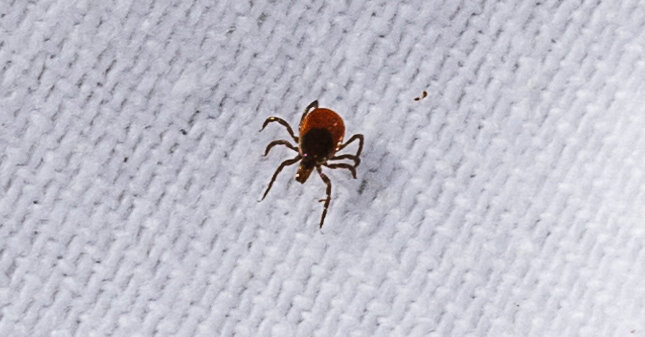
Blacklegged ticks, commonly known as deer ticks, are the dominant carriers of Lyme disease and are most common in urban settings. Lone star ticks, with a white spot on their back, carry alpha-gal but are less likely to be found in cities, at least for now. One tick may carry multiple pathogens, according to a recent study.
In New York City, the health department reported nearly 3,000 Lyme disease cases in 2025, up from just over 2,500 the year before. New Yorkers are usually infected while outside the city, but local cases have been reported in Staten Island and the Bronx. The Fordham Tick Index, which gauges the risk of encountering ticks outdoors in the New York area, currently has the risk level in the area as “high,” at 8 out of 10.
“The woods now are not the woods that were here 30 years ago,” said Thomas Daniels, the director of the Louis Calder Center in Armonk who oversees the tick index. He added, “It’s ripe for things to come in and invade.”
Twenty years ago, the American dog tick was the dominant species in the city. But now, the blacklegged tick is the “heavy hitter,” Dr. Daniels said. “You can find it virtually in all of the parks.”
Maria Diuk-Wasser, who leads the eco-epidemiology lab at Columbia University and its New York City Ticks project, said they are not yet not seeing huge differences over last year. But she still urged caution.
Early summer is peak nymph season, or when tiny baby ticks emerge.
“It’s much easier to miss,” said Dr. Diuk-Wasser, who warned that nymphs are usually what causes Lyme disease.
Light clothing, long sleeves and pants and tucked in socks are recommended. Showering immediately after coming inside also helps remove ticks that might be on your skin but not yet attached.
Experts also emphasized the need to check pets after walks outside and treat them with tick prevention treatments throughout the year.
If a tick has bit you, remove it with fine tweezers, wash the area with soap and water and dispose of the tick by wrapping it in tape or drowning it in alcohol.
Symptoms of many tick-borne illnesses include fever, rash and body aches; Lyme disease also frequently presents as a rash shaped like a bulls eye. If you develop symptoms, you should seek medical care.

