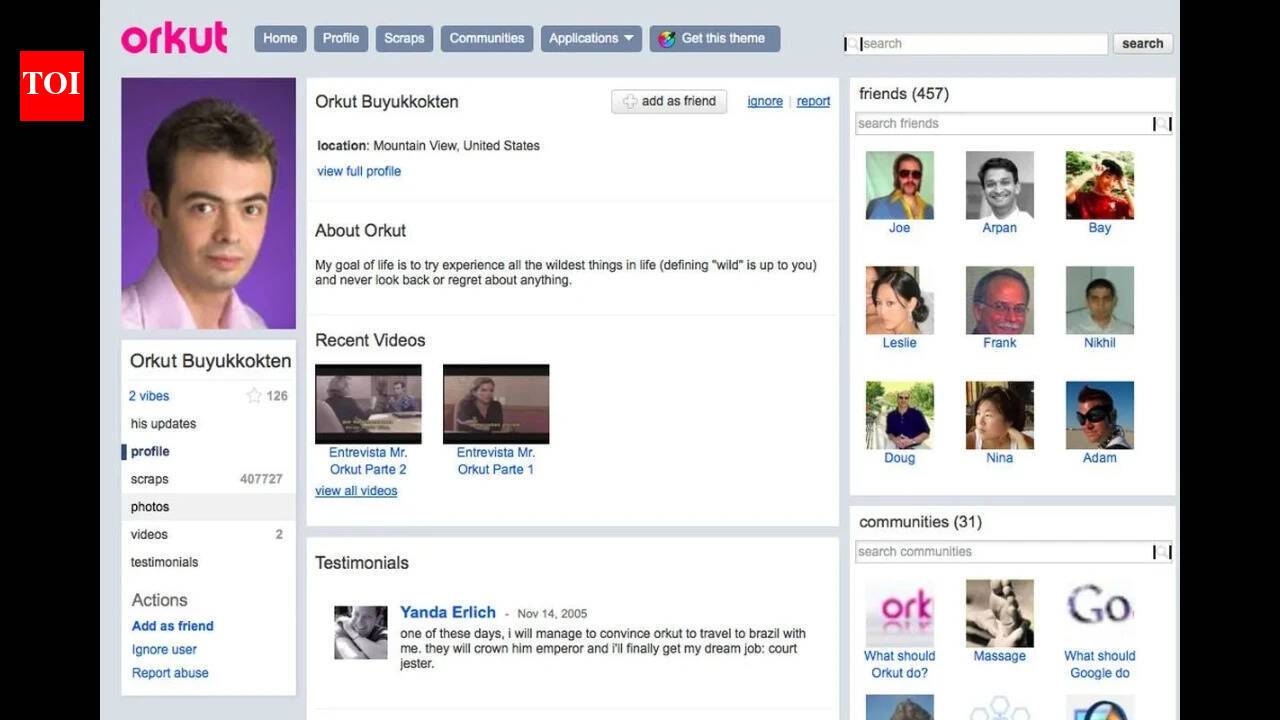
Remember Orkut? The scraps, the testimonials, the communities you joined just because they sounded interesting, and the excitement of seeing who had visited your profile? For many Indians, Orkut was their first taste of social media, long before Instagram, Facebook reels and influencer culture became part of everyday life.Now, its founder, Orkut Büyükkökten, wants to bring back some of what made the platform special. And for anyone who spent hours on Orkut in the 2000s, the idea is bound to bring back a few memories.But there’s a catch. He isn’t announcing the return of the original Orkut website just yet. Instead, the Turkish software engineer has launched a petition to build a new social network that puts people and real connections first.So, what happened to the original Orkut, and why does its creator think the world needs something like it again?
Why did Google shut down Orkut ?
Orkut was launched by Google in 2004. The platform was created by Büyükkökten while he was working as a software engineer at the tech giant. It soon became a favourite among users, particularly in India and Brazil.And Orkut wasn’t just about adding friends. People left scraps on each other’s profiles, wrote testimonials, joined communities around shared interests and spent time chatting with people they might never have met otherwise. For many, it was where online friendships began.But the social media landscape was changing. Facebook was growing quickly, offering users new ways to share updates and connect with friends. Other online platforms were also attracting more people, and Orkut struggled to keep up.In 2014, Google announced that it was shutting down the service. The company said other communities, including YouTube, Blogger and Google+, had grown faster than Orkut.The platform closed on September 30, 2014, leaving its loyal users with memories of a very different internet.
Who is Orkut Büyükkökten?
Büyükkökten is a Turkish software engineer who developed Orkut while working at Google. He studied at Bilkent University before earning a PhD from Stanford University.He later co-founded Hello Network, another social networking venture. Now, he wants to revisit the idea that first made Orkut popular: bringing people together online without making every interaction about views, likes or time spent scrolling.
Why does Orkut’s founder want to bring it back?
Büyükkökten believes social media has changed considerably since Orkut’s early days. What once felt like a way to meet people and build communities has, in his view, become increasingly focused on keeping users hooked.In a recent social media post, he reflected on the shift.“Two decades ago, I helped build some of the earliest social networks. Since then, I’ve watched us spend twenty years optimizing the internet for attention, with feeds that hook us instead of helping us,” he wrote.He also raised concerns about artificial intelligence and the growing difficulty of knowing whether there’s a real person behind an online interaction.His vision is to build a network where people can connect through shared interests and communities, with greater emphasis on trust, kindness and belonging. He has asked users to sign a petition in support of the idea.The appeal also taps into a feeling many early internet users may recognise. Social media was once a place to catch up with friends, discover people with similar interests and have conversations without feeling the need to turn every moment into content.That doesn’t mean Orkut was perfect. But for those who used it, the experience often felt different from the endless feeds they navigate today.
So, is Orkut really coming back?
Not yet. Büyükkökten’s petition is a call for support for a new social network inspired by Orkut’s original values. There has been no confirmed announcement that the old website, with its familiar profiles and communities, is returning.Whether the idea becomes a working platform remains to be seen. A petition may show that people are interested, but building a social network that can compete with today’s established platforms is another matter.Still, the interest in Orkut’s possible return says something about how people feel about social media now. Many users have grown tired of algorithm-driven feeds, constant notifications and the pressure to keep up with what’s trending.Could a simpler, more personal way of connecting find a place in today’s internet? That’s the question Büyükkökten is hoping to answer.For now, Orkut remains a memory for millions of users. But its founder wants to see whether the feeling that made it special can live on in a new form.